
Grade deflation
Average phosphate rock grades globally have been on the slide since the 1970s. CRU’s Maria Gamboa looks at the most recent trends in rock grade and the cost implications for phosphate fertilizer production.


Average phosphate rock grades globally have been on the slide since the 1970s. CRU’s Maria Gamboa looks at the most recent trends in rock grade and the cost implications for phosphate fertilizer production.

Russia's sulphur supply is under renewed pressure after another Ukrainian strike hit the Astrakhan gas processing plant, a facility vital to the country's fertilizer industry and responsible for over 60% of its sulphur output.

Brazil’s National Association for the Diffusion of Fertilizers (ANDA) has proposed an emergency $375 million subsidy to shield farmers from soaring sulphur prices. The proposal was presented to the government during the International Brazil Congress in São Paulo on 25 August.
Ecovyst reported 2Q 2026 sales of $250.0 million, up 42% from $176.1 million in 2025, driven by higher volumes and pricing, including about $55 million of sulphur cost pass-through. Net income rose to $10.7 million (a margin of 4.3%), while adjusted net income was $23.4 million. Adjusted EBITDA increased 27% to $53.1 million.
The Indian government is considering a new financial relief package for its domestic fertilizer industry aimed at protecting its agricultural sector from volatile global markets, according to a Department of Fertilizers (DoF) document dated 14 August. The proposal directly addresses the impact of the "West Asia crisis" on key raw material costs.

Three of the world's major phosphate producers used their second-quarter 2026 results to lay out how far a global sulphur squeeze is now cutting into their phosphate businesses.
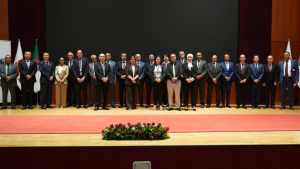
Algeria's Sonatrach and the Algerian Fertilizers Company (AFC) on 12 August signed engineering, procurement and construction contracts with Italy's Saipem and China Harbour Engineering Company (CHEC) for the first phase of the country's Integrated Phosphate Project (PPI).

Brazil's Federal Senate on 11 August approved the final text of the Profert bill (PL 699/2023), which will release up to BRL 10 billion ($1.85 billion) in tax-credit subsidies over five years to build new fertilizer plants or expand and modernise existing ones.

Germany's chemical industry association VCI has warned that continued low water on the Rhine and other inland waterways could force chemical companies to cut production, as Berlin publicly acknowledged the freight squeeze and put a relaxation of the Sunday lorry driving ban up for review.
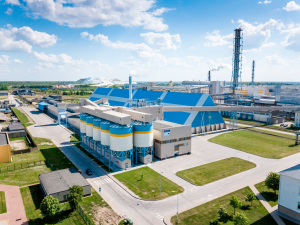
EuroChem has reportedly suspended operations at its Lifosa phosphate fertilizer plant in Kėdainiai, Lithuania, on the back of high raw material sulphur costs, CRU reported on 10 August.