
Africa’s fertilizer renaissance
New ammonia and urea plants in Nigeria and Ethiopia are part of a wave of new capacity in Sub-Saharan Africa, and may help pull up regional demand from its current low base level.


New ammonia and urea plants in Nigeria and Ethiopia are part of a wave of new capacity in Sub-Saharan Africa, and may help pull up regional demand from its current low base level.

The impact of coronavirus on both supply and demand continues to provide considerable uncertainty to the market. With much of Hubei province on lockdown, and a corresponding reduction in ammonia demand for DAP production, Chinese imports appear to be down, pushing more ammonia onto the international market and creating generally bearish sentiment.

AmoMax ® -Casale is a new ammonia synthesis catalyst jointly developed by Casale and Clariant. Retaining the same superior resistance to ageing, poisoning and mechanical strength as the well-known wustite-based catalyst, AmoMax ® 10, the new catalyst is significantly more active. C. Berchthold of Clariant and S. Panza of Casale explain the advantages of AmoMax ® -Casale and share the start-up experience of the first commercial reference.

Schoeller-Bleckmann Nitec (SBN), an experienced manufacturer of high pressure equipment for ammonia and urea plants for many years, also helps customers when things go wrong. SBN has come to the aid of operators on numerous occasions, helping them return their plant to operation as soon as possible when a problem occurs. R. Bunzl discusses SBN’s approach to finding solutions to a number of exceptional problems in urea equipment.

This year’s Nitrogen + Syngas conference was held from 17-19 February in The Hague, Netherlands.
A complete listing of all articles and news items that appeared in Nitrogen+Syngas magazine during 2019.
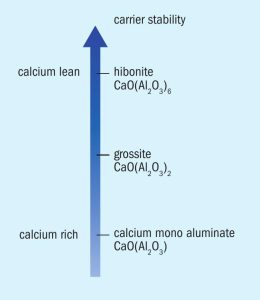
The increased severity of operating conditions in modern steam methane reformers requires catalysts with high catalyst activity and good mechanical stability to avoid premature replacements or unplanned shutdowns. F. Morales Cano, M. Stenseng and M. Feddersen of Haldor Topsoe describe a new catalyst formulation with a very homogenous and stable carrier material delivering the high activity and high mechanical strength required for long time operation.
Floor prices in nitrogen markets are set by marginal producers high on the cost curve, usually using higher cost feedstocks. Recently, lower coal prices in China and the cost of imported LNG have begun to change the dynamic between producers on the margins.

‘Green’ methanol means many things to different people. It encompasses low carbon emissions methanol manufacture at scale, recovery of material through waste gasification and conversion to methanol and power to liquid (e-fuel) methanol via electrochemistry and sometimes a combination of all of the above. Each route has a place in reducing the overall carbon footprint of production and subsequent use of methanol, driven by both governmental incentives or societal demand. In this article Andrew Fenwick of Johnson Matthey reviews the various routes to manufacture.
Dr MP Sukumaran Nair, former Secretary to the Chief Minister and Chairman of the Public Sector Restructuring and Audit Board for the Government of Kerala, provides an update on India’s plans to achieve self-sufficiency in urea production by 2022.