Carbon dioxide as a feedstock
Falling costs for production of hydrogen by electrolysis are encouraging more serious consideration of using recovered carbon dioxide as a feedstock for chemicals and even fuels production.

Falling costs for production of hydrogen by electrolysis are encouraging more serious consideration of using recovered carbon dioxide as a feedstock for chemicals and even fuels production.

At the end of last year, in our November/ December 2019 issue, I remarked upon the fresh impetus that the International Maritime Organisation’s (IMO) target of reducing carbon emissions from shipping by 50% in 2050 (compared to a 2008 baseline) had given to the idea of using ammonia as a shipping fuel. This year, in spite of You Know What, things seem to have, if anything, accelerated.

High pressure urea equipment often has lined nozzles. A lined nozzle is a full strength carbon steel nozzle that is protected against carbamate corrosion by a 5 or 6 mm thick stainless steel liner plate, which is welded to the carbon steel nozzle on either end. This design is however very vulnerable to fatigue cracking due to the difference in thermal expansion between the austenite liner and the carbon steel nozzle. History shows that such a design will lead to cracking in the long term. The following case study reports on a serious incident in a urea plant where a leak in a urea reactor nozzle caused a plant shutdown but could have resulted in rupture of the high pressure vessel.
Maire Tecnimont subsidiary Tecnimont SpA has finalised its $350 million EPC contract with Egypt Hydrocarbon Corp. (EHC) for the construction of a new ammonia plant at Ain Sokhna. The preliminary contract was announced in September last year. The contract for the plant, which will produce 1,320 t/d of ammonia, also includes extensive utilities and offsite facilities. Project completion is scheduled for 36 months from the effective contract date, which will be triggered by financial closure of the project. Project finance is being arranged by the Italian export credit agency SACE and the US EXIM Bank. The ammonia will be used to feed an ammonium nitrate plant, already existing and in operation in the same industrial facility, also owned by EHC.

Agricultural markets represent 75% of nitrogen demand worldwide. Rising populations, changing crop types, moves towards sustainability and the spread of speciality fertilizers and new technologies are all changing the market for nitrogen fertilizers, but the Covid pandemic may affect markets in a variety of different ways.
A round-up of current and proposed projects involving non-nitrogen synthesis gas derivatives, including methanol, hydrogen, synthetic/substitute natural gas (SNG) and gas- and coal to liquids (GTL/CTL) plants.
Air Products and Haldor Topsoe have signed a global alliance agreement. Under the terms of the agreement the two companies will use their combined market network for developing potential projects and the combination of their expertise on large-scale ammonia, methanol and/or dimethyl ether (DME) plants to be developed and built globally. It gives Air Products access to Topsoe’s technology licenses and the supply of engineering design, equipment, high-performance catalysts and technical services for ammonia, methanol and DME plants that are built, owned and operated by Air Products. It also allows for the integration of Topsoe’s technology into many Air Products’ technologies including gasification of various feedstocks, and synthesis gas processes.
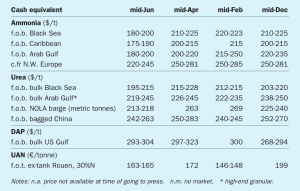
Alistair Wallace, Head of Fertilizer Research, Argus Media, assesses price trends and the market outlook for nitrogen.
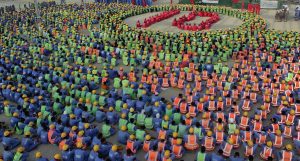
Nitrogen+Syngas asked some of the industry’s leading EPC companies what they are doing to make construction sites safer around the world in pursuit of the goal for zero incident safety performance. Read on to find out what approaches have been taken by Maire Tecnimont Group, thyssenkrupp, Toyo Engineering Corporation and Saipem.

Many fertilizers plants are looking to reduce the overall maintenance costs of their critical heat exchangers. Barinder J. S. Ghai of Sandvik Materials Technology takes a look at the life cycle costs of tube materials for heat exchangers in ammonia plants.