Reducing the carbon footprint of ammonia plants
With the current focus on decarbonising ammonia production, Johnson Matthey explains the important role of high activity ammonia synthesis catalyst in the production of green ammonia.
Merchant markets for ammonia have faced considerable disruption in recent years due to the covid pandemic and the war in Ukraine.
Jiangsu Sailboat Petrochemical has started up a CO2 -to-methanol plant at the Shenghong Petrochemical Industrial Park. The plant was developed in conjunction with Iceland’s Carbon Recycling International (CRI), with the plant brought to life in under two years from the initial contract signing. The methanol plant uses CRI’s proprietary emissions-to-liquids (ETL) technology, transforming waste carbon dioxide and hydrogen gases into sustainable, commercial-grade methanol. According to CRI, uses 150,000 t/a of carbon dioxide sourced from waste streams at the large petrochemical complex as feedstock, significantly reducing emissions that would have otherwise been released into the atmosphere. The plant has the capacity to produce 100,000 t/a of sustainable methanol, used primarily to supply Jiangsu’s methanol to olefins facility to produce chemical derivatives, including sustainable plastics and EVA coatings for solar panels. This is expected to reduce the reliance on fossil-based methanol to drive more sustainable value chains and carbon footprint reduction initiatives across various sectors, such as industrial manufacturing and renewable energy.
Tampa ammonia contract prices increased dramatically during September, from $395/tonne c.fr to $575/ tonne c.fr. The main culprit was plant outages and reduced production at several plants in the region. The tight supply situation was exacerbated by a delay to the restart of Ma’aden’s 1.1 million t/a ammonia plant in Saudi Arabia.
Ballestra is taking a new approach to improving nutrient use efficiency by moving methylene-urea production to the fertilizer industry. Massimo Gori and Svet Valkov of Ballestra discuss the technology and benefits of having a slow-release fertilizer that uses a product from within the fertilizer industry.
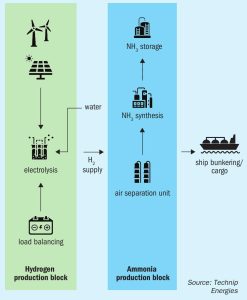
Distributed and carbon-free ammonia production with Stami Green Ammonia technology offers a highly competitive alternative to conventional grey processes, paving the way for scaling up and sustaining local communities with renewable energy sources.
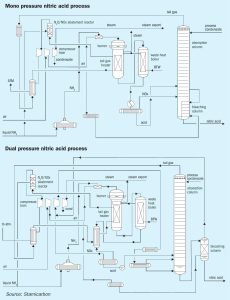
Hindustan Platinum describes two recent start-up issues with catalyst gauze packs at a nitric acid plant, and their remediation to allow production to continue.
Steinmüller Engineering shares its experiences of applying CFD to re-design the waste heat boiler downstream of the secondary reformer to successfully achieve the desired uniform cross flow across the tube bundle.
With low carbon ammonia and methanol being considered not just for their chemical and fertilizer uses, but as fuels, can we make enough of them to fill our energy needs?
Proman has signed a memorandum of understanding (MoU) with Mitsubishi Corp to collaborate on the development of a blue ammonia plant at Lake Charles, Louisiana. This new facility will aim to produce around 1.2 million t/a of low carbon ammonia, making it one of the largest of its kind in the world. The plant will incorporate carbon capture and sequestration technology. Proman says that this development aligns with the company’s commitment to sustainability and reducing greenhouse gas emissions. The proposed ammonia plant will be located at Proman’s existing site in Lake Charles, adjacent to its gas-to-methanol plant, which is also currently being developed.