
Overcapacity in the battery industry
China’s drive to build new battery production capacity for electric vehicles and stationary storage is leading to a familiar problem for the Chinese economy; overcapacity.


China’s drive to build new battery production capacity for electric vehicles and stationary storage is leading to a familiar problem for the Chinese economy; overcapacity.

Biostimulants are emerging as mainstream products with major fertilizer producers – including Yara, Mosaic, Fertiberia and ICL – launching their own biostimulant lines and expanding production capabilities. Smaller innovative companies, meanwhile, such as Azotic and Fyteko, remain the mainstays of the sector and are continuing to being new products to market. Other players such as Den Nouden/GrowSolutions are targeting the expansion of organic fertilizers.
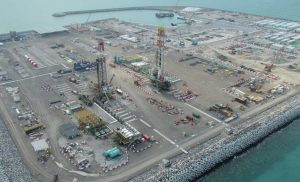
Already the world’s largest exporter of sulphur, Abu Dhabi continues to expand its sour gas production and sulphur output.

Pyrite roasting as a source of sulphuric acid continues to be a significant, albeit minor sector of the overall acid market.

This case study reports on the successful collaboration of two experienced partner companies to replace the problematic upper part of a co-current flow quench tower in a spent acid plant and shows the benefits of using resistant, pre-lined workshop fabricated equipment.

New regulatory developments in Europe are focusing attention on eliminating microplastic residues in soils by adopting biodegradable fertilizer coatings. Major technology licensors and engineering companies are also developing new coating technologies for controlled-release fertilizers (CRFs).

We look ahead at fertilizer industry prospects for the next 12 months, including the key economic and agricultural drivers likely to shape the market during 2024.
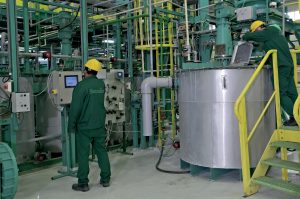
Kevin De Bois of Prayon Technologies describes an innovative process for removing magnesium from phosphate rock. Increasingly, phosphoric acid producers are looking to consume low-grade phosphate rock as a feedstock due to the prohibitive costs of high-grade rock sources. This has potentially negative consequences as the presence of impurities such as magnesium can negatively affect both the phosphoric acid process and the quality of the acid produced.

A proper fertilization programme is necessary to sustain both citrus productivity and soil fertility over the longer term. ICL agronomists Fabio Vale, William Wang, Patricia Imas and Francisco Morell outline the nutrient needs of citrus fruit – a regionally important crop in the Americas, Europe and China.

Citrus fruit growers are an attractive end-market for fertilizer suppliers due to the high K and N requirement of this widely-cultivated cash crop and the efficacy of fertigation and foliar spraying. We examine the nutrient needs of citrus trees and how balanced application of fertilizers helps maximise citrus fruit quality and yield.