
Market Outlook
Prices in most markets should register declines through January, though the extent to which benchmarks will ease is yet unclear. Chinese suppliers have seen significant price declines in recent weeks.


Prices in most markets should register declines through January, though the extent to which benchmarks will ease is yet unclear. Chinese suppliers have seen significant price declines in recent weeks.

Van Iperen International is pursuing an ambitious sustainability strategy to cut its carbon footprint by 50%.

Dr Karl Wyant of Nutrien outlines how the phosphorus and potassium removed during soybean/corn rotations are best replenished.

Soybean growers are increasingly turning to biostimulants and micronutrients such as boron to achieve yield gains.

In the ever-evolving landscape of agricultural inputs, a quiet revolution has been taking place across Latin America. Value-added fertilizers (VAFs), long operating in the shadows of traditional fertilizers, have emerged as a powerful force in the region’s agricultural transformation. Vatren Jurin of DunhamTrimmer explains more.
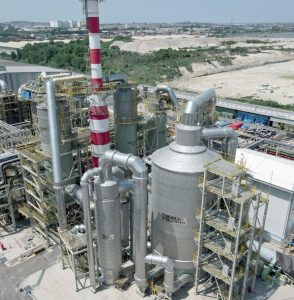
Short term supply constraints are dominating acid markets at present, but increasing smelter production across Asia may lead to oversupply in the longer term.

CRU’s 2025 Phosphates Conference – now in its 16th year – will be held in Orlando, Florida, 31 March - 2 April next year. The 2024 event convened in Warsaw was one of the most successful to date (Fertilizer International 519, p4).

The prospect of a drastic expansion in potassium sulphate production has been linked to a plethora of projects in Australia, Ethiopia, and Eritrea. These have sought to take advantage of market tightness and high price premiums. Yet investor interest in supposedly promising projects has waned over the last few years. In this insight article, CRU’s Alexander Chreky explains the reasons behind the high project failure rate, as well as highlighting some limited successes.
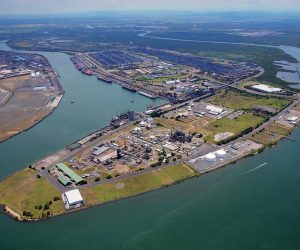
Demand for nitrates has rebounded after a difficult period following the dislocations caused by the war in Ukraine, with UAN in particular seeing rapid growth. Technical ammonium nitrate is also growing on the back of increased mining activity.

Part 1 of this series on stripper efficiency issues provided a brief history of the CO₂ stripping process and discussed how the invention of the HP CO₂ scrubber back in the 1960s revolutionised urea technology. In part 2 we take a look at how high liquid load can affect stripper efficiency.