
IMTOF 2023
The International Methanol Technology Operators Forum (IMTOF) met at the Leonardo Royal St Paul’s hotel in London from June 11th-14th.

The International Methanol Technology Operators Forum (IMTOF) met at the Leonardo Royal St Paul’s hotel in London from June 11th-14th.

A new book by leading industry expert Kish Shah looks at all aspects of ammonium nitrate production.

While demand for ammonia remains – for now at least – strongly tied to fertilizer and farming, over the three decades that I’ve edited this publication, methanol’s story has been a very different one, with a succession of major new slices of demand coming every few years from new applications that flare up and then mature or even drop away again. For a while in the 1990s it was MTBE, the oxygenated fuel additive that had a brief flourish in the US before being shut down by leaking fuel tanks leaching into ground water. Then there was dimethyl ether (DME) as a blendstock for LPG, and methanol itself directly blended into gasoline in China to keep up with soaring vehicle fuel demand. More recently, methanol to olefins (MTO) has added almost another 25% of demand over and above existing chemical and fuel uses. But as the world cracks down on coal production and use, China’s attempt to use methanol as a way of using domestic coal to replace imported oil seems to have passed its high water mark and begun to recede.

A round-up of current and proposed projects involving non-nitrogen synthesis gas derivatives, including methanol, hydrogen, synthetic/substitute natural gas (SNG) and gas- and coal-toliquids (GTL/CTL) plants.
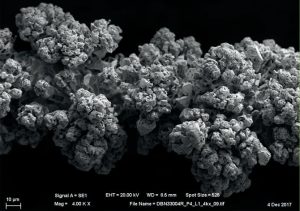
Although the nitric acid industry has an extensive history dating back centuries, nitric acid production continues to be a dynamic process with bespoke system solutions necessary per plant rather than a one size fits all. Kate Cardonne of Johnson Matthey discusses strategies to balance the cost and performance in nitric acid production.

Avoiding chloride contamination is critical in urea plants, not only from the process and utility side but also from the atmospheric side. The applied stainless steels in urea plants are susceptible to detrimental failure modes when chlorides and moisture are present. This UreaKnowHow.com Round Table discussion provides several examples of failures and important prevention measures relating to chloride stress corrosion cracking risks in urea plants.

Market Insight courtesy of Argus Media
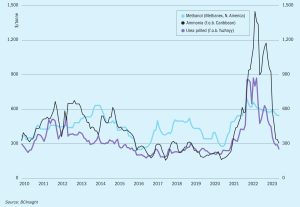
Supply in southeast Asia looks tight for the coming weeks, but further declines in Chinese domestic prices could alter the supply/demand balance in the region in August.

A look at fatal incidents in the ammonia industry over the past two decades.
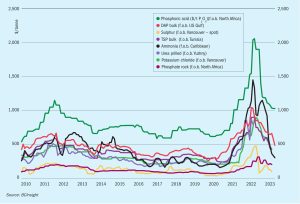
Market Insight courtesy of Argus Media. Urea: There was a general price upswing for both urea and ammonium nitrate in mid-June, while ammonium sulphate and urea ammonium nitrate (UAN) prices remained weak. Urea prices were pushed up in most regions as traders sought to secure cargoes across the globe – resulting in granular urea deals from the Baltic ($260-280/t f.o.b.), Egypt ($312-335/t f.o.b.), Middle East ($253-280/t f.o.b.) and China ($308-310/t f.o.b.).