Category: Latin America

Nitrogen Industry News Roundup

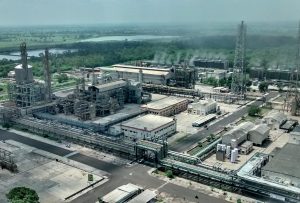
Maire Tecnimont’s innovation and licensing company Stamicarbon has been selected as the licensor for a urea project in sub-Saharan Africa, its first license in the region. Stamicarbon will deliver the process design package for the front-end engineering and design for a 4,000 t/d urea melt and granulation plant. The urea melt plant with a pool reactor will use Stamicarbon’s MP Flash design, a melt concept with improved energy efficiency, entailing a significant reduction of steam consumption. The minimal equipment items result in a significant reduction of the footprint and the overall capital cost of the plant. Less equipment also allows for a reduction in maintenance costs and OPEX savings.
Sulphur Industry News Roundup

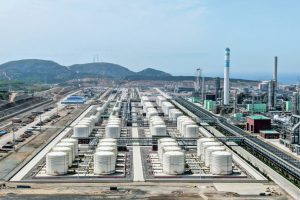
Chinese refinery output has been steadily falling this year as covid-related lockdowns impact upon the economy. Figures from the National Bureau of Statistics showed that refinery output fell to 13.8 million bbl/d in April – down 2% year on year – then took a sharp fall in May to 12.6 million bbl/d, more than 10% down on the same time in 2021, when output stood at 14.1 million bbl/d. May’s figure was 12.7 million bbl/d, a modest increase on April, but still 1.6 million bbl/d down compared to May 2021. Refining margins have also been hurt by high oil prices due to the Ukraine conflict, dropping close to zero or even negative according to industry estimates.

Sulphuric Acid News Roundup

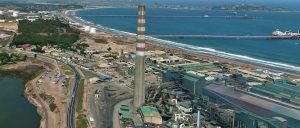
At the end of June a three day strike among workers at Chilean state mining company Codelco paralysed copper output at the world’s largest copper producer. The strike was in protest at the threatened closure of the Ventanas smelter, which was the site of an alleged leak of sulphur dioxide on June 6th. Chile’s environmental regulator subsequently provisional measures for both Codelco and power company AES Chile after numerous people in the nearby towns of Quintero and Puchuncavi in central Chile, including hundreds of high school students and staff, showed signs of sulphur dioxide poisoning. The measures include the installation of a new temperature sensor to measure potential thermal inversions. Both companies have denied responsibility for the leak; Codelco says that its air quality stations recorded normal levels of SO2 during the time of the incident.

Sulphuric Acid News Roundup

The Jordan Phosphate Mines Company (JPMC) has signed a supply agreement with Germany’s LUMA-International Company.Under the terms of the agreement, JPMC will sell 850,000 t/a of phosphate rock to the German company at international market rates. The agreement was signed by JPMC CEO Abdulwahab Rawad and managing director of LUMA-International Ralf Keller, in the presence of JPMC Chairman Muhammad Thneibat. Thneibat expressed hope that the deal would open wider scopes of cooperation between the JPMC and German companies in the field of phosphate fertilizers, and Keller likewise said that his company was looking forward to more cooperation with the JPMC and new partnerships to produce phosphoric acid and phosphate fertilizers.

Nitrogen Industry News Roundup

Casale has acquired Hong Kong-based Green Granulation Ltd (GGL), and its proprietary technologies for the design and construction of urea and calcium ammonium nitrate (CAN) granulation systems. Casale says that the takeover is part of a broader strategy aimed at strengthening its leading position in the nitrogen market by leveraging the widest integrated portfolio of efficient technologies, enabling the company to offer a ‘one stop shop’ for the entire production cycle of nitrogen-based fertilizers, from raw materials to final products. GGL’s addition to the Casale group includes the Cold Recycle Granulation process, an advanced fluidised bed technology designed to accept a lower concentration of urea feed melt (ca 96% urea and biuret), as well as a proprietary design for both granulator and scrubber, a team of experts and qualified technicians, and considerable experience in several industrial references. The CRG design has a horizontal layout, leading to lower structural costs and higher efficiency, as well as lower total investment costs and power consumption, lower power consumption and simplified operation, and higher operational flexibility in urea and CAN granulation.

Nitrogen Industry News Roundup

Switzerland-based EuroChem Group AG says it has entered into exclusive negotiations to acquire the nitrogen business of the Borealis group, after having submitted a binding offer. One of Europe’s leading fertilizer producers, Borealis operates fertilizer plants in Germany, Austria and France, as well as more than 50 distribution points across Europe. It supplies 3.9 million tonnes of fertilizer products per year, including 800,000 t/a of technical nitrogen solutions and 150,000 t/a of melamine via the Borealis LAT distribution network. It is a market leader in melamine, with its operations in Austria and Germany supplying primarily the woodworking industry. EuroChem says that melamine and technical nitrogen solutions represent important new business lines for the company to expand its nitrogen-based product portfolio in Europe.

Sulphuric Acid News Roundup

German slurry handling specialist Vogelsang has just launched a new acidification technology which it claims will reduce ammonia emissions from agriculture, reducing up to 70% of ammonia to nutrient rich ammonium. Its new SyreN technology is an onboard sulphuric acid dosing system for tractors that treats slurry or digestate as it is applied to the land. It uses a front-linkage mounted unit to carry the acid, which also improves tractor weight distribution. The acid is dosed when the organic fertiliser is fed to the applicator, with a pH regulator automatically controlling and adjusting the flow. Nitrogen uptake of organic fertilizer is also increased by up to 1/3 as the ammonium is more easily metabolised by the soil. Results from a study in Germany showed that the acidifying slurry increased crop yield by up to 20%. The sulphur contained in the acid also becomes available to the plants as sulphate after spreading, eliminating the need for an additional pass over the field to administer a supplementary sulphur fertiliser, such as ammonium sulphate nitrate. At approximately 30 kg/ha, the amount of sulphur introduced into the crop with the SyreN system corresponds to the average amount of sulphur that is already applied to crops in the course of a growing season.