
Fertilizer Industry News Roundup
Yara International is to supply fossil-free fertilizers to El Parque Papas, Argentina’s largest potato grower, in 2023.


Yara International is to supply fossil-free fertilizers to El Parque Papas, Argentina’s largest potato grower, in 2023.

Lithium miner Ioneer Ltd has signed a non-binding Memorandum of Understanding with Shell Canada Energy for the supply of sulphur to Ioneer for its Rhyolite Ridge lithium-boron project in Esmeralda County, Nevada. Ionner said in a statement that “securing the supply of key reagents for ore processing is an important step along the critical pathway to developing the Rhyolite Ridge project”. Under the memorandum, Ioneer will purchase up to 500,000 t/a of high-quality sulphur from Shell, which would fulfil the estimated annual sulphur requirement for the Project.

Yara International has approved a project to partly convert its Pilbara plant near Karratha in Western Australia to green ammonia production.
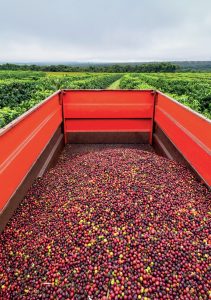
The Russian-Ukraine conflict and price volatility have affected the supply/demand dynamics of the Brazilian fertilizer market and the buying behaviour of growers. As a consequence, Brazil’s fertilizer consumption is expected to fall for the first time in eight years. Debora Simoes and Cleber Vieira of leading consultancy Agroconsult offers their key market insights.
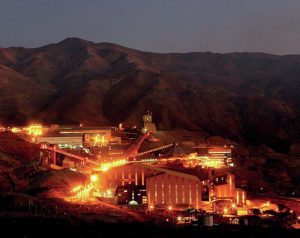
In its final report on the June 2019 explosion and fire at Philadelphia Energy Solutions in southwest Philadelphia, the US Chemical Safety Board has said that US refineries need to strengthen their safeguards surrounding the use of hydrofluoric acid, and has also recommended that the US Environmental Protection Agency take steps to improve its oversight of the chemical, which is used as an alkylation agent.

Maire Tecnimont subsidiary MyRechemical has been awarded a basic engineering contract for a waste to methanol and hydrogen plant to be located in Empoli, Tuscany. The scope of work includes the basic engineering design of the plant and the provision of necessary documentation to start the plant’s public authorisation process with the Tuscany region. The basic engineering phase is expected to be completed by the end of 2022. Once completed, the plant will process 256,000 t/a of non-recyclable waste and will produce 125,000 t/a of methanol and 1,400 t/a of hydrogen. The plant will use MyRechemical’s chemical conversion technology which allows the recovery of waste that cannot be mechanically recycled, or other types of unsortable dry waste. The carbon and hydrogen in the waste are converted via gasification into synthesis gas, which is used to produce low-carbon methanol and hydrogen.
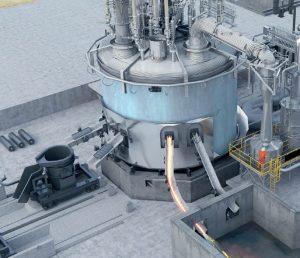
Maire Tecnimont’s innovation and licensing company Stamicarbon has been selected as the licensor for a urea project in sub-Saharan Africa, its first license in the region. Stamicarbon will deliver the process design package for the front-end engineering and design for a 4,000 t/d urea melt and granulation plant. The urea melt plant with a pool reactor will use Stamicarbon’s MP Flash design, a melt concept with improved energy efficiency, entailing a significant reduction of steam consumption. The minimal equipment items result in a significant reduction of the footprint and the overall capital cost of the plant. Less equipment also allows for a reduction in maintenance costs and OPEX savings.
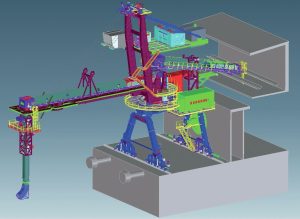
A record rise in gas prices at the end of August triggered a spate of ammonia production curtailments across Europe. These included major shutdown announcements from CF Fertilisers UK, Grupa Azoty, Yara International and others.

CF Fertilisers UK is to permanently close its fertilizer production site at Ince in north west England with the potential loss of 238 jobs.
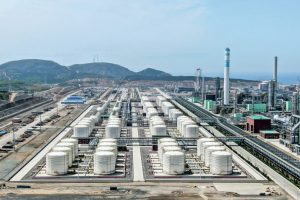
Chinese refinery output has been steadily falling this year as covid-related lockdowns impact upon the economy. Figures from the National Bureau of Statistics showed that refinery output fell to 13.8 million bbl/d in April – down 2% year on year – then took a sharp fall in May to 12.6 million bbl/d, more than 10% down on the same time in 2021, when output stood at 14.1 million bbl/d. May’s figure was 12.7 million bbl/d, a modest increase on April, but still 1.6 million bbl/d down compared to May 2021. Refining margins have also been hurt by high oil prices due to the Ukraine conflict, dropping close to zero or even negative according to industry estimates.