Latin America, a regional powerhouse
Latin America has confirmed its status as a pre-eminent global marketplace for fertilizers. We report on demand growth and fertilizer supply and capacity developments within this diverse region.
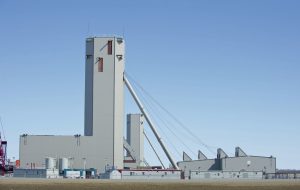
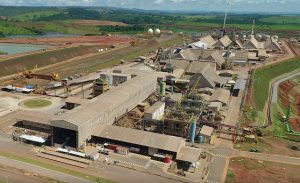
Brazil’s phosphate industry is on a growth dash to meet rising domestic demand. We report on the major acquisitions, investments and expansions by CMOC, Mosaic, Yara and Itafos.
Johnson Matthey and KBR have announced that they have signed a global strategic alliance agreement to license a new ammonia-methanol co-production process that combines the companies’ ammonia and methanol process technologies. The companies say that the co-production process makes the most of synergies between the two technologies, maximising savings while offering the highest levels of safety, flexibility and reliability.
The US Environmental Protection Agency (EPA) and the US Department of Agriculture (USDA) have announced the ‘Next Gen Fertilizer Challenge’, a joint EPA-USDA partnership and competition to advance agricultural sustainability in the United States. The competition includes two challenges that seek proposals for new and existing fertilizer technologies to maintain or improve crop yields while reducing the impacts of fertilizers on the environment.
Haldor Topsoe and Comprimo® have announced a global strategic alliance to jointly license the TopClaus sulphur removal and recovery technology. TopClaus combines Topsoe’s energy efficient wet sulphuric acid (WSA) process with the industry-standard Claus process, enabling plant operators to handle acid gases and achieve sulphur removal efficiencies of above 99.9%. The Claus part of the unit recovers elemental sulphur from acid gases, and the tail gases from the Claus unit are then treated in the WSA unit, where the remaining sulphur compounds are converted into sulphuric acid.
DuPont Clean Technologies has announced the successful startup and performance test of a 300,000 t/a STRATCO® alkylation unit licensed at the Hengli Petrochemical Company’s new refinery complex on Changxing Island in the Harbour Industrial Zone, China. The new alkylation unit enables Hengli to produce high-quality alkylate from a 100% isobutylene feed stream, catalysed by sulphuric acid. This first-of-a-kind unit was developed through DuPont research into the best ways to maximise product octane and minimise end point with this feedstock. Hengli had awarded DuPont the contract for the new alkylation unit as well as a MECS® sulphuric acid regeneration unit in 2015.
On June 30th, following clearance from the European Commission, Outotec completed the year-long merger of Metso’s Minerals business with Outotec via a partial demerger of Metso. The newly formed company, Metso Outotec, will focus on leadership in sustainable minerals and metals processing and recycling technologies. Headquartered in Finland, Metso Outotec employs over 15,000 professionals in more than 50 countries and its combined sales for 2019 were e4.2 billion.
US crude production dropped rapidly during April and May, but figures released by the Energy Information Administration (EIA) showed that this had plateaued and there have been some well reactivations and drawdowns from crude stocks. Total production curtailments in North America were more than 2.5 million bbl/d in May. ConocoPhillips Chairman and CEO Ryan Lance said in remarks to the media that a return to pre-outbreak production levels of 13 million bbl/d looked “pretty difficult”, although a recovery to 11 million bbl/d or possibly as high as 12 million bbl/d would be possible, depending upon OPEC moves. About one third of the company’s production was shut in as of the start of June – some 400,000 bbl/d. Lance argued that low cost shale oil resources still exist in the US, but there will be pressure on companies to reduce capital spending. The Covid19 outbreak has had a major impact in investment announcements, with a large number of project delays in the US due to uncertainty over future demand levels. Planned US exploration and production expenditure is down by 50% for the second half of 2020, while the rig count was down 60% on February.
Methanex has said that, in light of the uncertainty in the global economy from the Covid-19 pandemic, it will defer approximately $500 million of previously announced capital spending on its $1.4 billion Geismar 3 methanol project for up to 18 months. Geismar 3, which is intended to eventually produce 1.8 million t/a of methanol, will be placed on temporary “care and maintenance” for up to 18 months, enabling the company to complete the project when market conditions improve. Methanex says it will spend $100 million in Q1 2020 and a further $200 million from April 1, 2020 to September 30, 2021 on the project, the majority of which is spending that occurred or was committed during Q1 2020. This is approximately $500 million lower than the $800 million that was expected to be spent over that same period. Construction activity and procurement of non-critical equipment and bulk materials will be suspended until market conditions allow the Geismar 3 project to restart.
China’s copper industry is facing difficulties caused by the coronavirus outbreak in the country. Prolonged factory closures, particularly in Hubei province, at the centre of the outbreak, as well as neighbouring Guangdong and Zhejiang, also badly affected, have caused a slump in demand for copper domestically as copper fabricators remain on extended closure. However, smelters have resisted cutting production. Daye Nonferrous, based in Huangshi at the centre of coronavirus outbreak, continues to operate at 80% of its 600,000 t/a capacity for 1Q 2020, according to the company, in spite of quarantine and transport restrictions which have reduced truck shipments to the smelter – Daye is reportedly still able to receive copper concentrate shipments via the Yangtze River to Huangshi port.