Category: Industrial

NextChem wins contract for blue hydrogen project

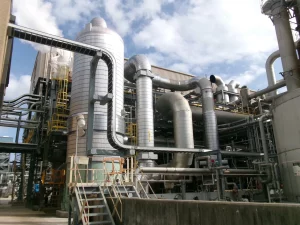
NextChem subsidiary KT Tech has been awarded a licensing, process design package and engineering services contract by a major international energy company for the application of its proprietary NX eBlue™ (electric steam methane reforming) technology for the production of low-carbon hydrogen in the Southwest of the United States. NX eBlue™ technology, part of NextChem’s technological portfolio for syngas and hydrogen production, features an innovative electric steam methane reforming reactor along with a dedicated process scheme to produce low-carbon hydrogen. This technology significantly reduces CO2 production and incorporates integrated carbon capture to further minimise CO2 emissions, all allowing for operational flexibility and scalability.

Casale wins melamine contract

Casale has been awarded a contract to supply melamine technology by Anhui Haoyuan Chemical Group. The new melamine plant will feature Casale’s uLEM-N technology, with a design capacity of 60,000 t/a, and will be fully integrated into an urea plant operated by Anhui Haoyuan. This is the third project that the two companies have developed together, following the successful implementation of two 1,500 t/a ammonia synthesis loop plants based on Casale’s N-LOOP™ technology.

Coal based fertilizer and methanol plant proposal

Suiso, a South African company specialising in blue ammonia production, is set to invest $1.7 billion in a coal-to-fertiliser facility in Kriel, Mpumalanga in the east of South Africa. The proposal is for a 1.5 million t/a ‘blue’ ammonia-urea plant which will replace South Africa’s annual imports of 1.2 million t/a of urea, as well as producing 235,000 t/a of blue methanol for fuels, using advanced decarbonisation and carbon capture technologies. Suiso is partnering with Sinopec Ningbo Engineering, Stamicarbon, and ETG – the latter will distribute Suiso’s fertilisers across Africa, supporting local agriculture and long-term food security.

KazZinc to invest in increased SO2 recovery

Kazakhstan Zinc (KazZinc) is progressing with plans to reduce sulphur dioxide emissions from its Ust-Kamenogorsk site following an environmental audit in December 2024 as a result of smogs caused fugitive emissions which forced residents to stay indoors. The site has reduced emissions from 69,000 t/a in 2011 to 15,000 t/a, but plans to invest $210 million in in new technologies, including sulphur dioxide recovery systems and upgraded filters for solid particle capture. The key measure is the modernisation of gas purification units which is expected to reduce SO2 emissions by 2,200 t/a by 2026. Another important initiative is the construction of the “Hydropolimet” workshop at the KazZinc Ridder metallurgical complex, which aims to reduce sulphur dioxide emissions by 714 t/a.