Asia
29 July 2026
Hynfra plans Mindoro green ammonia hub
Written by Natalie Noor-Drugan
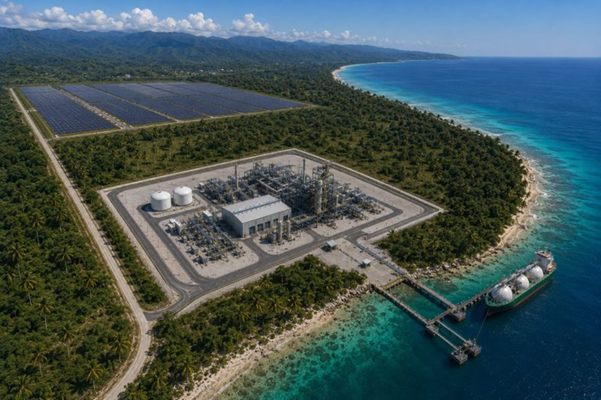
Hynfra, a Polish developer of green hydrogen and ammonia projects, has signed a memorandum of understanding with a Philippine partner to build a green ammonia complex on the island of Mindoro. The project is sized at around $1–$1.5 billion and is aimed at supplying policy‑driven demand for low‑emission ammonia from countries in Northeast Asia like Japan, South Korea and Taiwan.
Project scope and scaling
Under the MoU, the partners will begin joint technical, environmental and commercial studies to take the Mindoro project to investment readiness. The initial phase targets about 100,000 t/y of green ammonia, with room to scale up to around 1 million t/y. Production will be based on renewable power feeding electrolyser capacity to generate hydrogen, which will then be converted into ammonia.
Hynfra says the project builds on its existing pipeline of green hydrogen and ammonia developments in markets including Jordan, Mauritania and Oman, as it assembles a global portfolio of hydrogen–ammonia assets.
Strategic location and supply‑chain risk
The company frames the move as a response to this year’s disruptions in the Strait of Hormuz, which underlined supply‑chain risk for Asia’s fertilizer and energy importers. Mindoro’s position in the Pacific Basin is presented as strategically important, shortening supply routes and reducing reliance on corridors exposed to geopolitical risk, from the Strait of Malacca to Gulf export lines.
“This memorandum is part of our strategy to build a global portfolio of hydrogen‑ammonia projects,” said Tomoho Umeda, CEO of Hynfra. “We are seeing growing interest from East Asian governments in Pacific Basin projects, and we are deliberately targeting this niche. Demand for green ammonia here is already precisely defined and embedded in national policy. The Philippines combines favourable conditions for renewable energy with a location that allows fuel to be delivered directly to East Asian markets, bypassing the most sensitive shipping routes.”
Policy‑driven demand in East Asia
Hynfra highlights that Northeast Asian governments have already written significant low‑emission ammonia volumes into their energy plans: Japan is planning for roughly 3 million tonnes of ammonia demand a year by 2030, rising towards 30 million tonnes by 2050. South Korea aims to co‑fire more than half its coal fleet with ammonia by 2030 and expects to import close to 9 million tonnes annually. Taiwan and China are described as moving in the same direction on ammonia use for power and industry. Against this backdrop, Mindoro is positioned as a Pacific supply point that can deliver green ammonia directly into these markets.
About Hynfra
Hynfra is a Warsaw‑based project developer, system designer and technology integrator focused on green hydrogen and green ammonia. It works with technology partners and host governments to design and execute large‑scale renewable hydrogen–ammonia projects for energy and fertilizer applications, including planned plants in Jordan, Mauritania and Oman.