• Skip to main content

    Latin America

    Guyana lines up global EPC field for Wales fertilizer plant

    Written by Natalie Noor-Drugan


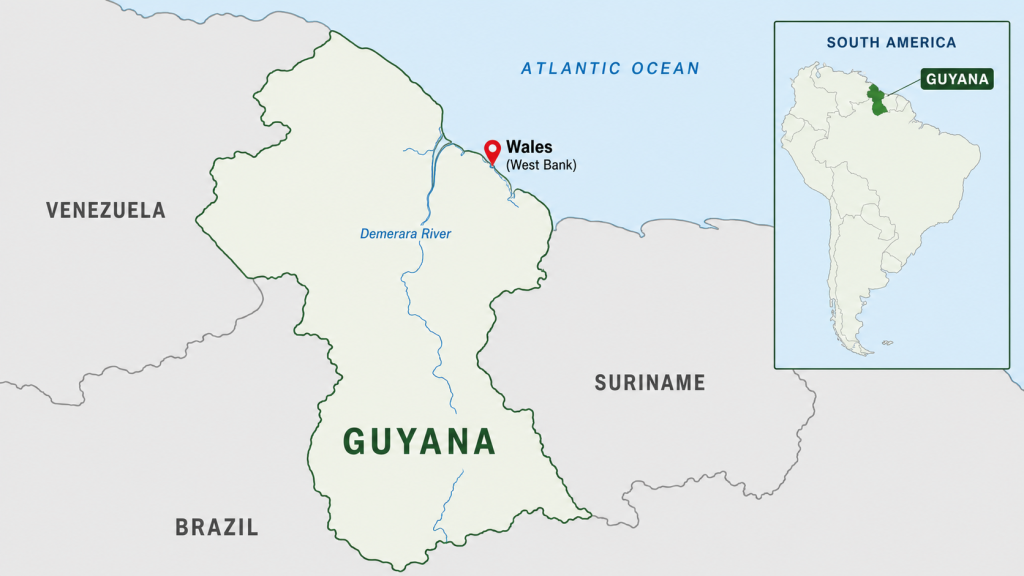
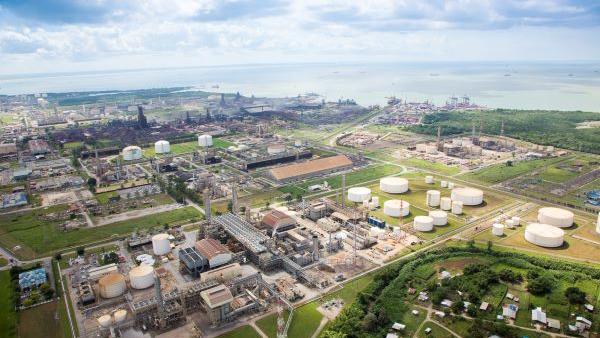
    Guyana has attracted a mix of Chinese, US, Indian, European and local engineering groups to bid for the Guyana Ammonia and Urea Plant (GAUP), a 300,000 t/y fertilizer project planned at Wales, a former sugar‑estate site on the West Bank Demerara now being developed as the country’s gas‑to‑energy hub. The plant, costed at up to $300 million, is intended to use gas from the under‑construction Wales pipeline and power complex to reduce fertilizer costs for Guyana, northern Brazil and Caribbean markets and to deepen local value addition to the country’s offshore hydrocarbons.

    Ten bidders have lodged proposals under a public–private partnership model to design, build and operate the fertilizer complex, which will rely on up to 20 million cubic feet per day of gas from Phase II of the Wales development. Officials say the winning contractor will also be required to secure a world‑class technology licensor for the fertilizer plant, underlining Guyana’s ambition to anchor a modern nitrogen industry at Wales and open up regional export opportunities in ammonia and urea.
    Prime Minister Mark Phillips said the deadline for EPC proposals, initially set for 22 January 2026, had been extended to 15 May, but stressed that this “had nothing to do with a lack of interest” from the market. He said there had been strong interest, with “many companies submitting requests”, and that meetings were being scheduled with all firms that submitted proposals, adding: “There is no cause for concern, as the procurement process remains active and orderly.”

    Guyana, an English‑speaking CARICOM (Caribbean Community and Common Market) state, is now one of the world’s fastest‑growing hydrocarbons economies as production ramps up from the offshore Stabroek Block. The government is seeking to leverage associated gas via the Wales gas‑to‑energy project to supply industrial schemes such as GAUP, cut fertilizer prices for domestic farmers, and offer competitively priced nitrogen products into northern Brazil and Caribbean markets to improve regional food security.

    GAUP will be structured as a private company with financing raised from the private sector rather than from the state budget. In parallel with the EPC tender, the government has invited preliminary expressions of interest from investors for equity stakes in GAUP, with a project budget of $300 million and a cap of $5 million per investor, offering a 10% government‑guaranteed annual return and giving preference to Guyanese investors and the diaspora. Officials have said that responses to this small‑ticket investment offer will be used to structure the formal call for capital, and that the government reserves the right not to accept any response and to change or cancel the process without liability.

    GAUP EPC bidders and countries

    EPC bidder / consortiumCountry or main base
    CAMCE – CNCEC – ECEC – ConsortiumChina
    China Railway First Group Co. Ltd, SEDIN Engineering Co. Ltd – ConsortiumChina
    Lindsayca Guyana IncGuyana (local arm of USA headquartered EPC)
    Montego Upstream Services Ltd, Ideal Engineering Services Inc – ConsortiumNigeria / USA
    Northern EPC Alliance (NEA), Lee Kieswetter Heavy Civil (LKHC), Valor EPC – ConsortiumNorth America (Canada / USA)
    Phoenix Welding & Fabricating IncGuyana (local arm of USA headquartered EPC)
    Hualu Engineering & Technology Co. Ltd, China National Machinery Import & Export Corporation – ConsortiumChina
    Morimatsu, Arkad SpA, CC7 Europe – ConsortiumJapan / Italy / Netherlands
    Kalpataru Projects International LimitedIndia
    China Wuhan Engineering Corporation LimitedChina

    Data: Local news reports, CRU research.

    Latest in Latin America

    Petrobras to resume construction at Tres Lagoas

    Petrobras PBR has said that it plans to restart construction of the long-delayed UFN-III fertilizer plant in Três Lagoas, Mato Grosso do Sul, with work at the site expected to resume by September. UFN-III, with a planned capacity of 2,200 t/d of ammonia and 3,600 t/d of urea, was partially completed in the 2010s, but the site has been inactive and unfinished since 2015. Petrobras now intends to complete the project with an estimated investment of $1 billion, targeting commercial operations by 2029. The site was chosen as it was strategically positioned near several of Brazil’s largest agribusiness regions, including Mato Grosso, Mato Grosso do Sul, Goiás, Paraná and São Paulo.