Nitrogen+Syngas 400 Mar-Apr 2026
19 March 2026
Next generation hydrogen technology
DECARBONISATION
Next generation hydrogen technology
NX eBlue™ is a next-generation hydrogen production technology, ready for industrial deployment, that integrates electrification with renewable energy to deliver a low-carbon, high-efficiency alternative to traditional steam methane reforming. M. Antonelli, M. Mennella, and Dr. S. Romagnuolo of KT Tech S.p.A. describe NEXTCHEM’s proposal for the electrification of steam methane reforming.
The global chemical industry is a cornerstone of modern society, providing essential products such as fuels, polymers, and specialty chemicals. However, it is also a significant contributor to greenhouse gas emissions, primarily due to its reliance on fossil-based energy and feedstocks. Among these emissions, carbon dioxide (CO2) represents the largest share, posing a critical challenge in the context of climate change and international decarbonisation targets.
Electrification of chemical processes has emerged as a promising pathway to mitigate CO2 emissions by replacing conventional thermal energy – typically derived from combustion of natural gas or other hydrocarbons – with renewable electricity. This transition enables the integration of low-carbon energy sources, such as wind, solar, and hydropower, into chemical manufacturing, thereby reducing the carbon footprint of core industrial operations. Beyond emission reduction, electrification offers additional benefits, including improved process controllability, enhanced energy efficiency, and compatibility with emerging digitalisation strategies.
One of the most impactful contributions to the CO2 emissions lies in steam methane reforming (SMR), the dominant industrial route for hydrogen production. SMR accounts for a substantial fraction of global CO2 emissions because it combines high-temperature endothermic reactions with direct combustion of fossil fuels to supply heat.
By substituting conventional fired heaters with electrically powered systems – such as resistive heating, induction, or microwave technologies – the SMR process can significantly reduce direct emissions and enable coupling with renewable electricity grids. This approach not only aligns with the growing demand for low-carbon hydrogen but also supports broader decarbonisation efforts across sectors like refining, ammonia synthesis, and methanol production.
However, the electrification of steam methane reforming also introduces significant changes to the process, defining new characteristics such as a substantial reduction in feedstock consumption and an almost complete capture of the CO2 produced.
NX eBlue™ reactor and process
Overview of the NX eBlue™ concept
NX eBlue™, a patented electric reforming technology developed by NEXTCHEM is designed to address the urgent need for decarbonisation in hard-to-abate sectors by enabling sustainable hydrogen production through the electrification of steam methane reforming (SMR). By leveraging renewable electricity, NX eBlue™ significantly reduces both feedstock consumption and CO2 emissions, positioning itself as a solution for industrial applications and utilities seeking low-carbon hydrogen.
NX eBlue™ is not only an advanced electrified reactor but also an innovative process architecture capable of accommodating a wide range of feedstocks – including natural gas, naphtha, LPG, off-gas, and biogas. It integrates state-of-the-art CO2 capture technologies and delivers high-purity hydrogen with minimal pollutant emissions. The captured CO2 can be recovered in gaseous, liquid, or supercritical form, enabling flexible downstream utilisation or storage.
Reactor technical features and design
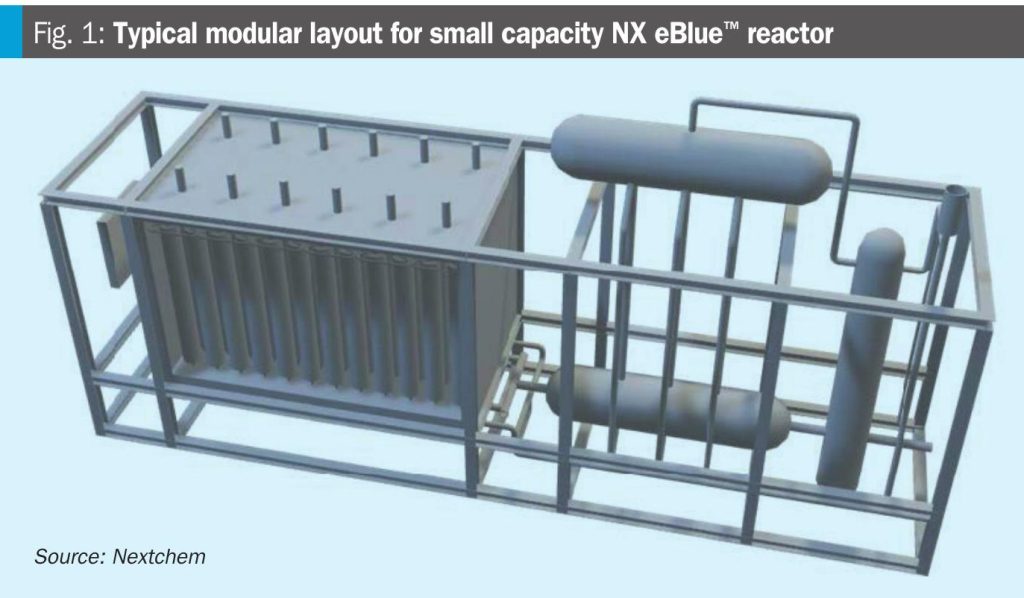
At the heart of the NX eBlue™ process is a proprietary electric reformer (Fig. 1). This reactor utilises commercial electric heating elements arranged around a compact set of tubular reactors.
Key technical features include:
- Simplified maintenance: Electrical components, wiring, and junction boxes are easily accessible, streamlining inspection and replacement.
- Extended component lifespan: Uniform operating temperatures enhance the durability of electric parts.
- Catalyst compatibility: The system employs well-proven commercial catalyst pellets, eliminating the need for specialised catalysts.
- Operational flexibility: The modular design allows for continued operation even if individual heating elements fail, ensuring high reliability and adaptability.
NX eBlue™ pilot validation and industrial readiness
The NX eBlue™ reactor has undergone extensive pilot testing, demonstrating:
- Use of commercial, long-life electric heating elements.
- High operational flexibility and straightforward maintenance.
- Reliable performance across all industrial procedures, including start-up, shutdown, and emergency scenarios.
These results confirm the technology’s readiness for market deployment, with offering of licenses, process design packages, proprietary equipment, and digital support services.
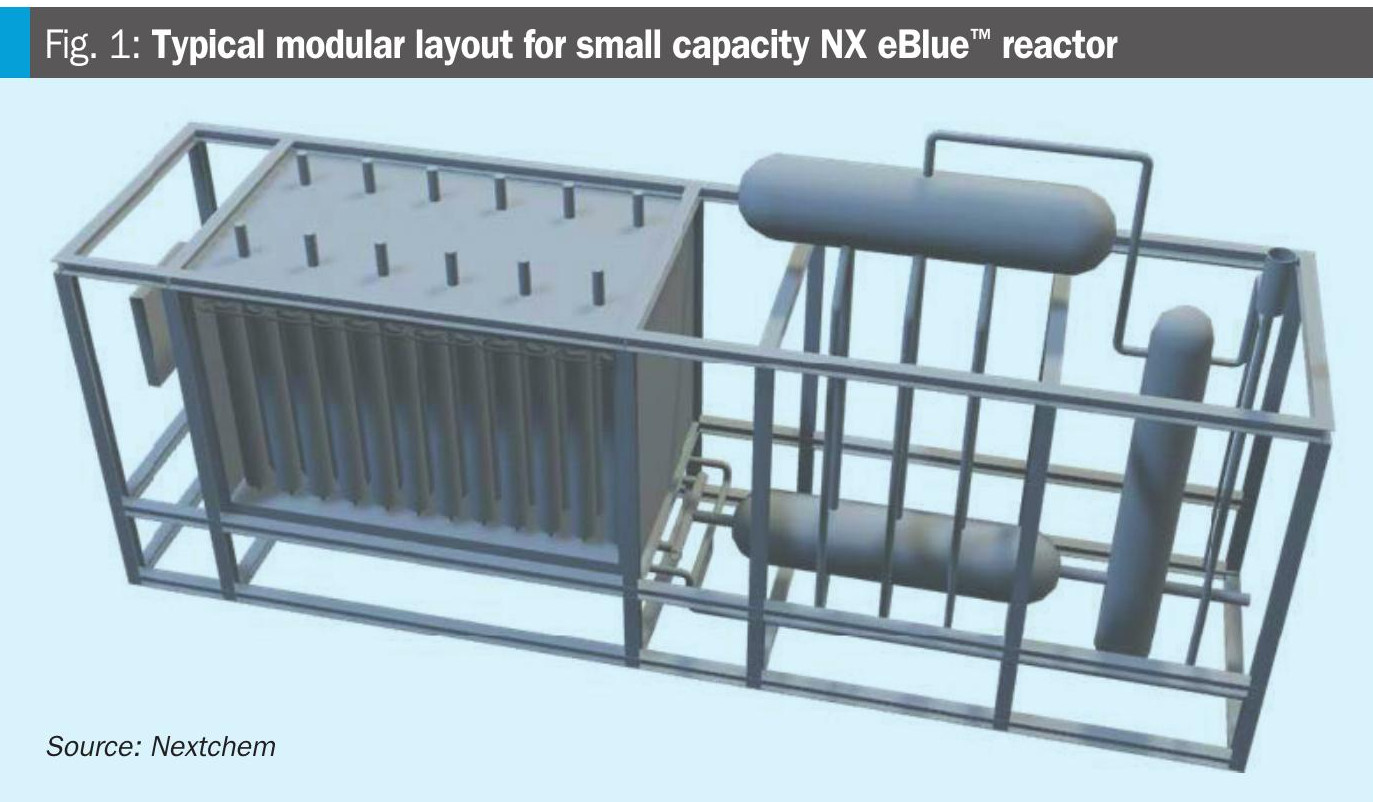
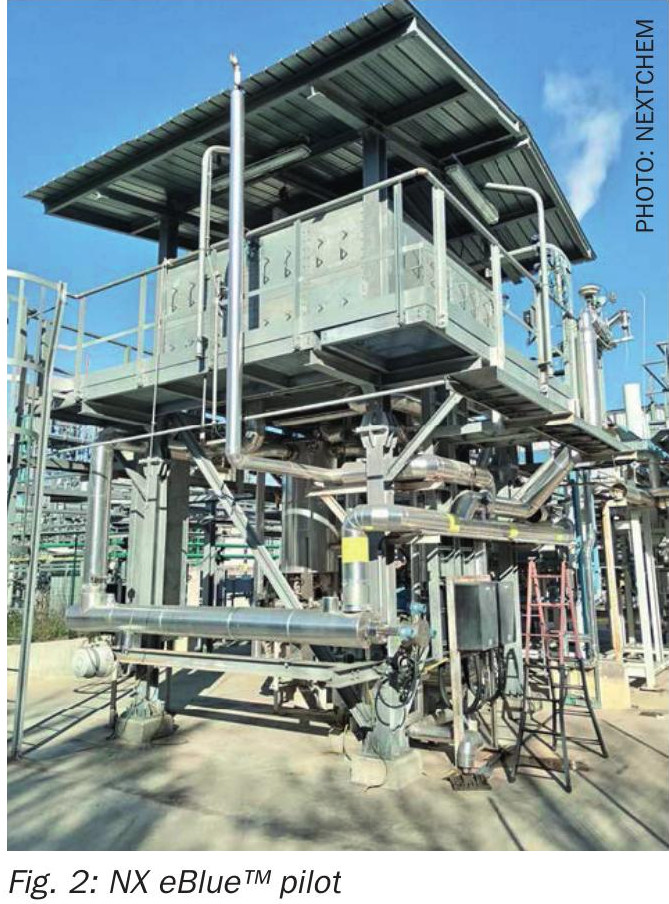
The pilot (Fig. 2) was in Chieti, Italy at “Parco Scientifico e Tecnologico d’Abruzzo” (PSTd’A) and is moving to the new NEXTCHEM Green Innovation District (GID) located in Rome, Italy.
Process design
The NX eBlue™ process integrates renewable power to enable low-carbon hydrogen production through an electrified reforming pathway (Fig. 3).
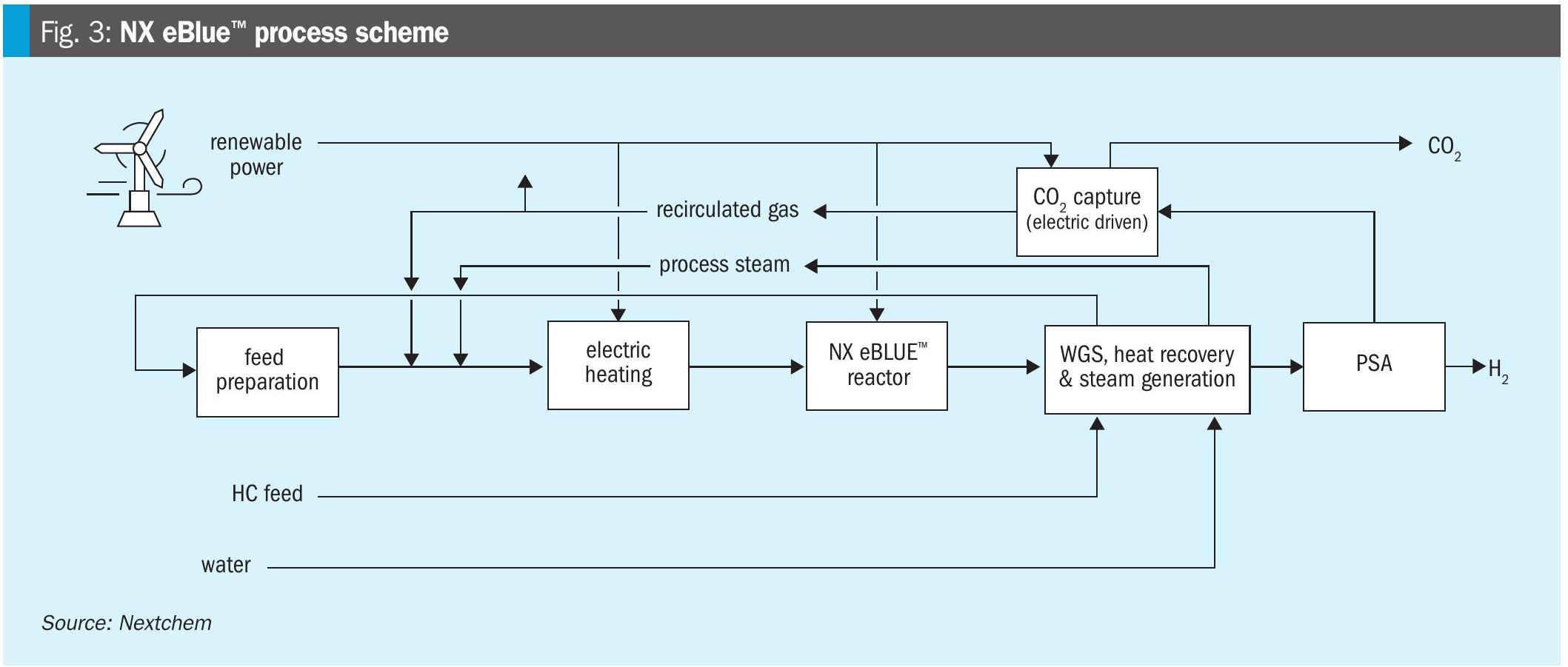
The system begins with heating and feed preparation, where hydrocarbon feed is conditioned (typically through desulphurisation).
Afterward, two separate mixing points – one handling recycle gas from the CCU and the other for steam – establish the ideal ratio of hydrocarbons to steam before they enter the steam methane reforming reactor.
Electric heating, powered by renewable energy, supplies the necessary thermal input to the subsequent section, reformer preheating and the NX eBlue™ reactor, which converts the feed into a hydrogen-rich gas stream.
Downstream, water-gas shift (WGS) unit(s), heat recovery and steam generation optimise hydrogen yield while recovering energy for process efficiency.
Next, a pressure swing adsorption (PSA) purifies the hydrogen product to high quality.
A CO2 capture unit, electrically driven, removes carbon dioxide from the PSA byproduct gas stream, ensuring near-zero emissions and supply. It should be emphasised that CO2 capture occurs on a pressurized gas stream, which has a high CO2 concentration, thereby facilitating the separation process and minimising associated costs.
Finally, the process incorporates gas recirculation and water recovery to maximise efficiency and sustainability, delivering hydrogen with minimal carbon footprint.
A designated outlet for flare discharge is provided to facilitate the management of inert components within the feedstock.
NX eBlue™ performance
NX eBlue™ technology offers notable performance benefits, especially concerning environmental impact and overall reduction in feedstock, as outlined below:
- It achieves a reduction in CO2 production ranging from 33% to 45% compared to any grey and blue steam methane reforming technologies, with nearly complete carbon capture efficiency exceeding 98%. The CO2 production is around 5.5 kg per H2 kg.
- Due to the process’s high efficiency and extensive use of renewable electricity throughout all stages, it achieves a natural gas consumption rate between 2.0 and 2.3 kg per kilogram of H2 produced.
- It operates using less than one-third of the renewable energy typically needed for electrolysis, allowing it to effectively complement green hydrogen facilities by ensuring continuous hydrogen production even when renewable power is limited. The renewable power consumption is around 16 ekWh per H2 kg produced.
- It has the potential to act as a CO2 negative technology when utilising biogenic feedstocks such as biogas – reflecting the removal of biogenic carbon from the atmosphere during capture and storage. It achieves an exceptionally high CO2 capture rate, ranging from 9 kg to 11 kg of CO2 per kg of H2, depending on the composition of the biogas.
Environmental impact of hydrogen production routes
In 2023, the International Energy Agency (IEA) published a comparative analysis of the emissions intensity of hydrogen production pathways (Fig. 4 – NX eBlue™ has been added for comparison). Coal gasification-based hydrogen without CCS shows the highest impact, with total emissions exceeding ~22 kg CO2-eq/kg H2, while even best-available CCS (98% on the flue gas) reduces this to values that range from 1.7 to 3.1kg CO2-eq/kg H2.
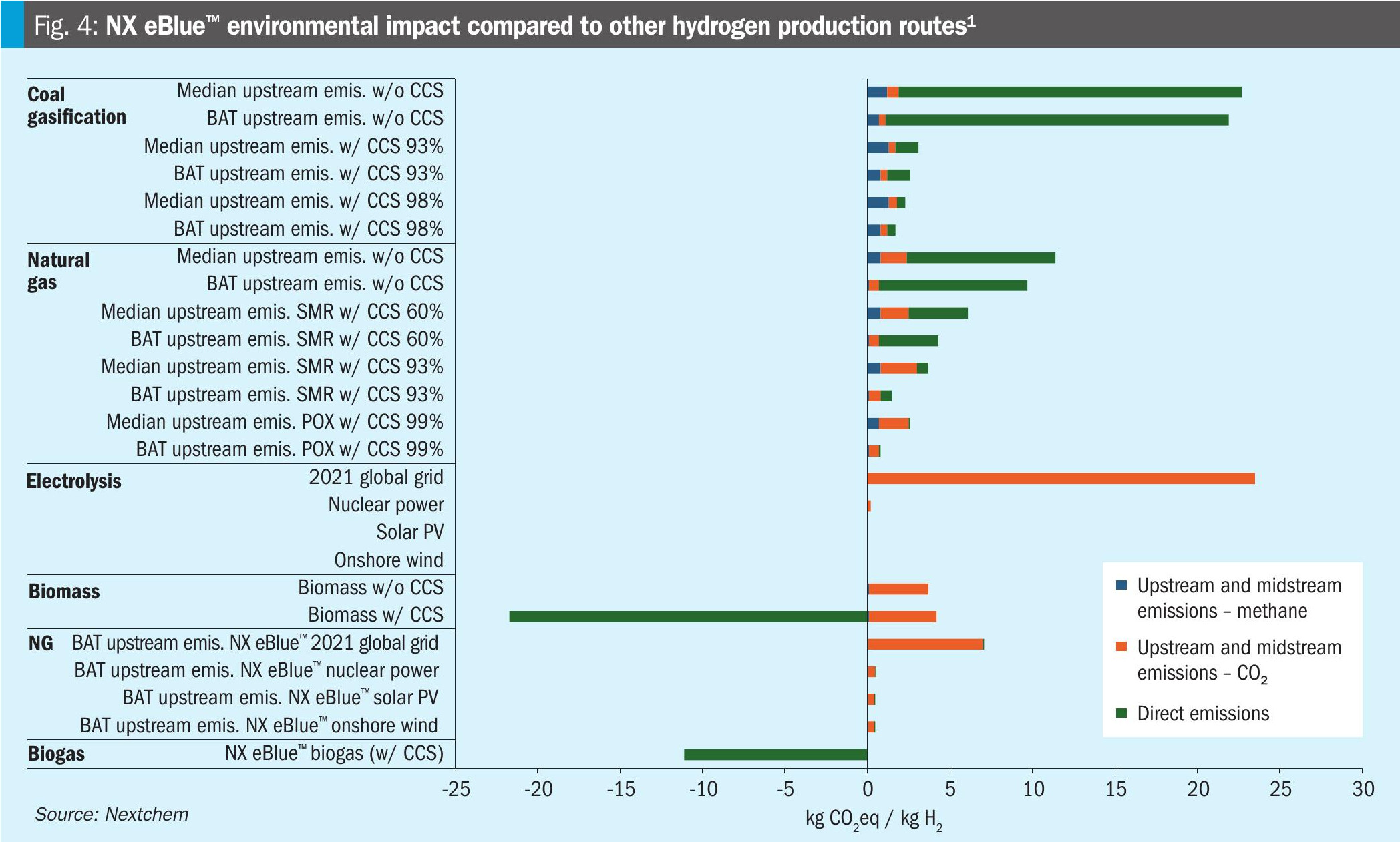
Natural gas SMR without CCS emits roughly 9–11.5 kg CO2-eq/kg H2 totally, dropping to ~1 kg at 99% capture on the flue gas.
Electrolysis powered by the 2021 global grid is highly carbon-intensive, reaching ~23 kg CO2-eq/kg H2, whereas renewable-powered electrolysis (solar PV or onshore wind) approaches near-zero direct emissions, with only minor upstream contributions (from 0.2 kg CO2-eq/kg H2 of nuclear power to ~0 kg CO2-eq/kg H2 of onshore wind and solar PV).
Biomass pathways are unique: without CCS, they emit ~3-4 kg CO2-eq/kg H2, but with CCS, they achieve negative emissions of approximately –17.5 kg CO2 -eq/kg H2, reflecting the removal of biogenic carbon from the atmosphere during capture and storage. This negative value indicates that the process not only offsets its own emissions but also actively reduces atmospheric CO, positioning biomass with CCS as a critical technology for net-negative hydrogen production and climate mitigation.
NX eBlue™ emission intensity
When powered by the 2021 global grid electricity mix, upstream CO2 emissions dominate, reaching totally around 7 kg CO2-eq/kg H2, while direct process emissions remain near zero due to >98% CO2 capture.
Switching to low-carbon electricity sources such as nuclear, solar PV, or onshore wind reduces upstream emissions dramatically to ~0.5 kg CO2-eq/kg H2 , positioning NX eBlue™ close to near-zero lifecycle emissions.
The most striking result appears for biogas-based operation with carbon capture and storage: direct emissions become strongly negative, around –11 kg CO2-eq/ kg H2, reflecting the removal of biogenic carbon from the atmosphere during capture and storage. This negative value confirms NX eBlue™’s potential as a net-negative hydrogen production route when integrated with renewable feedstocks and CCS, offering a critical pathway for deep decarbonisation and climate mitigation.
In summary, NX eBlue™ technology offers a low carbon alternative to conventional steam methane reforming for hydrogen production, supporting a sustainable low carbon hydrogen economy and contributing to the decarbonisation of hard-to-abate sectors.
Reference