Nitrogen+Syngas 400 Mar-Apr 2026
19 March 2026
Decarbonising the syngas value chain: New technological horizons in e-methanol and renewable production pathways
CASALE
Decarbonising the syngas value chain: New technological horizons in e-methanol and renewable production pathways
The strategic shift in the methanol market
Methanol has historically been one of the most vital building blocks of the chemical industry, essential for producing adhesives, synthetic fibres, and plastics. However, the current energy transition is fundamentally redefining its role from a simple chemical feedstock to a versatile low-carbon energy carrier and marine fuel. This shift is driven by urgent environmental regulations, such as the EU’s Refuel Maritime directive and the FuelEU Maritime regulation, which mandate a progressive reduction in the carbon intensity of fuels used by vessels. Methanol is uniquely positioned to meet these requirements because it is a clean-burning fuel that significantly reduces emissions of sulphur oxides (SOx), nitrogen oxides (NOx), and particulate matter compared to heavy fuel oil. Furthermore, its liquid state at ambient temperature and pressure provides significant operational advantages in terms of handling, storage, and transport compared to alternative options. To address this growing demand, industry leaders like Casale are advancing a diverse portfolio of production routes, including e-methanol, biomass gasification, and biomethane conversion, while providing the necessary technologies to decarbonise existing fossil-based assets.
The rise of e-Methanol: The eFLEX™ technology
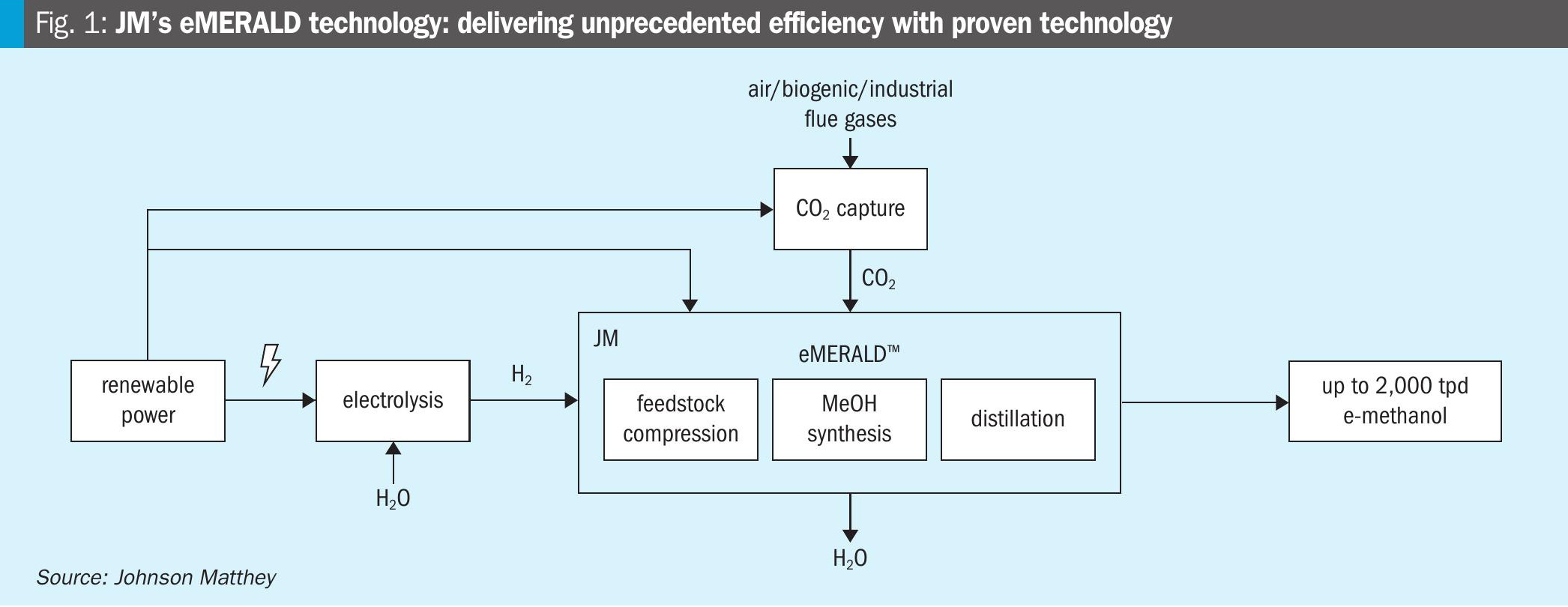
E-methanol represents a cornerstone of the Power-to-X strategy, enabling the storage of intermittent renewable energy in a stable liquid form. The process involves synthesising methanol from carbon dioxide, captured from industrial point sources, biogenic origins, or even direct air capture, and green hydrogen generated via water electrolysis powered by renewable electricity. Casale’s eFLEX™ technology is specifically engineered to optimise this synthesis loop for maximum efficiency. In a typical eFLEX™ configuration (Fig. 1), fresh green hydrogen from electrolysers is fed together with CO2 to methanol synthesis which typically operates efficiently above 70 bar pressure.
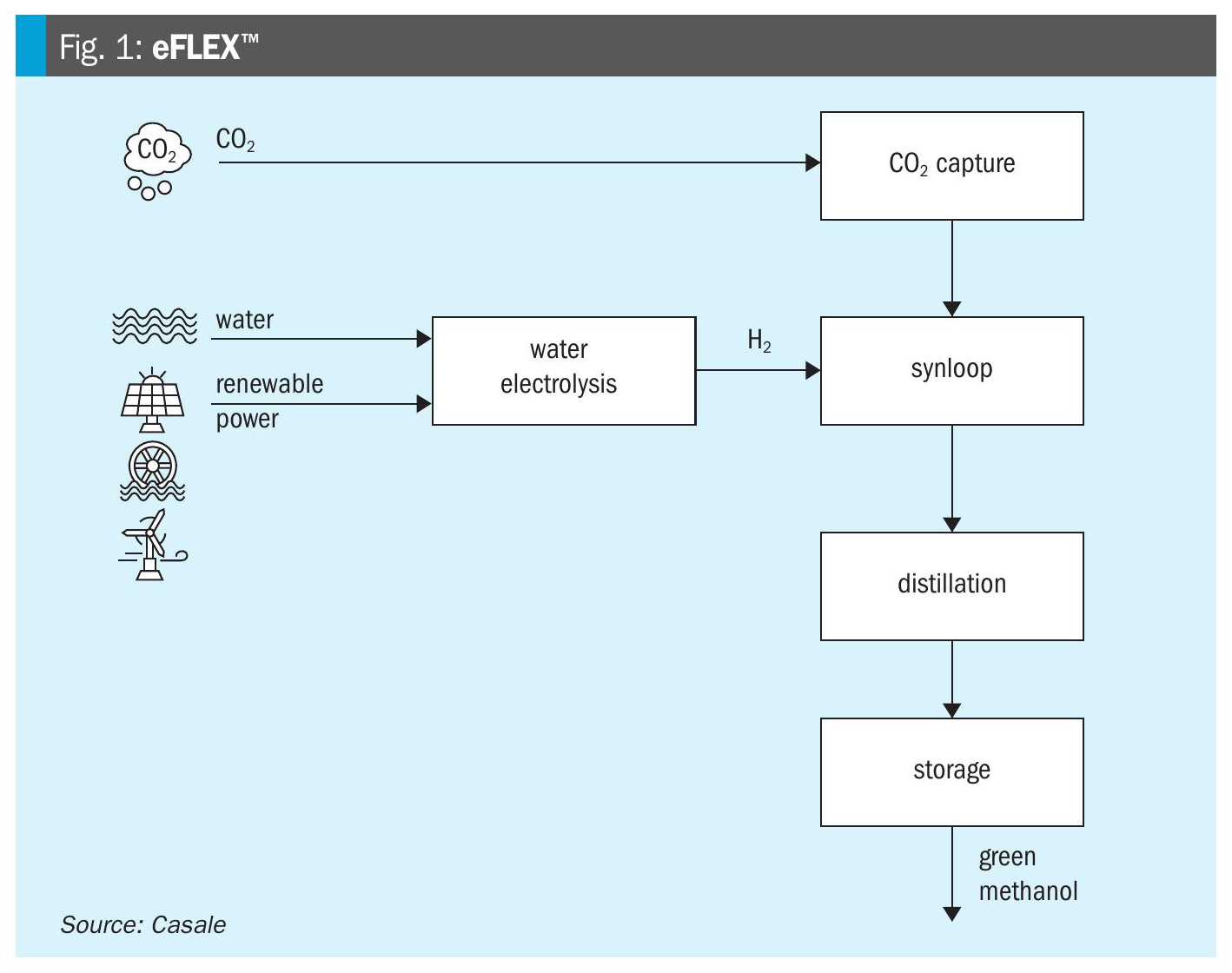
A key technical asset of this design is the use of the Isothermal Methanol Converter (ISOPLATE steam converter), which ensures superior temperature control and higher per-pass conversion rates. Methanol recovered from the reactor generally contains organic impurities and water and the eFLEX™ process layout provides a reliable and efficient distillation design suitable to achieve quality compliant with the international standards such as Grade AA and IMPCA.
The performance metrics for eFLEX™ plants are highly competitive, with singletrain capacities reaching up to 2,500 t/d thanks to the axial radial layout applied to the ISOPLATE steam converter. The specific electrical power consumption of the methanol plant itself is kept below 250 kW per ton of product, excluding the power required for upstream electrolysis and carbon capture. From an environmental perspective, the product carbon intensity is less than 28.2 gCO2e/MJ, compliant with RFNBO. To ensure the optimal performances, Casale collaborates closely with first-class catalyst manufacturers, tailoring the design based operational data focused on catalyst behaviour under the specific conditions of e-methanol synthesis.
Renewable methanol via biomass gasification: The BioFLEX™ pathway
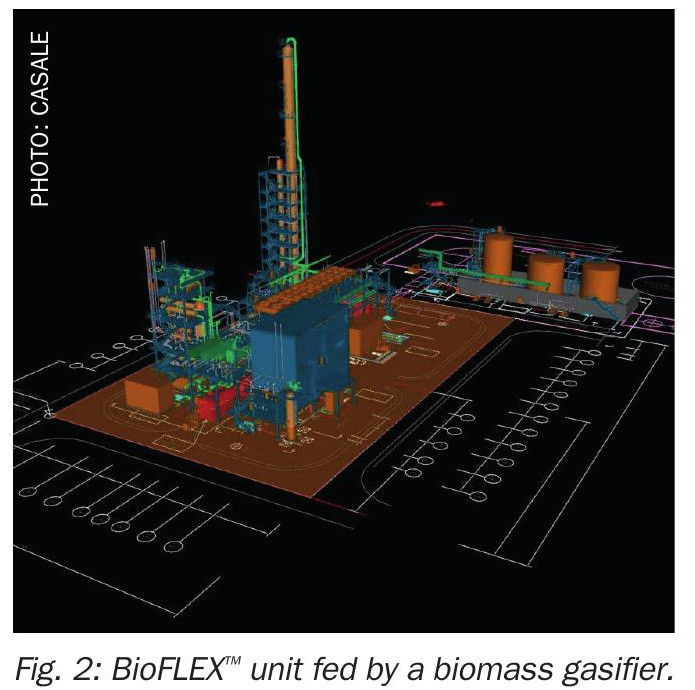
While e-methanol relies on captured CO2 and green electricity, the bio-methanol pathway leverages the carbon already stored in organic matter through gasification. Suitable feedstocks include a wide range of residues, such as agricultural by-products (straw, husks, manure), forestry waste (bark, offcuts), and industrial residues (sawmill, pulp and paper, etc). These materials would otherwise decompose or be burned, releasing greenhouse gases; instead, gasification transforms them into a synthesis gas (syngas) that is then catalytically converted into methanol. Casale’s BioFLEX™ technology (Fig. 2) is designed to address the unique challenges of biomass-derived syngas, which is often hydrogen deficient and contains high levels of carbon oxides and, in some cases, methane.
To optimise the syngas composition, Casale recommends installing a combination of steps downstream of the gasifier, including the addition of a sour water gas shift (WGS) section, equipped with Casale axial radial converter, and an acid gas removal (AGR) stage to balance the carbon oxides content and hydrogen. As an alternative or in combination with WGS and AGR, gH2 from electrolysers could be injected upstream methanol synthesis section to enhance plant throughput maximising the exploitation of the carbon contained in the biomasses.
For feedstocks that result in high methane concentrations in the raw syngas (exceeding 4-5 mol-%), the BioFLEX™ layout integrates an autothermal reforming section, based on Casale HEART™, within the methanol synthesis unit (Fig. 3). This configuration is a key feature of the Advanced Methanol Amsterdam project, designed for a capacity of 260 t/d.
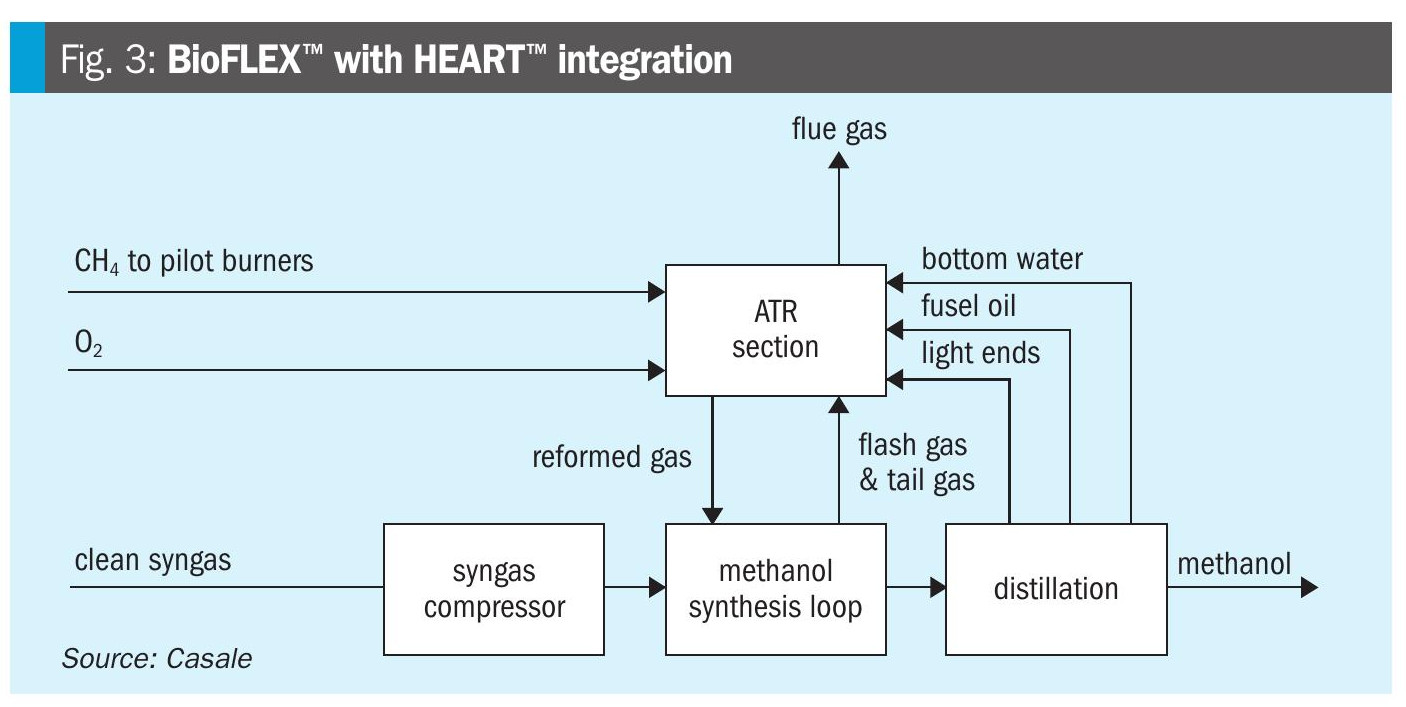
The integration of HEART™ significantly boosts overall carbon efficiency, achieving levels over 93%, while ensuring total CO2 equivalent emissions, associated to product, can be limited below 28.2 gCO2e/MJ. Compared to traditional fossil-based production, the methanol production through the BioFLEX™ route can achieve a decrease in specific CO2 emissions in the order of magnitude of 80%. This makes biomass gasification a commercially viable and environmentally credible solution for regions with high biomass availability.
Methanol from biogas and biomethane: Optimised layouts
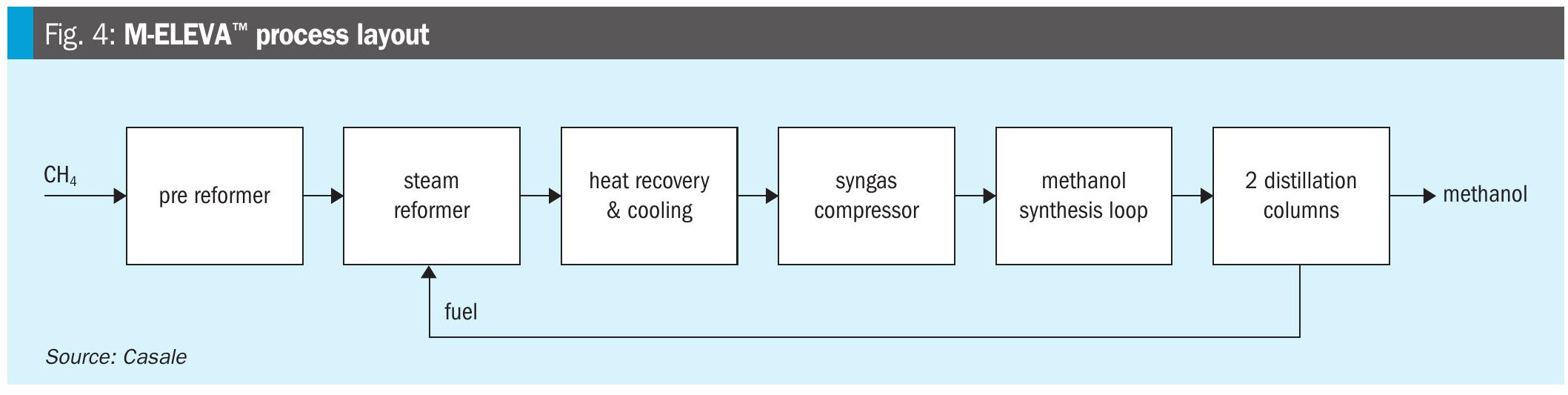
Utilising biogas or renewable natural gas (rNG) as a feedstock represents another critical pathway for sustainable methanol production, allowing producers to leverage existing gas-based technologies with renewable inputs. Casale offers two proven process layouts for this sector: M-ELEVA™ and Syn-POWER-M™, both developed for plant fed by fossil natural gas and with excellent running references; both have been customised and optimised for the challenges linked to the sustainable methanol market. The M-ELEVA™ layout (Fig. 4) is focused on minimising capital expenditure (capex) through an efficient process involving a proprietary axial radial pre-reformer, steam methane reformer (SMR), and an ISOPLATE™ gas converter. Distillation is generally based on two columns layout. This technology is applicable also in case of biogas feedstock with exceptionally high CO2 content.
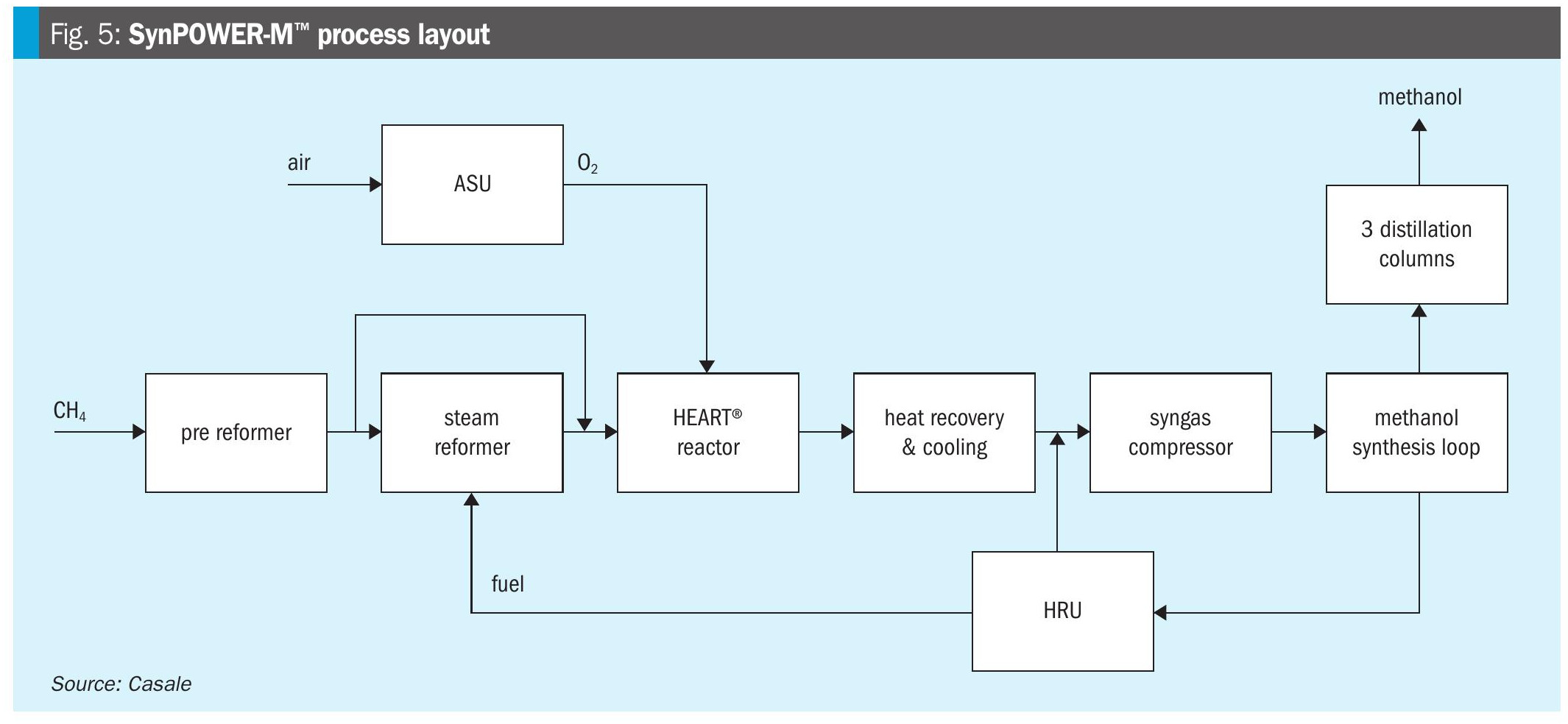
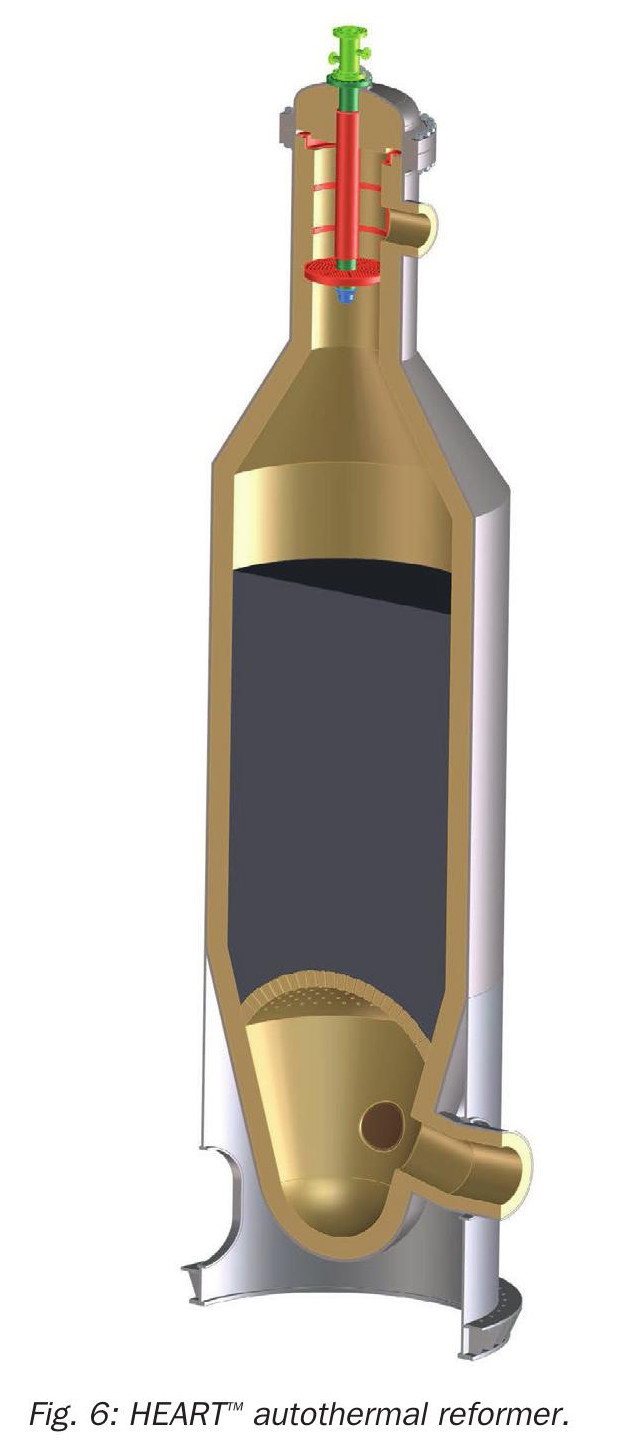
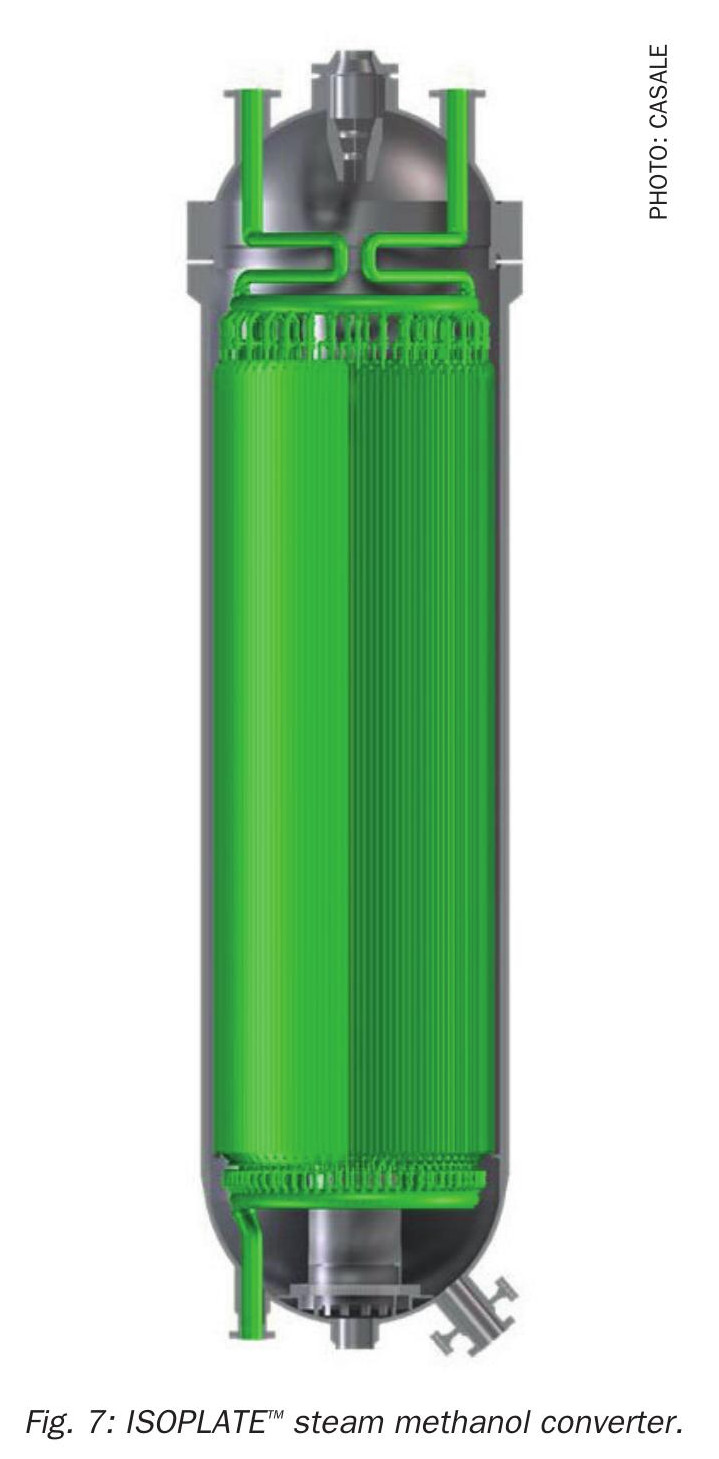
Syn-POWER-M™ layout (Fig. 5) is designed to minimise operating expenditure (opex) and direct CO2 emissions. This layout utilises a combined reforming scheme, consisting of a proprietary axial radial pre-reformer, SMR and autothermal reformer HEART™ (Fig. 6) to achieve high efficiency and low methane slip. The synthesis section is characterised by the ISOPLATE™ steam converter (Fig. 7) while the distillation layout is based on three columns for maximising energy savings.
A performance comparison highlights the advantages of this approach: while a standard SMR-based M-ELEVA™ plant has a specific natural gas consumption below 7.6 Gcal/t, the Syn-POWER-M™ design reduces this by 10% to 7.0 Gcal/t. More importantly, the Syn-POWER-M™ configuration leads to a 50% decrease in specific CO2 emissions at SMR stack and an 80% reduction in demineralised water consumption compared to pure SMR designs. In view of the design carried out for a project in South East Asia, the Syn-POWER-M™ layout demonstrated its ability to produce renewable methanol with a carbon footprint as low as 32.9 g CO2 eq/MJ. The design is suitable to reach carbon intensity, associated to methanol product, below the current thresholds set by the IMO, RTFO and RED III for biofuels.
Decarbonising fossil-based infrastructure through advanced revamping
Despite the growth of greenfield renewable projects, the existing global fleet of natural gas-based methanol plants remains a significant contributor to carbon emissions, releasing approximately 200 million tonnes of CO2 annually. For many producers, complete asset replacement is not economically feasible; therefore, a proper revamping strategy is the most sustainable route to improve margins while meeting tightening carbon compliance costs and taxes. Casale specialises in these complex retrofits, offering a range of technologies under the RENOVO-M™ family to enhance capacity and performance while simultaneously reducing emissions.
Revamping typically targets the syngas generation section through the implementation of pre-reforming, autothermal reforming (HEART™), or partial oxidation (POX-ART™). The installation of a POX-ART™ reactor in parallel to an existing primary reformer is a particularly effective strategy. By switching a portion of the production to oxygen-blown reforming, a single POX-ART™ based unit can increase total methanol production by up to 30% while reducing natural gas consumption by 5-15%. In a project implemented by Casale, a POX-ART™ based revamp resulted in a 12.7% increase in capacity, a 6% decrease in specific natural gas consumption, and a nearly 20% reduction in specific CO2 emissions. Furthermore, retrofitting older adiabatic converters with Casale’s proprietary plate-cooled, ISOPLATE™ gas internals, is essential for maximising carbon efficiency in the synthesis section. This “in situ” retrofit allows the loop to process higher make-up gas flows with superior flexibility, ensuring that decarbonisation targets are achieved alongside economic growth.
To further expand the range of decarbonisation strategies, a highly innovative revamping option involves the hybrid integration of e-methanol production elements into existing natural gas-based facilities. By implementing CO2 injection either upstream or downstream of the SMR and combining it with green hydrogen generated through water electrolysis, plants can achieve a significant transition toward low carbon methanol production. This approach allows producers to leverage their existing fossil-based infrastructure while progressively incorporating renewable feedstocks, offering a flexible and scalable pathway to meet evolving sustainability targets without the need for a complete plant replacement.
The engine of performance: The Isothermal Methanol Converter
At the heart of both new greenfield units and brownfield revamps lies the technology of the synthesis reactor. Casale’s history in converter design has evolved through three generations: from the early tube-cooled designs (1928-1979) to adiabatic reactors, and finally to the modern plate-cooled Isothermal Methanol Converters introduced in 2000 which, currently, have evolved into the ISOPLATE™ family (ISOPLATE™ gas and ISOPLATE™ steam). The ISOPLATE™’s distinctive feature is the use of heat transfer plates immersed directly in the catalyst bed, which provides several critical advantages over traditional designs. Because the plates do not require a tubesheet, the mechanical limitations on converter size are removed, allowing for significantly larger catalyst volumes and higher capacities within a single vessel. The ISOPLATE™ design utilises an axial-radial flow design to minimise pressure drop while maximising the features of the plate-cooled system. Currently, over 25 isothermal reactors employing the ISOPLATE™ design are in operation; the first units entered service in 2002.
For BioFLEX™ and eFLEX™ units, Casale typically employs a “steam-raising” (ISOPLATE™ steam) design, where boiler feed water (BFW) is used as the cooling medium. This high degree of heat integration allows for the recovery of reaction heat as medium-pressure steam, which can then be used to drive compressors or provide thermal energy for the distillation section, eliminating the need for external steam imports. For ease of maintenance, Casale has also implemented a “full opening” design, where the entire pre-assembled internal package can be lifted out of the pressure vessel as a single piece, greatly simplifying repairs or catalyst replacement.
Conclusion: A multi-pathway future for sustainable methanol
The methanol industry is currently at a turning point. What was once purely a chemical commodity is now a critical tool for global decarbonisation, particularly in the hard-to-abate maritime sector. As demonstrated by the eFLEX™ and BioFLEX™ technologies, and the successful application of the RENOVO-M™ revamping approach, the technical solutions required to transition toward a low-carbon methanol economy are already mature and operational. The flexibility to produce methanol from diverse feedstocks, including urban waste, agricultural residues, captured CO2, and renewable power, is its greatest strength, allowing for regional optimisation and energy resilience.
However, the transition faces challenges that must be addressed through coordinated efforts. These include securing affordable sustainable feedstocks, ensuring the availability of low-carbon electricity, and the need for clear regulatory frameworks and carbon pricing to bridge the cost gap with fossil fuels. As technology continues to improve through advancements in catalyst performance and reactor design, and as the global infrastructure for methanol bunkering expands, sustainable methanol is poised to become a central feature of the global energy system. The path forward is clear: a multi-pathway approach that combines innovation in new plants with the strategic decarbonisation of existing assets is the most effective way to build a cleaner and more sustainable planet.