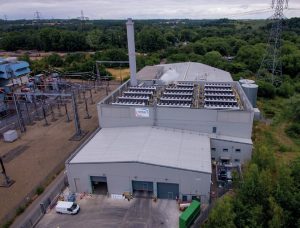
Challenges for gasification technology
Gasification, particularly of waste and biomass, is seeing interest as sustainable sources of syngas. But there are both technical and commercial challenges to wider adoption.


Gasification, particularly of waste and biomass, is seeing interest as sustainable sources of syngas. But there are both technical and commercial challenges to wider adoption.
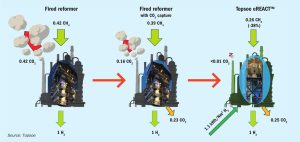
The world’s most common syngas production method remains steam methane reforming, a process which has a substantial CO2 footprint as the necessary reaction heat is supplied by combustion of hydrocarbons. Topsoe’s eREACT™ technology allows for the first-of-its-kind electrification of the traditional SMR process. The reaction heat for eREACT™ is instead generated directly by (renewable) electricity, thereby eliminating the flue gas altogether. Having gone through scale-up from bench scale to industrially relevant pilot scale the technology is now ready for industrial application.
Fulcrum BioEnergy says that it has successfully produced low-carbon synthetic crude oil using landfill waste as a feedstock at its Sierra BioFuels Plant, the world’s first commercial-scale landfill waste-to-fuels plant. Located outside of Reno, Nevada, Sierra will produce approximately 11 million gallons of renewable, low-carbon transportation fuels each year from approximately 175,000 t/a of landfill waste.

The ERCOSPLAN Group of Companies held an international potash symposium on 6-8 October 2022 at the Messe Erfurt Congress Centre in Erfurt, the capital of the German state of Thuringia. The overall theme of this year’s event was: the exploration, extraction and processing of mineral salts – as well as the creation and use of underground cavities in the saline host rock.
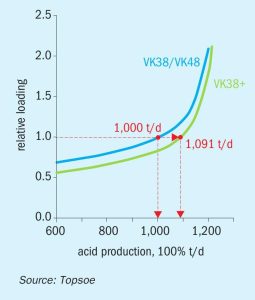
With energy prices skyrocketing, sulphuric acid plant operators face a heightened challenge to improve plant efficiency. Martin Alvarez from Topsoe discusses how the company’s new high-activity catalyst, VK38+, can help acid plants maximise energy efficiency to secure important economic benefits while simultaneously reducing their carbon footprint.
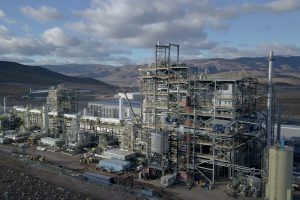
Fischer-Tropsch technology has long offered alternative production routes to synthetic fuels, but has struggled to make a use case outside of some niche applications. Could the greening of the chemical industry offer another way forward for the technology?
Maersk has ordered six more 17,000 teu (twenty-foot equivalent unit) container ships capable of running on methanol from Hyundai Heavy Industries (HHI). The order brings Maersk’s total order book of dual-fuel vessels capable of running on methanol to 19. Maersk said the new ships will replace existing tonnage in its fleet when they’re delivered in 2025. When all 19 vessels on order join the fleet and replace older tonnage, CO2 savings will be around 2.3 million t/a, according to Maersk. Maersk has committed itself to renewable methanol as a pathway to zero emissions shipping. Its first vessels are due for delivery from Q1 2024. The company has also signed several green methanol fuel supply agreements and joined a partnership to create the first e-methanol plant in Southeast Asia. Maersk is also working with Japanese trading house Mitsui and the American Bureau of Shipping (ABS), to jointly conduct a detailed feasibility study of methanol bunkering logistics in Singapore.
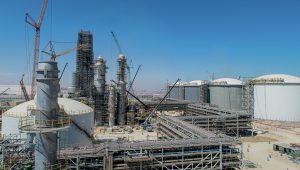
Saudi Arabia’s Ras Al-Khair Industrial City has signed an industrial land agreement with local firm Gulf Copper to develop a copper smelting and casting plant at an investment $319.30 million. The project would be developed on a plot spanning more than 250,000 square metres in the industrial city. No construction timelines were given. The Saudi government has previously signed agreements with Trafigura and Saudi-based Modern Mineral Holding to develop a 400,000 t/a copper smelter at Ras Al Khair which would also include 200,000 t/a of zinc and 55,000 t/a of lead smelter capacity at a projected cost of $2.8 billion.
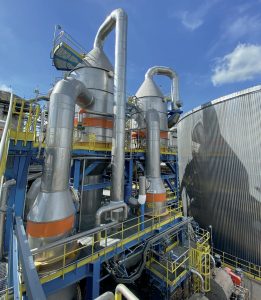
Effective and efficient wastewater management is a vital task that is being aided by the introduction of new treatment technologies. The recovery of economically-valuable nutrients from wastewaters is another priority.
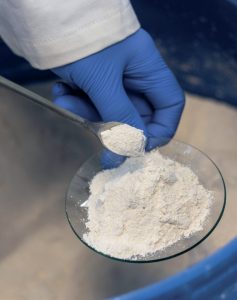
Reclaiming phosphorus from sewage sludge ash holds great potential for the fertilizer industry – by helping to reduce dependency on global supply chains, ensuring resilience and even raising quality. But successful phosphorus recovery largely depends on the process used, as EasyMining’s Anna Lundbom, Sara Stiernström and Christian Kabbe explain.