Ukraine’s fertilizer market abides
Ukraine’s resilient fertilizer market has undergone an import-led revival following a calamitous collapse in consumption in 2022.


Ukraine’s resilient fertilizer market has undergone an import-led revival following a calamitous collapse in consumption in 2022.

Smelter outages and tight concentrate markets ease an oversupplied market.
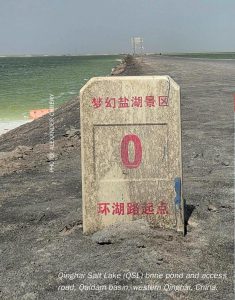
In this CRU Insight, Alexander Chreky reports on China’s potash industry – and reviews the country's international potash investments.
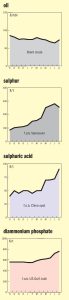
The global sulphur market registered price increases during August as a result of demand in Asia and North Africa, while supply has tightened due to limited supply from the FSU and Saudi Arabia, as well as logistical constraints in both Iranian ports and railway capacity to Black Sea ports.

In addition to the above deal with Morocco, the Bangladesh Agricultural Development Corporation (BADC), part of the Bangladesh Ministry of Agriculture, has signed a contract to import both triple superphosphate (TSP) and di-ammonium phosphate (DAP) fertilisers from Malaysia. The agreement was signed on 17 July 2025 in Kuala Lumpur by Mohammed Ruhul Amin Khan, chairman of BADC, and representatives of Selcra Niaga. Under the contract, BADC will import 280,000 tonnes of TSP and 280,000 tonnes of DAP from Malaysia. According to BADC officials, this landmark deal is expected to play a crucial role in ensuring the timely delivery of non-urea fertilisers to farmers. The move aims to strengthen Bangladesh's efforts toward building an efficient and sustainable agricultural system.
South America has become the largest importing region for nitrogen fertilizers, with Brazil overtaking India as the world’s largest urea importer. While there have been attempts to use local gas to develop a domestic nitrogen industry, these have faced challenges on a number of fronts.

At the end of this year, the European Union’s Carbon Border Adjustment Mechanism (CBAM) will move from its transitional phase into its ‘definitive’ phase, whereby the carbon costs of goods entering the EU will need to be priced in. CBAM requires suppliers to calculate the carbon emissions of their fertilizer (and other, e.g. steel) products, including indirect emissions, for example from electricity consumed in the process, and emissions of precursor or raw materials. They will then need to purchase CBAM certificates to cover embedded emissions above the established free allowance benchmark rates determined by the European Commission: 1.57 tonnes CO2e/tonne ammonia and 0.23 tCO2e/t nitric acid.
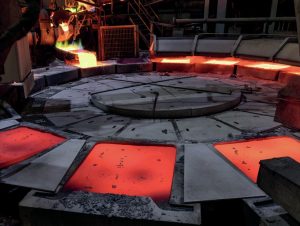
CRU's analyst Viviana Alvarado discusses the effect of smelter outages and maintenance, a copper concentrate shortage, and Asian capacity ramp ups, on sulphuric acid supply and prices.
Abu Dhabi-based nitrogen producer and distributor Fertiglobe says that it is acquiring the distribution assets of Wengfu Australia Pty Ltd. through an asset sale and purchase agreement, expanding its downstream reach and enhancing access to supplying Australian customers. Fertiglobe currently supplies around 600,000 t/a of urea to Australia, with the potential to grow supply volumes […]

India India has imposed five-year anti-dumping duties on six Chinese imports, including insoluble sulphur, mainly used in the vulcanisation of rubber. The move follows an investigation by India’s Directorate General of Trade Remedies (DGTR) last year, following a complaint by Oriental Carbon and Chemicals in March 2024. The period covered by the investigation was from 1st Jan 2023 to 31st Dec 2023, while the injury investigation period ran from April 2020 to 31st Dec 2023. DGTR made a determination that Chinese exporters had been selling the six products at unfairly low prices, adversely affecting the profitability of Indian producers. DGTR says that the duties it has imposed are “aligned with WTO norms” and aim to protect domestic industries from unfair trade practices and address the growing trade imbalance with China. According to the trade authority, the market share of the countries subject to duties “has been significantly increasing” while local Indian industry’s capacities are “lying idle” amid growing demand. n