
The year that went viral
A look back at some of the major events of 2020 for the sulphur and sulphuric acid industries, as well as a look forward as to how 2021 might look.

A look back at some of the major events of 2020 for the sulphur and sulphuric acid industries, as well as a look forward as to how 2021 might look.
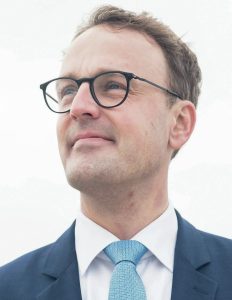
ClimeCo says that it has promoted Dr. Scott Subler to Chief Science Officer (CSO). Subler has made an enduring mark on the carbon offset world over the last 15 years. From overseeing the first US offset delivery from a dairy farm methane capture project to chairing the Offsets Committee for the Chicago Climate Exchange, Subler has been a major influence on many carbon offset methodologies that are used today. His work investigating different types of lagoon cover systems for dairy and swine farms in different climates continues to impact new methane capture installations, and his advocacy for organic waste composting projects resulted in the protocol used today at the Climate Action Reserve.
In early October Tesla held a ‘battery day’ event at its headquarters in Fremont, California. Speaking at the event, company founder and CEO Elon Musk outlined his vision for the electric car industry over the coming decades, and spoke particularly to his ambitions for the nickel industry. He had already called for more mining of nickel earlier in the year, and has said that Tesla is developing cathodes that will contain higher nickel and no cobalt. The latter comes after a lawsuit against Tesla and several other high-tech US firms for allegedly supporting human rights violations by buying cobalt from the Democratic Republic of Congo. Musk echoed the potential ‘reputational risk’ for the nickel market and called for more sustainable nickel production, dangling the prospect of a “giant contract” with any miners that could produce nickel in an “environmentally sensitive way.” Tesla is reportedly in discussions with Vale and BHP as well as the Indonesian government concerning potential investments in nickel production.
Illinois-headquartered CF Industries has made a long-term commitment to low-carbon ammonia production and net-zero emissions.
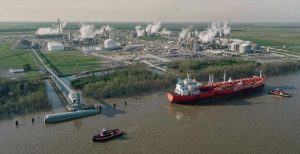
The US Environmental Protection Agency (EPA) and the US Department of Agriculture (USDA) have announced the ‘Next Gen Fertilizer Challenge’, a joint EPA-USDA partnership and competition to advance agricultural sustainability in the United States. The competition includes two challenges that seek proposals for new and existing fertilizer technologies to maintain or improve crop yields while reducing the impacts of fertilizers on the environment.
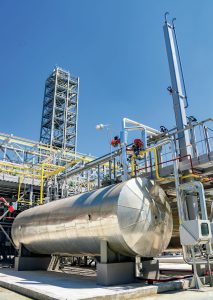
A few years ago DME production from methanol gave a major boost to world methanol demand, with DME being used as a blendstock for LPG. However, demand plateaued and DME has not had the takeoff that its proponents feel it should have. Could new renewable DME processes give it the boost it needs?

A look back at some of the major events of 2020 for the nitrogen and syngas-based industries, as well as a look forward as to how 2021 might look.
Recent protests in Belarus have triggered a wave of share price volatility, London’s Financial Times reported on 18th August.
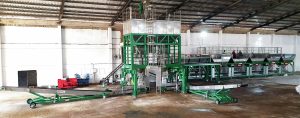
The last three years has seen a renaissance in fertilizer production and blending in sub-Saharan Africa. We highlight the expansion of capacity in Nigeria and other countries within the region.
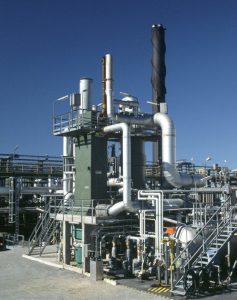
Haldor Topsoe and Comprimo® have announced a global strategic alliance to jointly license the TopClaus sulphur removal and recovery technology. TopClaus combines Topsoe’s energy efficient wet sulphuric acid (WSA) process with the industry-standard Claus process, enabling plant operators to handle acid gases and achieve sulphur removal efficiencies of above 99.9%. The Claus part of the unit recovers elemental sulphur from acid gases, and the tail gases from the Claus unit are then treated in the WSA unit, where the remaining sulphur compounds are converted into sulphuric acid.