
Fertilizer plant revamping: technology & projects
The refurbishment and modernisation of fertilizer plants offers the opportunity to reduce operating costs, raise production capacity, improve energy efficiency and cut emissions.

The refurbishment and modernisation of fertilizer plants offers the opportunity to reduce operating costs, raise production capacity, improve energy efficiency and cut emissions.

The phosphate fertilizer industry is turning to production methods that are able to consume low-grade phosphate rock and/ or generate pure gypsum as a by-product. Gypsum-free processes, and technologies that capture phosphorus from waste streams, are also on the rise.
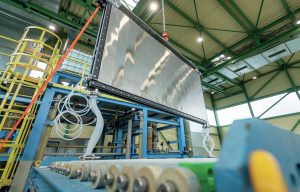
By using modular construction, operational modelling and digital plant control, thyssenkrupp Uhde can offer customers fast-build, capital efficient green ammonia plants. Dr Christian Renk and Dr Klaus Nölker explain the company’s innovative approach to plant construction, design and control.
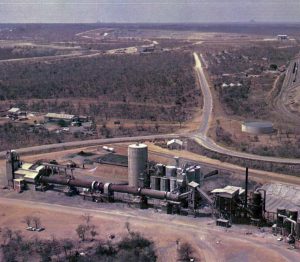
The economic conversion of phosphogypsum waste into a valuable product has been pursued for decades. Although phosphogypsum is still generally disposed of as waste, industry attitudes are changing and greater use of phosphogypsum will be expected in a circular economy.
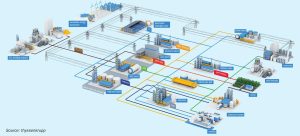
Erika Niino-Esser of thyssenkrupp Industrial Solutions explains the importance of thyssenkrupp’s technologies for sustainable hydrogen and ammonia value chains in the global energy transition, and how they are contributing to a climate-neutral world. Several novel green hydrogen projects are also highlighted.

CRU’s Nitrogen + Syngas conference returned to a face to face meeting for the first time in two years at the end of March this year.
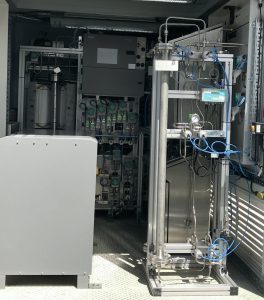
Ammonia synthesis catalysts have seen major improvements over the last 100 years, and they are highly optimised with respect to activity, thermal stability, and poisoning resistance. Improving such catalysts even further requires a deep understanding of their structure and the impact of different parameters on performance. Clariant, Johnson Matthey and Topsoe report on their studies and developments in ammonia synthesis catalysts.

The CRU Nitrogen + Syngas Conference returns to Berlin for a live event from 28-30 March 2022. The conference will be run as a hybrid event giving participants the option to attend live in-person or online via the virtual platform.
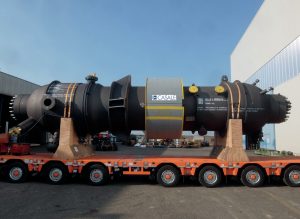
Improvements to equipment and materials are driving greater operational performance and higher efficiencies at urea plants. Recent advances are reviewed.

Efficient size preparation and ore transport are key prerequisites for successful potash and phosphate production. We highlight the range of equipment options.