How to solve stripper efficiency issues (part 5)
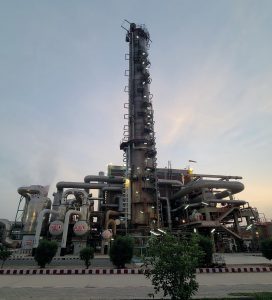
In part 5 of this series on stripper efficiency issues we conclude the discussion with a focus on fouling inside stripper tubes.
Days 2 and 3 of the CRU’s 38th Nitrogen+Syngas 2025 Expoconference turned to the technical sessions, organised in three parallel streams covering: green ammonia technology, nitric acid and ammonium nitrate, plant operations and reliability, urea technology, digitalisation, carbon capture, emissions reduction and sustainable fertilizer production, and fertilizer finishing.
Based on 16 years of experience, Muhammad Nabeel Shakir of Fatima Fertilizer Company outlines a methodology to achieve optimum performance of the PGM catalyst and catchment system in nitric acid plants.
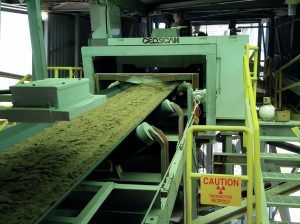
Sophisticated control of phosphates production is now possible thanks to the availability of real-time process analysers. The emergence of laboratory robots is also improving process efficiency and delivering cost savings.
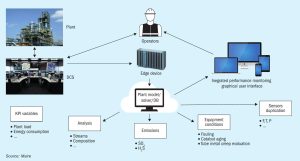
The pursuit of operational excellence requires continuous process monitoring, together with qualified analysis of the collected data. The Digital Process Monitor (DPM) provides a process digital twin which consists of an accurate process plant model that incorporates the licensor’s knowledge and expertise in sulphur recovery technology, thereby providing continuous insights into plant performance. This article provides an overview of the DPM features focusing on the related benefits in terms of overall operational improvements and plant efficiency for the sulphur recovery unit.
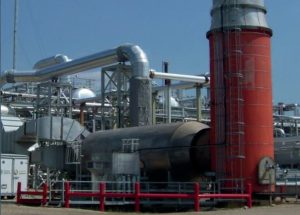
Sulphur Experts outline the steps required to determine optimised SRU incinerator operating conditions. Although a proper determination of the ideal SRU incinerator operating conditions for any given facility is complicated by a combination of inconsistent permitting standards and poor understanding of the role of the SRU incinerator, the payoff for incinerator optimisation is a significant decrease in natural gas usage with corresponding savings in operating costs, a decrease in CO2 emissions, and a simultaneous reduction in NOx and SO3 emissions.
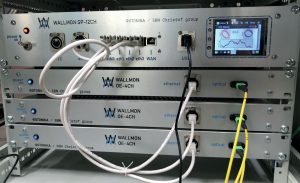
Christof Group SBN presents groundbreaking sensor technology for accurate and reliable continuous monitoring of individual heat exchanger tube wall thickness in high pressure, high temperature industrial conditions.
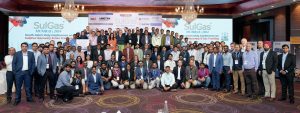
We report on the key highlights of the annual SulGas® conference, organised by Three Ten Initiative Technologies LLP,, which took place in Mumbai, India, from January 31 to February 2, 2024.
WIKA discusses a novel and easy way to monitor the shell temperature of the Claus thermal reactor using proven technology and highlights the benefits a purge-less thermocouple system for high temperature measurement.
In 2019 Topsoe launched its ClearView™ technology for WSA and SNOx sulphuric acid plants. This article focuses on the results and learnings from the first implementation of ClearView™ at a new WSA plant at Anglo American Platinum’s Polokwane smelter in South Africa.