
Steam and power balance in low-carbon ammonia and methanol plants
KPI explains why steam and power balances must be assessed early to ensure low-carbon ammonia and methanol project feasibility.


KPI explains why steam and power balances must be assessed early to ensure low-carbon ammonia and methanol project feasibility.
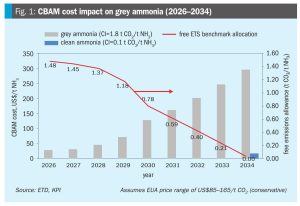
VK Arora of Kinetics Process Improvements (KPI) compares the delivered-cost competitiveness of blue ammonia from regions including the US Gulf Coast, Western Canada, Atlantic Canada, the Middle East, Indonesia, and Malaysia into Japan, the European Union, and South Korea.
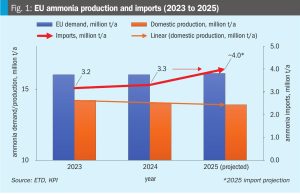
VK Arora of Kinetics Process Improvements, Inc. (KPI) looks at how – while carbon border taxes may reshape ammonia trade – the economics of hydrogen and electricity will ultimately determine the long-term competitiveness of European production.
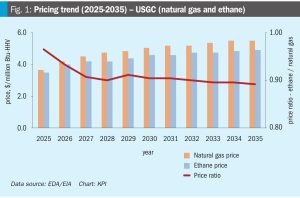
In this study Kinetics Process Improvements (KPI) demonstrates that controlled ethane co-feeding combined with intermediate methanol condensation in the synthesis loop provides a practical, low capital, low-risk revamp strategy to increase ATR methanol plant capacity by approximately 5% while remaining fully within existing equipment, metallurgical, and compression limits.
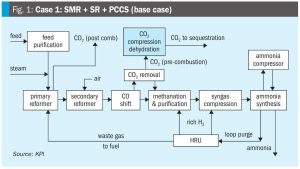
KPI evaluates deep decarbonisation pathways for a new build ammonia plant of 3,500 t/d on the US Gulf Coast. Eight technology configurations are compared with results providing a framework for technology selection, balancing emissions reduction, process integration, and indicative economics.
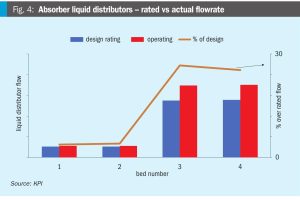
KPI describes the systematic revamp of a Benfield CO2 removal unit at a high-throughput ammonia plant, emphasising simulation-driven diagnostics and customised engineering solutions.
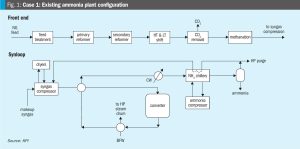
VK Arora of KPI examines the technical and operational challenges of decarbonising legacy and new ammonia plants, drawing on a European case study of full-scale conversion supported by robust process and integration design. It also presents three US case studies exploring partial strategies, such as green hydrogen blending and oxygen enrichment, to reduce CO2 emissions and improve throughput. Together, these examples highlight a phased, cost-effective approach to decarbonisation, with blue hydrogen serving as a near-term transitional feedstock.