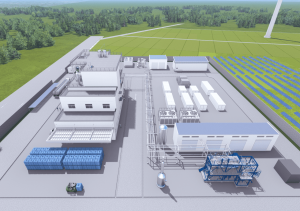
Tokyo pilots green hydrogen-to-fertilizer link
Tsubame BHB has been picked by the Tokyo Metropolitan Government (TMG) for a one‑year pilot to turn Tokyo‑produced green hydrogen into nitrogen fertilizers.


Tsubame BHB has been picked by the Tokyo Metropolitan Government (TMG) for a one‑year pilot to turn Tokyo‑produced green hydrogen into nitrogen fertilizers.

QatarEnergy has announced its decision to build a new, world-scale urea production complex that will more than double Qatar’s urea production. The project is aiming to construct three ammonia production lines which will supply four new world-scale urea production trains in Mesaieed Industrial City. Total capacity for the new complex is projected to be 6.4 million t/a, more than doubling Qatar’s annual urea production from about 6 million tons per annum currently to 12.4 million tons per annum. Production from the project’s first new urea train is expected before the end of this decade.

Innovative catalyst systems from Heraeus and Łukasiewicz Research Network – New Chemical Syntheses Institute contribute to reach climate goals by reducing N2 O emissions during nitric acid production. Dr Uwe Jantsch and Jens Hesse of Heraeus Precious Metals report on the process performance results achieved for N2 O reduction in nitric acid production using FTC gauze systems and iron oxide based secondary catalysts.
Hanwha Corporation and INEOS Nitriles have announced their intention to collaborate in a study for a new low-carbon ammonia facility with carbon sequestration in the USA, with a capacity of more than 1 million tonnes per annum. The location of the plant is yet to be determined. The two companies have agreed heads of terms, under which Hanwha and INEOS will jointly explore the feasibility of a facility to meet the growing global demand for ammonia with low-carbon emissions. A final investment decision is planned for 2026 with planned commercial operation in 2030.

Large-scale ammonia cracking technology and catalysts will enable the full potential of ammonia to be realised as industries transition towards low carbon energy. In this feature we report on the current status of ammonia cracking processes and catalysts.
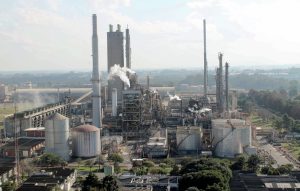
The board of Petrobras has approved the resumption of operations at the company’s Araucária Nitrogenados SA (ANSA) site at Araucaria, Parana state. The plant, which has the capacity to produce 475,000 t/a of ammonia and 720,000 t/a of urea, has been idled 2020.

A summary of papers presented at CRU’s Nitrogen+Syngas conference, this year held at the Gothia Towers in Gothenburg, Sweden.
Indian fertilizer producers Mangalore Chemicals & Fertilizers (MCFL) and Paradeep Phosphates (PPL) have announced that the companies intend to merge, allowing them to consolidate their operations, according to a company statement. The new merged company, to be called PPL, will have a total production capacity of 3.6 million t/a of fertilizers.

CRU’s Nitrogen + Syngas conference convened at the Hyatt Regency Barcelona Tower in Barcelona, from March 5th-8th.
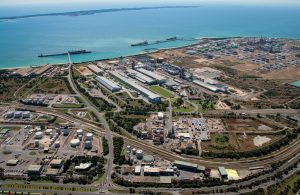
BASF says that its high-pressure regenerative CO2 capture technology HiPACT ® , codeveloped by BASF and engineering partner JGC Corporation will be used by INPEX, one of Japan’s largest exploration and production companies, in its Kashiwazaki Clean Hydrogen/Ammonia Project. This is Japan’s first demonstration project for the production of blue hydrogen/ammonia from domestically produced natural gas, the consistent implementation of carbon capture, utilisation and storage (CCUS) in domestic depleted gas fields and the use of hydrogen for power generation and ammonia production. The project is funded by the Japanese governmental organization New Energy and Industrial Technology Development Organization (NEDO).