
Nutrients for livelihoods
“There can be no life without soil, and no soil without life.” An insightful quote from Charles Kellogg, the renowned former chief of USDA’s soils bureau.


“There can be no life without soil, and no soil without life.” An insightful quote from Charles Kellogg, the renowned former chief of USDA’s soils bureau.

The commercial production of cannabis for medicinal purposes is expanding rapidly. This burgeoning market is opening up new opportunities for growers and fertilizer producers alike. Avishai Schneider , market development agronomist at Haifa Group, offers his advice for successful fertilization of this sensitive and difficult to grow crop.

The two agricultural products most strongly associated with the economies of Southeast Asia are the food staple rice and export commodity palm oil. We explore the link between the region’s agricultural productivity and its fertilizer consumption.
Nelson Silva was appointed to Nutrien’s board of directors in the second week of August. His appointment coincided with the retirement of David C Everitt from Nutrien’s board, where he has been a director since 2013.
Due to the Covid-19 pandemic, CRU Events is convening the 2020 Africa Fertilizer Agribusiness Conference, 14-16 September, as a ground-breaking virtual event for the first time.
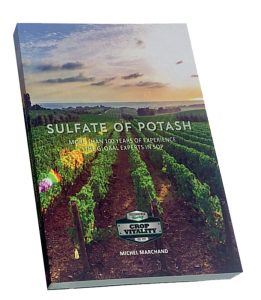
We talk to Nicolas White , Portfolio & Knowledge Director at Tessenderlo Kerley International, about the company’s new agronomic book on SOP – Sulfate of Potash: More than 100 years of experience. At almost 350 pages, the book is unique in its depth and breadth of coverage.

Belgium-headquartered Tessenderlo Kerley International, a business unit of Tessenderlo Group, has entered into a new partnership with Kemira of Finland. The two companies have signed a long-term off-take agreement for the marketing and distribution of premium SOP (sulphate of potash) fertilizers.

SensoTech has announced a high level management restructuring which represents a generational change in leadership. Robert Benecke and Hannes Benecke, sons of the founder Dr. Ingo Benecke have become the company’s new managing directors with immediate effect, replacing Dr. Ingo Benecke and SensoTech co-founder Mathias Bode, who have run the company for 30 years, developing and producing sonic velocity measuring instruments for liquid analysis which can be found in numerous industrial plants around the globe.

Although the Covid-19 pandemic has been the big story in every market this year, the disruption and dislocations that this has caused have masked some of the bigger trends in the urea market, such as the revival of Chinese exports and India’s push for self-sufficiency.
“T here are,” Mark Twain once remarked, “three kinds of lies: lies, damned lies, and statistics.” It’s certainly difficult to know what to make of economic statistics and indicators at the moment, in the world turned upside down that the Covid-19 pandemic has delivered. Here in the UK, we are told that April and May saw the national economy contract by 25%, the largest fall in 300 years of the Bank of England’s economic record keeping, and the situation is very similar across much of the developed world. But how real is that figure? After all, we were all sent home in March, to ‘lock down’ and prevent the spread of the virus, and we are only now starting to move back towards some semblance of normality. Some of us, fortunately or not, have still been able to work from home, but for much of the economy, especially for much of the service sector; tourism, travel, restaurants and hotels, theatres and cinemas – there has been zero activity. Remove half of the largest sector of the economy for three months and surely a 25% fall in output is exactly what you’d expect? But is that real, or just a number? Has that activity gone for good, or, now that we are emerging, blinking into the sunlight again, can we switch the economy back on again as easily as we switched it off?