• Skip to main content

    Tag: Environmental Compliance

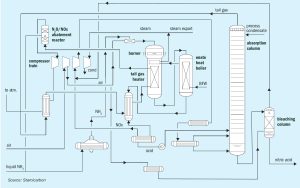
    Boosting sulphuric acid production with oxygen

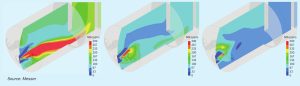
    A plant operating a spent acid decomposition furnace as part of its sulphuric acid production facility desired to increase acid production primarily by processing additional spent acid while making minimal modifications to the plant equipment and operations. The Messer solution entailed introducing oxygen in two steps, both as an enrichment to the combustion air and by direct injection into the furnace. The resulting performance improvements exceeded the project objectives for acid production and spent acid decomposition, without increasing NOx emissions. This paper provides a summary of the system start-up and tuning and presents the resulting improvements and lessons learned.

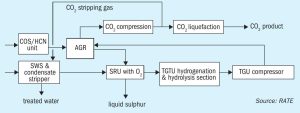
    A better understanding of SRU incinerators

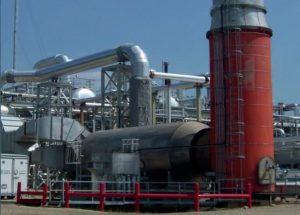
    Sulphur Experts outline the steps required to determine optimised SRU incinerator operating conditions. Although a proper determination of the ideal SRU incinerator operating conditions for any given facility is complicated by a combination of inconsistent permitting standards and poor understanding of the role of the SRU incinerator, the payoff for incinerator optimisation is a significant decrease in natural gas usage with corresponding savings in operating costs, a decrease in CO2 emissions, and a simultaneous reduction in NOx and SO3 emissions.

    Ultra capacity with ultra low emissions

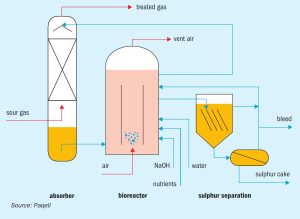
    As environmental SO2 emission regulations become more stringent, tail gas treating options become limited. To potentially achieve lower opex and improved plot plan, utilising a biological desulphurisation process as an alternative to a conventional amine-based TGT unit is becoming of increased interest in the oil and gas industry. At the same time, demands for increased SRU capacity and reliability favour the use of medium and high-level oxygen enrichment.

    Sulphur Industry News Roundup

    Kazakhstan’s oil and condensate output increased by 7% from 1.79 million bbl/d to 1.92 million bbl/d in early June after sour gas reinjection operations resumed at the Kashagan offshore oil and gas development following a recent outage, according to the Kazkah Energy Ministry. Reinjection of sour gas into two wells resumed on 8th June, enabling operator the North Caspian Operating Company (NCOC) to boost oil and condensate production at a large artificial island in Kazakhstan’s Caspian Sea waters. Reinjection was paused on May 20th following the detection of sour gas during routine sampling and a subsequent integrity test. Kashagan normally produces about 300,000 barrels of oil per day. Kazakhstan expects Kashsgan to raise oil production this year to 18.2 million t/a from 12.7 million t/a in 2022.