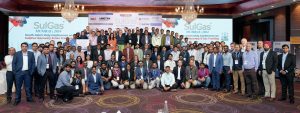
SulGas Mumbai 2024
We report on the key highlights of the annual SulGas® conference, organised by Three Ten Initiative Technologies LLP,, which took place in Mumbai, India, from January 31 to February 2, 2024.
As environmental SO2 emission regulations become more stringent, tail gas treating options become limited. To potentially achieve lower opex and improved plot plan, utilising a biological desulphurisation process as an alternative to a conventional amine-based TGT unit is becoming of increased interest in the oil and gas industry. At the same time, demands for increased SRU capacity and reliability favour the use of medium and high-level oxygen enrichment.
MECS, Inc. (MECS) has developed a new impaction-based mist eliminator called Brink® Prime Impact™ , which offers equivalent or improved efficiency at higher throughput and the same pressure drop as traditional impaction beds, resulting in the ability to debottleneck existing inter-pass absorption towers and final absorption towers in sulphuric acid plants or design new or replacement towers with smaller diameters, thus reducing investment cost.
RATE USA discusess some of the many solutions available to revamp sulphur plants to meet stricter environmental regulations with regard to SO2 and CO2 emissions.
TOYO has a long history in urea granulation technologies and has recently added two new technologies to its product line-up.
Blasch Precision Ceramics reports on the deployment of VectorWalls™ to improve the performance of the SRU thermal incinerator and provide benefits such as lower fuel gas consumption and lower CO2 emissions.
Flares in urea plants are designed to improve the site’s safety performance by capturing and burning ammonia emissions from safety release points. This will prevent/reduce ammonia emissions from entering the environment and in turn reduce ammonia risks. Flares are becoming more common in new urea plants, but are they the optimum solution to improve safety and reduce environmental risks?
A discussion on the injection of sulphuric acid in the urea melt as a solution to reducing ammonia emissions from the urea prilling tower.
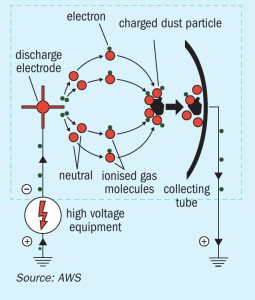
A discussion on some of the different solutions being used in the urea industry to reduce ammonia and urea dust emissions.