Carbon dioxide as a feedstock
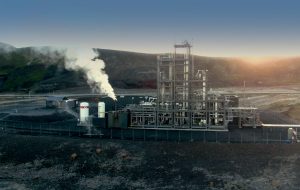
Falling costs for production of hydrogen by electrolysis are encouraging more serious consideration of using recovered carbon dioxide as a feedstock for chemicals and even fuels production.


Falling costs for production of hydrogen by electrolysis are encouraging more serious consideration of using recovered carbon dioxide as a feedstock for chemicals and even fuels production.
Johnson Matthey (JM) has been selected by China’s Ningxia Baofeng Energy Group as licensor for a third methanol synthesis plant at their coal to olefins complex near Yinchuan in Ningxia province. With a planned capacity of 7,200 t/d (2.4 million t/a), the unit will be the largest single train methanol plant in the world once completed.
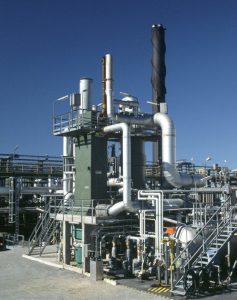
Haldor Topsoe and Comprimo® have announced a global strategic alliance to jointly license the TopClaus sulphur removal and recovery technology. TopClaus combines Topsoe’s energy efficient wet sulphuric acid (WSA) process with the industry-standard Claus process, enabling plant operators to handle acid gases and achieve sulphur removal efficiencies of above 99.9%. The Claus part of the unit recovers elemental sulphur from acid gases, and the tail gases from the Claus unit are then treated in the WSA unit, where the remaining sulphur compounds are converted into sulphuric acid.

Antonio Sancho , Incro’s managing director, gives a personal view on the circular economy and shares his experience of manufacturing high-quality liquid fertilizers from food industry wastewater.
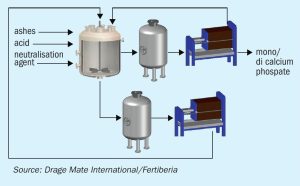
Two EU projects are developing and bringing to market a new generation of fertilizers derived from bio-wastes, as Fertiberia’s Maria Cinta Cazador Ruiz explains.
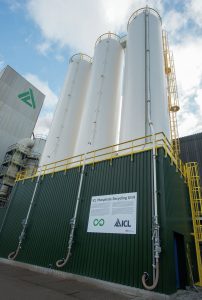
Leading nitrogen and phosphate producers, including ICL, OCP and Yara, have all launched major sustainable fertilizer production projects. The aim is to incorporate recovered nutrients or low-carbon feedstocks into their manufacturing processes.