
US nitrogen capacity
New carbon capture-based plants could see US nitrogen capacity jump over the next few years, but Trump attacks on IRA tax credits may scupper some ongoing projects.


New carbon capture-based plants could see US nitrogen capacity jump over the next few years, but Trump attacks on IRA tax credits may scupper some ongoing projects.

thyssenkrupp Uhde says that it has been selected by MOPCO – the Misr Fertilizers Production Company – to supply advanced technology for three existing ammonia and urea plants in Damietta, Egypt, to improve the sustainability of production. Using an innovative carbon capture and usage (CCU) solution, the aim is to remove up to 145,000 t/a of CO2 from the flue gas of the existing ammonia production and use them to boost urea production. At the same time, three 150 t/d axial-radial flow uhde® ammonia converter cartridges using JM’s high performance KATALCOTM 74-1catalyst will be installed in the existing converters to increase ammonia production capacity while lowering natural gas consumption in the synthesis loop by around 10%. To bring down CO2 emissions further, additional green hydrogen feedstock will be sourced from new water electrolysis units powered by renewable energy. MOPCO plans to produce up to 150,000 t/a of green ammonia.
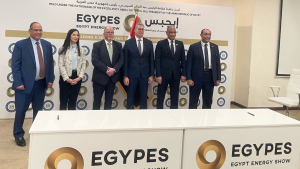
MOPCO has selected thyssenkrupp Uhde to supply advanced technology for its Damietta ammonia-urea complex in Egypt.

10th February, 2025 – sessions as reported by Richard Hands from Barcelona CRU’s 38th Nitrogen+Syngas 2025 Expoconference has begun in Barcelona with three strands covering business development, technical innovations and practical operator training, the latter comprising case studies for analysing hazards associated with green ammonia production. Heading up the business development session, Marti Leppälä, Secretary […]

High energy storage costs for renewable-based technologies are likely to make European long term carbon prices considerably higher than their present levels.

While there is still a considerable push for use of biomass waste as a lower carbon feedstock for chemical production via gasification to syngas, biological processes such as fermentation are increasingly gaining traction as an alternative.
NextChem has been awarded two contracts to upgrade and expand the capacity of the Heydar Aliyev Oil Refinery (HAOR) industrial complex in Baku by state oil company SOCAR. As part of the contract, NextChem will conduct a technological assessment and deliver a process design package to upgrade the existing sulphur recovery unit (SRU) with oxygen enriched air, a cost-effective and flexible solution for expanding its current sulphur production capacity. Additionally, NextChem will provide the licensing and the process design package based on its proprietary NX SulphuRec TM technology for a new SRU. NX SulphuRec TM is a portfolio of proprietary sulphur recovery technologies, based on the integration of modified Claus and tail gas treatment processes, aimed at reducing the environmental impact of acid and sour gases produced during the refining process.
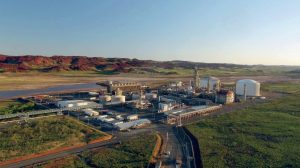
An ammonium nitrate industry geared around producing explosives for the mining sector is now being joined by a major urea project and a number of renewables-based products for export of green ammonia.

QatarEnergy has announced its decision to build a new, world-scale urea production complex that will more than double Qatar’s urea production. The project is aiming to construct three ammonia production lines which will supply four new world-scale urea production trains in Mesaieed Industrial City. Total capacity for the new complex is projected to be 6.4 million t/a, more than doubling Qatar’s annual urea production from about 6 million tons per annum currently to 12.4 million tons per annum. Production from the project’s first new urea train is expected before the end of this decade.
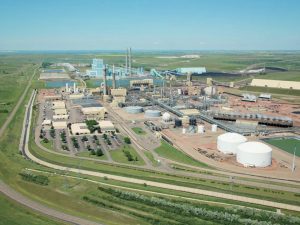
In spite of increasing environmental concerns over the use of coal as a feedstock, it continues to provide around one quarter of the world’s ammonia. But in a world that is decarbonising, is there still a future for coal-based capacity?