
Nitrogen and methanol in the Caribbean
Gas availability and pricing continues to affect ammonia and methanol output from Trinidad, while Venezuela struggles with sanctions and political instability.


Gas availability and pricing continues to affect ammonia and methanol output from Trinidad, while Venezuela struggles with sanctions and political instability.
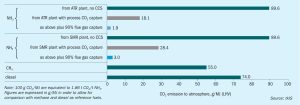
Reducing the carbon footprint in the synthesis of chemicals is a new global challenge as the world works towards providing sustainable products designed to minimise their environmental impacts throughout their whole lifecycle. This article looks at the role of blue technologies as part of a roadmap towards the decarbonisation of fuels and chemicals.
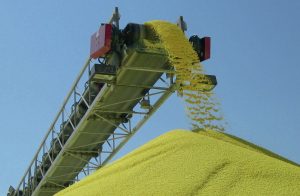
While the covid pandemic has kept refinery run rates down in 2020, new refinery sulphur capacity will nevertheless form the bulk of new additions to sulphur production over the next few years. But delays to projects on both the supply and demand sides could tip a fairly balanced market in either direction.
Tecnimont has been awarded a $1.5 billion contract by Nigeria’s Federal Executive Council to carry out rehabilitation works at the Port Harcourt refinery in Rivers State, run by the state-owned Nigerian National Petroleum Company (NNPC). The contract covers engineering, procurement and construction (EPC) activities for a full rehabilitation of the Port Harcourt refinery complex, aimed at restoring the complex to a minimum of 90% of its 210,000 bbl/d nameplate capacity. Tecnimont says that the project will be delivered in phases from 24 and 32 months and the final stage will be completed in 44 months from the award date.

Georgy Eliseev , Principal Analyst at Fertecon for IHS Markit, looks at the medium to long term outlook for both ‘green’ and ‘blue’ ammonia production.

Bodo Albrecht, BASF writes: Among the many sad news of 2020 is the passing of Alan Heywood, a leading authority in the advancement of nitric acid catalysts and recovery systems. At the time I first met Alan in 1997, he already had 6 patents to his name ranging from improved aircraft gas turbine igniters and “ZGS” grain stabilized precious metal composite materials to PGPs “cartridge” catalyst, arguably the first true catalyst system ever produced.
Copenhagen Infrastructure Partners (CIP) has unveiled plans to build Europe’s largest power-to-ammonia facility at the Danish port of Esbjerg, based on electricity from offshore wind turbines. The company said the plant will consist of 1GW of electrolysis capacity, capable of supplying sufficient hydrogen to produce 300,000 t/a of ammonia, and that the ammonia will be used as both as agricultural fertiliser and as fuel for the shipping industry. Excess heat generated in the process would be used to provide heating for around one third of local households in communities around the plant, to be sited on the west coast of Denmark. The company has signed a memorandum of understanding for the project with companies from both the agriculture and shipping sectors, including Danish Crown, Arla, DLG, Maersk and DFDS Seaways. CIP anticipates that it would cost approximately $1.2 billion to build the facility. They are currently seeking investors for the project and expect that the investment decision would be reached by 2023. The plant could enter commercial operations in 2026.
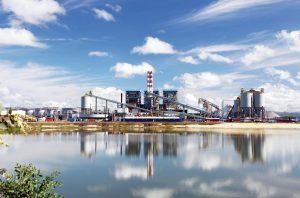
Demand for nickel sulphate is expected to rise rapidly this decade to feed increased battery production for electric vehicles. At the same time, diminishing sources of high grade nickel ores are leading to a renewed focus on high pressure acid leaching (HPAL) of laterite ores, with a significant impact on sulphur and sulphuric acid demand.
Alexander Prygunkov became Uralchem’s new CEO on the 4th December. Mr Prygunkov, who was formerly PIK Group’s chief operating officer, will focus on the digital transformation of the company. He is also expected to strengthen Uralchem’s position in the chemicals and agricultural industries, and introduce a more modern approach to business management.

Newly-developed froth flotation equipment and reagents are improving selectivity and the grade and recovery of phosphate concentrates.