• Skip to main content

    Tag: Ammonia

    Syngas News Roundup

    Johnson Matthey (JM) has secured a multiple licence for China’s Ningxia Baofeng Energy Group’s latest project to develop five of the largest single train methanol plants in the world. Located at Baofeng’s Ordos City complex in Inner Mongolia, the five plants each have a planned capacity 7,200 t/d. Under the agreement Johnson Matthey will be the licensor of all five plants and supplier of associated engineering, technical review, commissioning assistance, and catalyst. The plants will take synthesis gas as a feed and use JM radial steam raising converters in a patented series loop. Within the design, there is potential for 1-2% more feedstock efficiency over the life of the catalyst. Thanks to JM’s methanol loop synthesis technology, the plants will provide enhanced energy savings along with low OPEX, CAPEX and emissions. When complete, the plants will represent JM’s 13th operating license in China for a mega-scale plant (>5,500 t/d) and the fourth JM methanol design licensed by Ningxia Baofeng Energy.

    Nitrogen Industry News Roundup

    Building on its long experience and leading position within global ammonia production, logistics and trade, Yara says that it aims to capture opportunities in green shipping, agriculture and industrial applications; a market expected to grow by 60% over the next two decades. A major first step includes plans to fully electrify its ammonia plant at Porsgrunn, Norway, with the potential to cut 800,000 t/a of CO 2 , equivalent to the emissions from 300,000 passenger cars.

    SRU troubleshooting tools

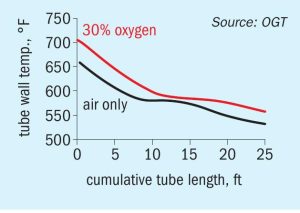
    Process and simulation models can be valuable tools when troubleshooting to solve operational issues in sulphur recovery units. Two examples are provided. In the first case study it is shown how a tuned model was useful in troubleshooting an SRU that was experiencing lower than expected recovery efficiency and apparent channelling in the first catalytic converter. In the second case study an SRU simulation tool is used to investigate sulphidic corrosion in a waste heat boiler.

    Hidden opportunity: the water side of sulphur recovery units

    Failure investigations, equipment design and process upgrade projects for SRUs often overlook the impact of water quality. In this article E. Nasat o of Nasato Consulting and L. Huchler of MarTech Systems explore impacts of higher heat transfer rates, control of boiler and condenser water chemistry, conventional equipment design/configurations and monitoring program designs. SRU operators can improve the effectiveness of their failure investigations by implementing a broader, more holistic approach that assesses equipment design, process conditions, operating protocols and water quality issues.