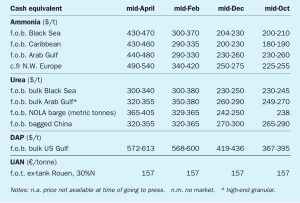
Price trends
Market Insight courtesy of Argus Media


Market Insight courtesy of Argus Media
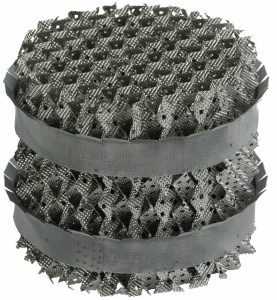
By using a Rectisol™ demonstration unit at one of Air Liquide’s industrial production sites, Air Liquide Engineering & Construction has gained unique know-how in Rectisol™ column design with structured packings. S. Schmidt, R. Szabo, M. Linicus and S. Corbet report on how the application of commercially available structured packings in the absorber columns of a Rectisol™ unit results in significant capex and opex savings.

Gas availability and pricing continues to affect ammonia and methanol output from Trinidad, while Venezuela struggles with sanctions and political instability.
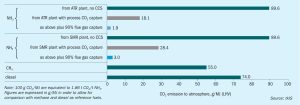
Reducing the carbon footprint in the synthesis of chemicals is a new global challenge as the world works towards providing sustainable products designed to minimise their environmental impacts throughout their whole lifecycle. This article looks at the role of blue technologies as part of a roadmap towards the decarbonisation of fuels and chemicals.
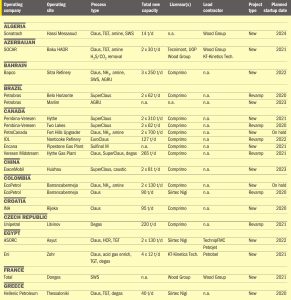
Sulphur’s annual survey of recent, current and future sulphur recovery unit construction projects maps the developing shape of brimstone production from fuel and gas processing plants worldwide.

More than 250 delegates from 36 countries participated in the 2021 Fertilizer Latino Americano Virtual Conference, 25-28 January 2021. To highlight this successful event, we report on selected keynote and regional presentations.
The Belarusian Potash Company (BPC) has agreed new annual potash supply contracts with India and China.

ICIS, the independent commodity intelligence company, provides an overview of the nitrogen market. The world supply of urea looks set to outpace market demand in 2021, as several new projects come on-stream. Global ammonia demand, in contrast, is expected to rebound strongly this year after a difficult 2020. The flurry of recent green ammonia projects announcements is another significant market development.

Fertilizer markets are rallying to an extent not seen in almost a decade. This is primarily being driven by strong demand fundamentals, with crop prices moving to their highest point since 2013. But low pipeline inventories and supply disruptions have also played a part. In this guest editorial, CRU’s Chris Lawson explains what’s driving this rally and highlights the key supporting factors.
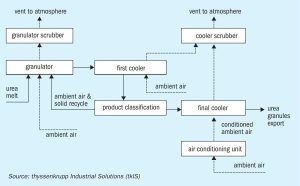
Globally, thyssenkrupp Industrial solution (tkIS) has engineered and built nine urea granulation plants during the last 10 years. Based on this experience, Benedict Jass, Marc Wieschalla and Ivo Mueller of tkIS describe two different cooling concepts for urea granules – fluid bed cooling and bulk flow cooling – and their contrasting advantages and disadvantages.