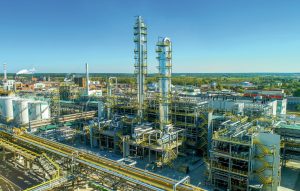
Syngas project listing 2020
A round-up of current and proposed projects involving non-nitrogen synthesis gas derivatives, including methanol, hydrogen, synthetic/substitute natural gas (SNG) and gas- and coal to liquids (GTL/CTL) plants.

A round-up of current and proposed projects involving non-nitrogen synthesis gas derivatives, including methanol, hydrogen, synthetic/substitute natural gas (SNG) and gas- and coal to liquids (GTL/CTL) plants.
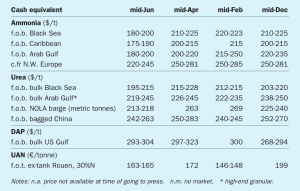
Alistair Wallace, Head of Fertilizer Research, Argus Media, assesses price trends and the market outlook for nitrogen.

Nitrogen+Syngas asked some of the industry’s leading EPC companies what they are doing to make construction sites safer around the world in pursuit of the goal for zero incident safety performance. Read on to find out what approaches have been taken by Maire Tecnimont Group, thyssenkrupp, Toyo Engineering Corporation and Saipem.

Many fertilizers plants are looking to reduce the overall maintenance costs of their critical heat exchangers. Barinder J. S. Ghai of Sandvik Materials Technology takes a look at the life cycle costs of tube materials for heat exchangers in ammonia plants.

Merchant ammonia capacity, only a relatively small 10% of overall ammonia demand, has been expanding in recent years and was already in surplus even before the current Covid crisis, but longer term a shortage of new projects may tighten the market again.
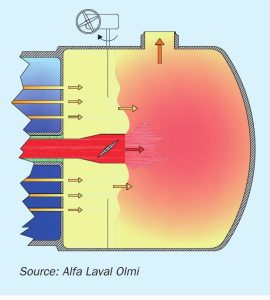
Process gas boilers with an internal bypass system are an important type of shell-and-tube heat exchanger installed in steam methane reforming units. For decades, two traditional designs have dominated the market: the “hot” and “cold” bypass process gas boiler. Today, a third option based on a new design concept is available: the “bayonet” bypass process gas boiler, with process and mechanical features that can provide superior performance, lower opex and improved reliability. G. Manenti of Alfa Laval Olmi SpA discusses the design and operating principles of the different designs.

There is an urgent need to limit the rise in global temperatures to avoid severe environmental and societal impact. This can be expressed as a target to achieve net zero carbon emissions by 2050. The provision of decarbonised hydrogen at scale is an essential step in helping to achieve net zero. Johnson Matthey’s Low Carbon Hydrogen (LCH) technology permits the needs of scale and urgency to be met. J. Pach of Johnson Matthey presents a serious response to a serious threat.
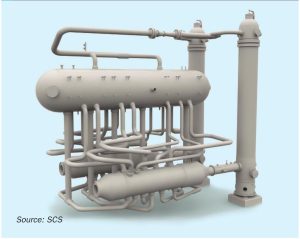
Dr M. Olbricht and Dr J. Weidenfeller of Schmidtsche Schack | ARVOS (SCS) discuss the impact of the heat recovery equipment arrangement in an ammonia plant downstream of the secondary reformer on reliable boiler operation. A detailed investigation was performed by SCS in response to an operator experiencing difficulties in maintaining water quality in this critical equipment. Water quality has a crucial impact on the lifetime and reliability of the equipment.
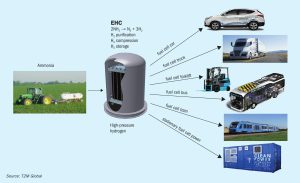
As the world focuses on clean fuels for the 21st century, there is an emerging opportunity to use ammonia as a source of hydrogen. Hydrogen fuel cells are expected to play a significant role as part of a clean energy portfolio. T2M Global and its development partner, SAFCell, are collaborating to develop a modular system to produce hydrogen from ammonia using a novel solid state separation system that does not require pressure or solvents. P. Patel of T2M Global, C. Chisholm of SAFCell and V. Pattabathula of Incitec Pivot explain the challenges, the opportunities and the current status of this new technology.
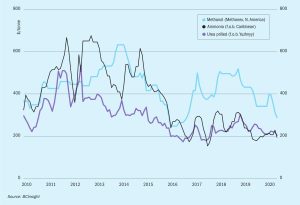
Prices remain at low levels, in part because of oversupply due to new plant start-ups. However, there has also been a contraction in demand, especially for technical ammonia – industrial markets for ammonia in China and East Asia have been badly affected.