
Sulphur: Past, Present, Possibilities
MEScon 2025 took place in Abu Dhabi from 19-22 May 2025, providing delegates with renewed energy, new connections, and fresh ideas to apply across the sulphur value chain.


MEScon 2025 took place in Abu Dhabi from 19-22 May 2025, providing delegates with renewed energy, new connections, and fresh ideas to apply across the sulphur value chain.

IPCO highlights the reasons for converting sulphur into a solid form, and compares two of the technologies most commonly used to achieve this.

Casale has signed a process design package (PDP) contract with Daewoo Engineering & Construction Co for two new fertilizer plants. These are being commissioned by Turkmenhimiya, Turkmenistan’s state-owned chemical company, as part of a production complex in Turkmenaba, the country’s second-largest city.

AMETEK Process Instruments has collaborated with Worley Comprimo, part of Worley’s Technology Solutions, to provide sulphur recovery unit (SRU) stakeholders with critical analytical measurements combined with advanced burner control technology to deliver enhanced automated air control management. The companies say that their 2ACT™ Solution is a fully automated system that minimises SRU upsets, enhances reliability, and delivers strong returns on investment. At the heart of this partnership, the innovative 2ACT™ Solution offers an all-in-one approach to advanced air control – significantly boosting SRU performance and efficiency while reducing operational costs. 2ACT uses AMETEK’s IPS-4 ultraviolet and infrared analyser to measure H2 S, CO2 , NH3 , H2 O and total hydrocarbons (THCs) by continuously sampling the acid gas upstream of the SRU. The change in air demand requirement is then calculated, with main and trim air adjustments implemented automatically by the feed forward control scheme designed by Worley Comprimo. The companies say that the benefits of the 2ACT Solution include maintaining an optimal H2S to SO2 ratio at the outlet of the Claus Plant to maximise recovery efficiency, mitigating damage to tail gas treatment unit (TGTU) components, lowering SO2 emissions and carbon footprint with improved uptime and plant throughput.
Topsoe has been selected by Zhongneng Yida New Energy Co., Ltd to deliver technology for production of sustainable aviation fuels (SAF) at a new facility to be located at the city of Shijazhuang in the Shenze Economy Development Zone of Hebei province. Zhongneng Yida plans to export the produced SAF to European and local Chinese markets. Topsoe will provide its HydroFlex® technology and catalysts as part of the agreement. The facility will produce 400,000 t/a of SAF, utilising used cooking oil for the feedstock.
Egypt’s Minister of Petroleum and Mineral Resources, Karim Badawi and New Valley Governor, Mohamed Al-Zamlout were present at the signing of a framework agreement between a consortium of Egyptian public companies to build a new phosphoric acid plant at Abu Tartour in the New Valley region. The project aims to maximise added value and increasing the economic return on Egyptian phosphate ore by using it in higher-yield industries rather than exporting it as a raw material. The Egyptian state-owned consortium includes Abu Qir Fertilizers; East Gas Company, Mineral Resources and Mining Industries Authority; Misr Phosphate, AT-PHOS, Petroleum Projects and Technical Consultations Company (PETROJET), and Engineering for the Petroleum and Process Industries (ENPPI), all of which are shareholders in the project. The contractor agreement was signed with a Chinese consortium of China State Construction Engineering Corporation (CSCEC) and East China Engineering Science and Technology Co (ECEC).
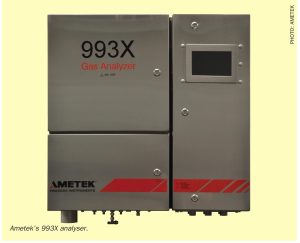
In other news, AMETEK says that its 993X series of analysers, encompassing the 993X and 9933, are now ATEX and IECEx Zones 1 and 2, and ETL (North America) Class I Division 2 compliant for use in hazardous locations with ambient temperature up to +60ºC. Built with IP66 rated enclosures, the 993X analysers can be installed outdoors, or in minimally temperature-controlled enclosures, reducing both capital and operating costs.

India India has imposed five-year anti-dumping duties on six Chinese imports, including insoluble sulphur, mainly used in the vulcanisation of rubber. The move follows an investigation by India’s Directorate General of Trade Remedies (DGTR) last year, following a complaint by Oriental Carbon and Chemicals in March 2024. The period covered by the investigation was from 1st Jan 2023 to 31st Dec 2023, while the injury investigation period ran from April 2020 to 31st Dec 2023. DGTR made a determination that Chinese exporters had been selling the six products at unfairly low prices, adversely affecting the profitability of Indian producers. DGTR says that the duties it has imposed are “aligned with WTO norms” and aim to protect domestic industries from unfair trade practices and address the growing trade imbalance with China. According to the trade authority, the market share of the countries subject to duties “has been significantly increasing” while local Indian industry’s capacities are “lying idle” amid growing demand. n
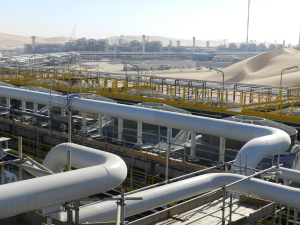
New sulphur production from Chinese and Indian refineries and Middle Eastern sour gas and the ramp up of nickel leaching projects in Indonesia continue to change the direction of sulphur trade.
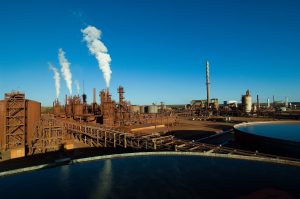
The progressive closure of smelter capacity in Australia poses potential problems for acid consumers across the country.