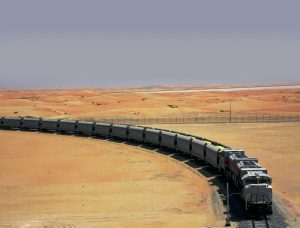
Transporting sulphur safely
Sulphur is a relatively safe and inert solid. However, it has a number of unique physical and chemical properties which can give rise to hazards, particularly during transport and handling.


Sulphur is a relatively safe and inert solid. However, it has a number of unique physical and chemical properties which can give rise to hazards, particularly during transport and handling.
Casale has developed a range of methanol-ammonia coproduction processes to match different requirements according to product capacity.
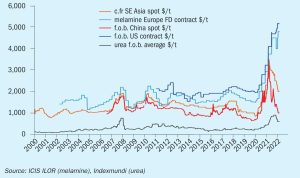
The latest improvements to melamine process technology now make it even easier to integrate a melamine plant with an ammonia and urea fertilizer complex. Guido Canti of Eurotecnica and Marc Wieschalla of thyssenkrupp Uhde discuss the benefits of plant integration.

Industry focus on technologies to reduce the carbon intensity of ammonia and methanol production has been intensifying. In this article thyssenkrupp Uhde, Proton Ventures, Toyo Engineering Corporation, Stamicarbon, BD Energy Systems and KBR report on some of their latest technology developments towards decarbonisation.
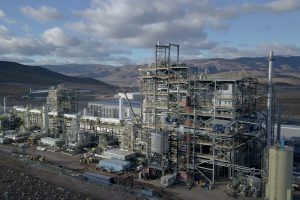
Fischer-Tropsch technology has long offered alternative production routes to synthetic fuels, but has struggled to make a use case outside of some niche applications. Could the greening of the chemical industry offer another way forward for the technology?

Catalysts are of crucial importance in a number of chemical processes and hence, their quality has a direct impact on the efficiency and operating costs of chemical plants. This refers especially to ammonia production, since this process is energy-consuming.

Optimisation of the nitric acid process depends on good process visualisation tailored to the specific process parameters of the plant, improvements in combustion efficiency, reduction of N2 O emissions and the optimal use of platinum group metals.
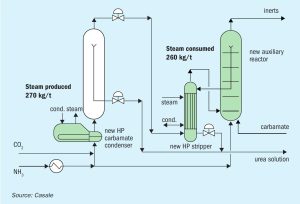
Casale reviews urea plant revamping process schemes and successful case studies for energy savings and TOYO discusses its latest revamping technologies including application of the new generation low-pressure, energy-saving ACES21-LP™ process.
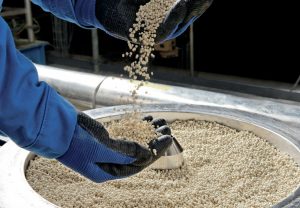
Producing efficient fertilizers that deliver nutrients directly to crops in exactly the right amounts has clear economic and environmental benefits. Recent advances in controlled-release and stabilised fertilizer technology are highlighted.

ICL has developed a new generation of rapid biodegradable coatings for its controlled-release fertilizer (CRF) portfolio. The new coating technology reduces the environmental footprint of CRFs and will help farmers meet the requirements of Europe’s Green Deal. This patented innovation, named eqo.x, coats nitrogen fertilizers for field grown crops. Eqo.x has already been fully tested in the field – and shows excellent results in terms of production, nutrient use efficiency, volatilisation and leaching reduction. Ronald Clemens, ICL Global Marketing & Portfolio Manager CRF, explains the benefits.