
A return to market stability?
After two turbulent years, could the fertilizer market finally start to stabilise in 2023? Well, that’s what Dutch agricultural finance house Rabobank is predicting…

After two turbulent years, could the fertilizer market finally start to stabilise in 2023? Well, that’s what Dutch agricultural finance house Rabobank is predicting…
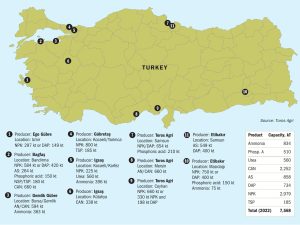
Turkey’s thriving agricultural sector has created a large and dynamic fertilizer market at the crossroads of Europe and Asia, explains Hakan Goral, the CEO of Tekfen Agri Industry Group.

CRU Events will convene the 2023 Phosphates International Conference & Exhibition in Istanbul at the Hilton Bomonti Hotel, 27 February to 1 March.

Market Insight courtesy of Argus Media. Urea: The market remained weak at the start of the year with urea prices falling as producers fought for liquidity. Egyptian product fell by $40/t to $495/t f.o.b. in a matter of days, while f.o.b. prices in the Middle East and southeast Asia similarly fell to around $440/t. Urea prices in many end-user markets also slumped: US prices fell over the course of the first week of January by $30/t, Brazil by $15/t and many European markets by around $20/t.
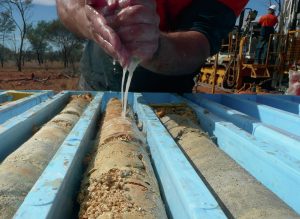
Fertilizer International presents a global round-up of phosphate rock, phosphoric acid and finished phosphates projects.
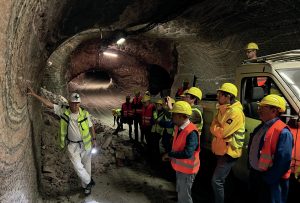
The global potash market has endured a tumultuous 18 months, says Andy Hemphill, senior editor for potash and sulphuric acid at ICIS Fertilizers. Export sanctions, high offer prices and buyer unrest persist as we enter 2023.
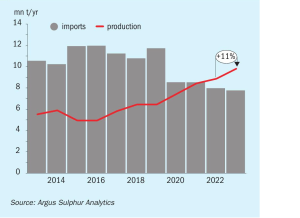
Meena Chauhan, Head of Sulphur and Sulphuric Acid Research, Argus Media, assesses price trends and the market outlook for sulphur.
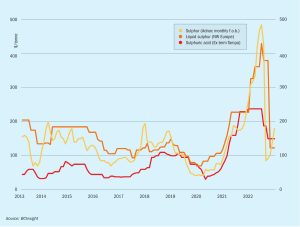
Processed phosphates pricing will be a major influence in the coming months. A gap remains between historical levels of sulphur and DAP pricing that points to the potential for sulphur prices to recover to higher levels during 2023.
It has long been known that sulphur dioxide aerosols can reflect sunlight back into space. On a large scale, this has tended to come from volcanic eruptions. The explosion of the island of Krakatoa in 1815 led to the following year, 1816, becoming known in Europe as ‘the year without a summer’. More recently, it is estimated that the eruption of Mount Pinatubo in the Philippines in 1991, the second largest eruption of the 20th century, sent around 18 million tonnes of SO2 into the stratosphere. Temperatures in the troposphere – the atmospheric layer closest to the earth – dropped by about 0.5°C as a result for about two years afterwards.
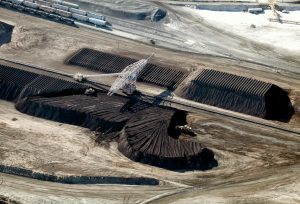
Last year saw global trade in all commodities have to take into account the potential loss of supply from Russia, a key exporter of many commodities. Sulphur was no exception, with prices swinging wildly across the year.