Fertilizer Industry News Roundup
CF Industries has signed an agreement with thyssenkrupp to develop a commercial-scale green ammonia project at its Donaldsonville production complex in Louisiana.

CF Industries has signed an agreement with thyssenkrupp to develop a commercial-scale green ammonia project at its Donaldsonville production complex in Louisiana.
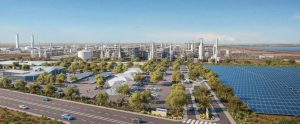
A recent report from BloombergNEF (New Energy Foundation) looking ahead to 2050 argues that green hydrogen can be cheaper than natural gas. It finds that ‘green’ hydrogen from renewables should become cheaper than natural gas (on an energy-equivalent basis) by 2050 in 15 of the 28 markets modelled, assuming scale-up continues. These countries accounted for one-third of global GDP in 2019. In all of the markets BNEF modelled, ‘green’ hydrogen should also become cheaper than both ‘blue’ hydrogen (from fossil fuels with carbon capture and storage – CCS) and even ‘grey’ hydrogen from fossil fuels without CCS. The cost of producing ‘green’ hydrogen from renewable electricity should fall by up to 85% from today to 2050, the report predicts, leading to costs below $1/kg ($7.4/MMBtu) by 2050 in most markets. These costs are 13% lower than BNEF’s previous 2030 forecast and 17% lower than their previous 2050 forecast. Falling costs of solar photovoltaic (PV) electricity are the key driver behind the reduction; BNEF now believes that PV electricity will be 40% cheaper in 2050 than they had thought just two years ago, driven by more automatic manufacturing, less silicon and silver consumption, higher photovoltaic efficiency of solar cells, and greater yields using bifacial panels.
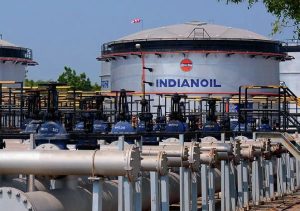
Storm Uri which blanketed the southern states of the US with snow, and led to widespread power outages in Texas, has had a major impact upon US Gulf Coast and Southern-Midwest refined products supply. Most Gulf Coast refineries were shut down or forced to operate at reduced rates. IHS Markit estimated that more than 5.2 million bbl/d of Gulf Coast capacity and 730,000 bbl/d in PADD 2 was impacted by the winter weather at its height, and close to 20% of lower 48 US natural gas production was shut-in in the first half of February. A drop in crude oil production of between 2.2 and 4 million bbl/d was estimated.
Copper major Freeport-McMoRan is reportedly on verge of finalising a $2.8 billion deal with China’s Tsingshan to build a copper smelter in Weda Bay, Indonesia. The Indonesian government said that the companies were aiming to conclude negotiations by the end of March. It also said that most of the financing will be borne by Tsingshan, with Freeport possibly only needing to provide funding for 7.5% of the total project cost. The smelter would have a copper concentrate input capacity of 2.4 million t/a.
Building on its long experience and leading position within global ammonia production, logistics and trade, Yara says that it aims to capture opportunities in green shipping, agriculture and industrial applications; a market expected to grow by 60% over the next two decades. A major first step includes plans to fully electrify its ammonia plant at Porsgrunn, Norway, with the potential to cut 800,000 t/a of CO 2 , equivalent to the emissions from 300,000 passenger cars.
Norilsk Nickel has finally closed down its nickel smelting operation at Nikel in Russia’s Murmansk region; the company’s oldest still operating production facility. The shutdown is part of the company’s environmental programme, which aims to significantly reduce its environmental impact at all production sites. The Nikel closure will eliminate SO2 emissions in the cross-border area with Norway, which had become a major bone of contention with the Norwegian government. Norilsk aims to reduce SO2 emissions at Kola by 50% by the end of 2020 and 85% by the end of 2021, and is modernising its production in Monchegorsk, including the construction of new state-of-the-art facilities.
In early October Tesla held a ‘battery day’ event at its headquarters in Fremont, California. Speaking at the event, company founder and CEO Elon Musk outlined his vision for the electric car industry over the coming decades, and spoke particularly to his ambitions for the nickel industry. He had already called for more mining of nickel earlier in the year, and has said that Tesla is developing cathodes that will contain higher nickel and no cobalt. The latter comes after a lawsuit against Tesla and several other high-tech US firms for allegedly supporting human rights violations by buying cobalt from the Democratic Republic of Congo. Musk echoed the potential ‘reputational risk’ for the nickel market and called for more sustainable nickel production, dangling the prospect of a “giant contract” with any miners that could produce nickel in an “environmentally sensitive way.” Tesla is reportedly in discussions with Vale and BHP as well as the Indonesian government concerning potential investments in nickel production.
Illinois-headquartered CF Industries has made a long-term commitment to low-carbon ammonia production and net-zero emissions.
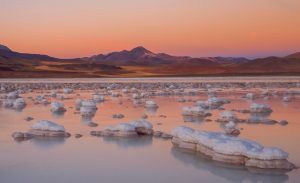
Latin America has confirmed its status as a pre-eminent global marketplace for fertilizers. We report on demand growth and fertilizer supply and capacity developments within this diverse region.

Brazil’s phosphate industry is on a growth dash to meet rising domestic demand. We report on the major acquisitions, investments and expansions by CMOC, Mosaic, Yara and Itafos.