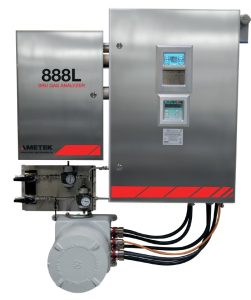
Next generation sulphur plant analysers
As plants move towards full unit control, Jochen Geiger of Ametek Process Instruments provides an overview of how the latest sulphur plant analysers are providing greater insight into sulphur plant operations.

As plants move towards full unit control, Jochen Geiger of Ametek Process Instruments provides an overview of how the latest sulphur plant analysers are providing greater insight into sulphur plant operations.
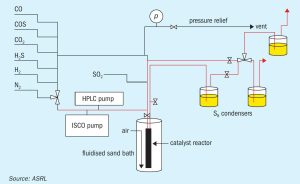
Temperature dependent rate constants for the hydrolysis of CS2 and COS across Claus Al2 O3 and TiO2 catalysts are valuable tools for the design and optimisation of new, as well as existing, sulphur recovery units. In this context, Alberta Sulphur Research Ltd (ASRL) has measured CS2 and COS hydrolysis rates over a range of temperatures for both Al2 O3 and TiO2 catalysts under start-of-run and, more recently, end-of-run first converter conditions. In this article Christopher Lavery, Dao Li, Ruohong Sui, and Robert A. Marriott of ASRL report on their methodology and the utility of the kinetics calculated from their data and draw comparisons between the start-of-run and end-of-run results.
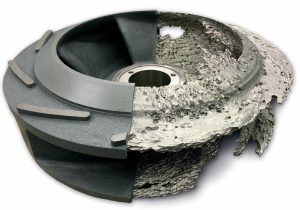
We profile leading suppliers of tailor-made pumps and pipes to the phosphates and sulphur industries.

Erosion and corrosion are two of the biggest challenges faced by equipment used in phosphate fertilizer production. This harsh operating environment requires exceptionally well-designed pumps made from sophisticated and robust construction materials. Hani Tello of ITT Rheinhütte and Harvinder Bhabra of ITT Goulds Pumps outline the range of options.
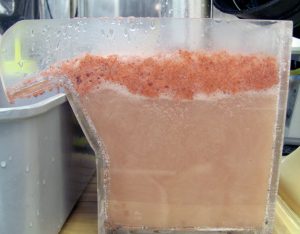
Newly developed flotation reagents are improving the selectivity and grade/recovery of phosphate and potash concentrates.

Conventional fertilizers can be transformed into enhanced efficiency fertilizers (EEFs) using coating agents and inhibitors. Greater use of EEFs, by preventing nutrient losses and avoiding excess nutrient supply, can help global agriculture become more sustainable, as Urvi Mathur of Neelam Aqua explains.
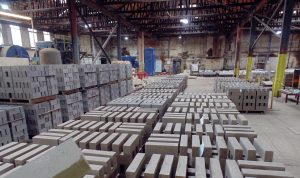
As sulphur recovery units operate at progressively higher temperatures, creep stress in the furnace refractory lining can lead to deformation or even failure of the bricks and require the shutdown of the SRU. UK-based DSF Refractories have developed a product which minimises creep stress damage at high temperatures, for a longer-lived furnace lining.
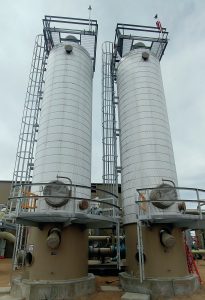
New low-cost metal oxide solid scavengers for hydrogen sulphide (H2 S) removal from wet and dry natural gas have been developed and deployed at commercial scale. The desulphurisation process uses a proprietary sorbent chemistry to achieve a high sulphur capacity and removal efficiency. G. Alptekin, F. Kugler and M. Schaefer of SulfaTrap LLC describe the new technology and its performance.
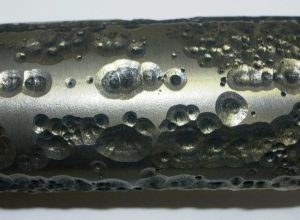
T. Hentrich and B. Nowak of VDM Metals provide an overview of the development of VDM® Alloy 699 XA, a new generation, metal dusting resistant alloy, available in a wide range of product forms, for demanding applications in the chemical process industry.

With demand for conventional fuels projected to peak and fall over the next decade, some refiners are looking to petrochemical production as a way of diversifying their product slate.