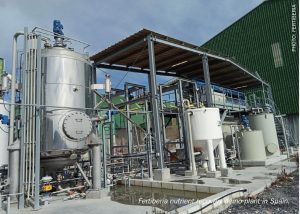
Bio-based fertilizer materials: benefits and challenges
Fertiberia’s Cinta Cazador Ruiz outlines the aims of the B-FERST project and highlights its major successes.

Fertiberia’s Cinta Cazador Ruiz outlines the aims of the B-FERST project and highlights its major successes.
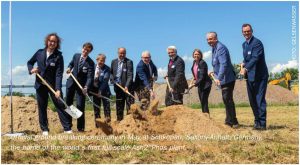
EasyMining’s Christian Kabbe provides an update on the company’s first full-scale Ash2™Phos plant in Germany.
Thyssenkrupp Uhde’s BioTfueL® technology has been selected for the BioTJet project by Elyse Energy and its partners (Axens, Avril, IFPEN). This project will produce sustainable aviation fuel (SAF) from end-of-life wood waste and local forestry residues. together with the addition of green hydrogen. By 2029, BioTJet will supply sustainable aviation fuel to reduce carbon intensity in air
TotalEnergies has signed an agreement with the German developer RWE to supply 30,000 t/a of green hydrogen to the Leuna refinery for fifteen years, beginning in 2030. The green hydrogen will be produced by a 300 MW electrolyser, built and operated by RWE in Lingen. Green hydrogen storage will be provided locally. The green hydrogen will be delivered by a 600 km pipeline to the gates of the refinery and will prevent the site’s emission of some 300,000 tons of CO2 beginning in 2030. This is the largest quantity of green hydrogen ever contracted from an electrolyser in Germany.

Horisont Energi says that it has secured a non-binding offtake deal with “a European energy group” for ammonia sales from its Barents Blue clean ammonia plant at Markoppnes in northern Norway. Sales and purchase agreements are targeted for completion in 2026. Horisont is pressing ahead with the 1 million t/a project in spite of the withdrawal of project partner Fertiberia, and the exit of Polish company Orlen from a related CCS project. Front end engineering and design work has not yet been completed, but the project has been working on commercial agreements for the supply of gas, offtake of clean ammonia and storage of CO2 . Carbon capture is projected to be above 99%, and it is expected to be the most energy-efficient clean ammonia plant in the world. Barents Blue is supported by a $48 million grant as part of the EU IPCEI hydrogen program, Hy2Use. The project is targeting a final investment decision (FID) in 2026 and estimated production start in 2029/2030.
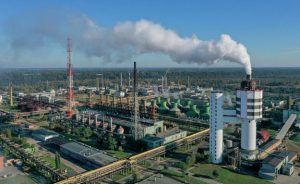
Achema says that it plans to “temporarily” suspend ammonia production at its site at Jonava from May 15th, due to the volatility of natural gas prices and competition from cheaper foreign imports. It currently plans to resume production in 3Q 2025. The facility has been operating at reduced capacity since 2021, and Lithuanian lawmakers have discussed converting the site to explosive grade ammonium nitrate production as part of a European rearmament programme.
Clariant says that its MegaMax 900 methanol synthesis catalyst has been used in the successful startup of European Energy’s green methanol plant at Kasso, Denmark. The facility uses biogenic CO2 and green hydrogen to produce up to 42,000 t/a of green methanol. Clariant’s Applied Catalyst Technology (ACT) technical service team provided on-site support throughout the startup procedure, overseeing the catalyst loading, reduction, and startup. Clariant says that the catalyst is operating with excellent activity and stability despite the challenging conditions of CO2 -to-methanol conversion.

The European Commission (EC) says it has begun tracking European imports of certain ethylene and ammonia products, to allow it to react quickly to level the playing field if the monitoring points to a surge of imports causing or threatening to cause injury to the EU industry. This surveillance has been put in place in response to evidence of a significant and potentially injurious increase in the EU market share of imports of the chemicals. It covers imports of copolymers of ethylene and alpha olefin, urea containing more than 45% (by weight) of nitrogen, and ammonium sulphate from all countries, and should remain in place for a period of three years.
Tecnicas Reunidas and Siemens Energy have been awarded the contract to carry out front-end engineering design (FEED) for a major green methanol project in La Robla, Spain. The consortium will work on the project for Spanish developer Reolum, part of a partnership that says it is building the largest green methanol plant in Europe. The La Robla Nueva Energia facility will combine biogenic CO2 from a co-located biomass-based cogeneration plant with green hydrogen to produce 140,000 t/a of low carbon methanol. Tecnicas Reunidas will focus on the biogenic carbon capture and methanol production units, while Siemens Energy will handle the renewable hydrogen unit. Johnson Matthey has been selected to supply its eMERALD methanol technology, while Mitsubishi Heavy Industries will license it CO2 capture technology for the project.
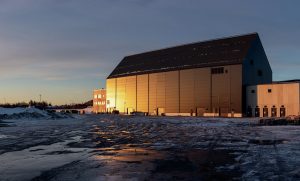
Fertilizer International talks with Jakob Liedberg, the CEO of innovative potassium sulphate producer Cinis Fertilizer.