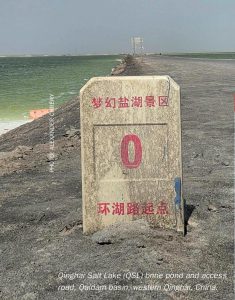
China looks beyond its potash heartland to secure supply
In this CRU Insight, Alexander Chreky reports on China’s potash industry – and reviews the country's international potash investments.


In this CRU Insight, Alexander Chreky reports on China’s potash industry – and reviews the country's international potash investments.

India is preparing to set up its first urea manufacturing facility in Russia to secure long-term fertiliser supplies and reduce exposure to global price shocks, according to Indian media reports. The proposed project, backed by Rashtriya Chemicals and Fertilisers (RCF), National Fertilisers Ltd (NFL) and Indian Potash Ltd (IPL), aims to tap Russia’s abundant reserves of natural gas and ammonia, key raw materials that India lacks. The venture is reportedly scheduled to be announced during Vladimir Putin’s visit to India in December. The facility is said to aim at ultimately producing 2 million t/a of urea. India is currently the second-largest consumer and third-largest producer of fertilisers globally, but it remains vulnerable to global commodity swings.
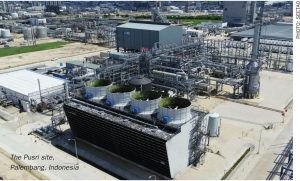
Already a large urea supplier to the region, Indonesia has plans for several new plants to monetise its natural gas resources.

ClassNK has added Japan's first hydrogen-fuelled tug Ten-Oh to its register, built by Tsuneishi Shipbuilding Co., Ltd. This vessel was developed and built under the 'Nippon Foundation Zero Emission Ships Project', a grant program by The Nippon Foundation aimed at developing ships with zero CO2 emissions. Based on discussions among the parties involved during the planning stage of the vessel, ClassNK reviewed the safety requirements and countermeasures for hydrogen-fuelled ships by applying Part GF of its 'Rules and Guidance for the Survey and Construction of Steel Ships' etc. These reviews focused on issues such as preventing explosions caused by the high ignitability of hydrogen and mitigating the potential impacts of hydrogen fuel leakage on crew members and the environment.

Ube Corporation has accelerated closure plans for its nitrogen products in Asia as part of its Vision 2030 plan. The company says that it aims to halt ammonia and related product production at its Ube City plant in Japan by March 2028, two years ahead of its previous schedule. Production of caprolactam and polyamide materials at the same plant will end by March 2027. Post-restructuring, the facility will prioritize specialty chemicals such as polyimides, separation membranes, ceramics, pharmaceuticals, and high-purity chemicals.

Indonesia’s sovereign wealth fund Danantara has signed a heads of agreement with Shenzhen-based GEM Limited to jointly develop a high-pressure acid leach (HPAL) nickel facility with a capacity of 66,000 t/a of nickel. The project carries an estimated value of $1.42 billion. GEM is a global leader in green metallurgy and circular economy solutions, known for its large-scale recycling of electric vehicle batteries and electronic waste.

India’s Coromandel International (CIL) is set to increase its stake in phosphate rock producer Baobab Mining and Chemicals Corporation (BMCC) in Senegal further to 71.51% from 53.8%, according to local press reports. CIL is reportedly paying $7.7 million for an additional 17.69% equity stake, after previously raising its stake from 45% in September 2024. CIL originally announced it would take a stake in BMCC in 2022, when it paid $19.6 million for a 45% stake, along with a loan of $9.7 million into BMCC for capital projects and expansion. CIL plans to use the stake to ensure long term supply security of phosphate rock.
A formal signing ceremony has been held between senior company executives from KMG PetroChem, Tecnimont and the Kazakh government for the construction of the new Tengiz Gas Separation Complex (GSC) project. The ceremony was held at KMG PetroChem headquarters, in the Atyrau region of Kazakhstan. The Tengiz GSC project’s scope of work includes engineering, procurement, construction and commissioning works, with Tecnimont mainly responsible for the EPC works. Completion is expected by the first quarter of 2029. Once completed, the gas processed by the GSC will feed the Silleno petrochemical plant, another project currently being executed by Tecnimont in the region. The GSC is designed to recover at least 98% of ethane from dry gas, while the Silleno complex is expected to deliver high-quality petrochemical products. KMG PetroChem is a fully owned subsidiary of Kazakhstan’s national oil and gas company KazMunayGas.
In addition to the above deal with Morocco, the Bangladesh Agricultural Development Corporation (BADC), part of the Bangladesh Ministry of Agriculture, has signed a contract to import both triple superphosphate (TSP) and di-ammonium phosphate (DAP) fertilisers from Malaysia. The agreement was signed on 17 July 2025 in Kuala Lumpur by Mohammed Ruhul Amin Khan, chairman of BADC, and representatives of Selcra Niaga. Under the contract, BADC will import 280,000 tonnes of TSP and 280,000 tonnes of DAP from Malaysia. According to BADC officials, this landmark deal is expected to play a crucial role in ensuring the timely delivery of non-urea fertilisers to farmers. The move aims to strengthen Bangladesh's efforts toward building an efficient and sustainable agricultural system.
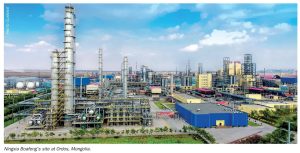
Johnson Matthey (JM) says that the three methanol production trains of Inner Mongolia Baofeng Coal-based New Materials Co., Ltd., a wholly owned subsidiary of Ningxia Baofeng Energy Group, were successfully commissioned in November 2024, February 2025, and March 2025, respectively. Located in the Wushenqi Sulige Economic Development Zone of Ordos City, Inner Mongolia Autonomous Region, this plant employs Johnson Matthey’s advanced methanol synthesis technology and catalysts, making it the largest single methanol plant in the world. Inner Mongolia Baofeng also stands as one of the largest chemical enterprises globally that produces polyethylene and polypropylene by using coal as a substitute for oil.