Market Outlook
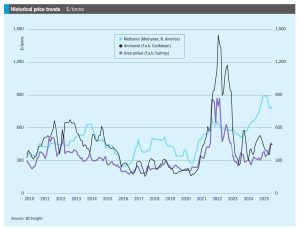
• Ammonia prices look well insulated against any declines over the immediate term, though the upside may be more limited in some regions than others.

• Ammonia prices look well insulated against any declines over the immediate term, though the upside may be more limited in some regions than others.
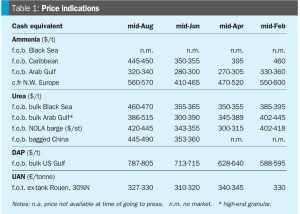
Ammonia prices in both hemispheres had levelled out by the end of August, with the exception of a few marginal upticks in some regions on the basis of the latest supply-demand dynamics. All eyes are now on September’s Tampa settlement, which should spell out the extent of the upside pressure set to emerge over the coming weeks.

Transition Industries LLC has signed a heads of agreement with Italian contractor Bonatti SpA to deliver key infrastructure for the Pacifico Mexinol green methanol project in Sinaloa. Under the agreement, which includes a fixed lump-sum price, Bonatti will handle detailed engineering, procurement, construction, pre-commissioning, commissioning and startup for upgrades to the Terminal Transoceánica de Topolobampo port facilities. The work will cover methanol loading operations for export, underground transfer pipelines, vapor recovery systems, and dual fiber optic cables linking the main plant to the port. Bonatti may also build a closed-loop water pipeline to recycle municipal wastewater for plant operations, avoiding freshwater use and reducing environmental impact.

BASF and Yara International ASA say that they have jointly decided to discontinue their project to develop a 1.4 million t/a low-carbon ammonia production facility with carbon capture and storage in the US Gulf Coast region. The companies say that this decision reflects their “commitment to focus on initiatives with the highest potential to achieve their respective value creation goals.” Yara will continue its ammonia strategy as previously communicated, evaluating and maturing equity investment opportunities in US ammonia to determine the optimal project portfolio.
ATOME says that the European Investment Bank (EIB), the lending arm of the European Union, has approved financing in-principle of up to $135 million for the company’s flagship Villeta Project. EIB is one of ATOME’s senior debt providers for Villeta and the announcement follows the Green Climate Fund approval earlier this month. Details of the financing will be finalised in early course, following closing of the debt package with the consortium of leading international development finance institutions. Based on the progress with financing, ATOME is projecting a final investment decision by the end of September 2025.
thyssenkrupp nucera says that it has successfully completed the acquisition of key technology assets from Danish company Green Hydrogen Systems (GHS), as announced in June. The transaction was finalised following receipt of all necessary regulatory approvals and the consent of the court-appointed insolvency administrator. The asset deal includes intellectual property as well as a test facility with a full-size prototype in Skive, Denmark.
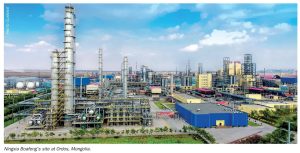
Johnson Matthey (JM) says that the three methanol production trains of Inner Mongolia Baofeng Coal-based New Materials Co., Ltd., a wholly owned subsidiary of Ningxia Baofeng Energy Group, were successfully commissioned in November 2024, February 2025, and March 2025, respectively. Located in the Wushenqi Sulige Economic Development Zone of Ordos City, Inner Mongolia Autonomous Region, this plant employs Johnson Matthey’s advanced methanol synthesis technology and catalysts, making it the largest single methanol plant in the world. Inner Mongolia Baofeng also stands as one of the largest chemical enterprises globally that produces polyethylene and polypropylene by using coal as a substitute for oil.
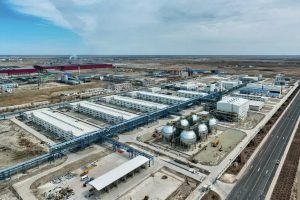
Jilin Electric Power says that it has commissioned one of the world’s largest green hydrogen and ammonia plants in Jilin Province. Jilin says that this is the world’s largest operating green ammonia plant, with a capacity of up to 32,000 t/a of green hydrogen and 180,000 t/a of green ammonia; the largest combined PEM and alkaline electrolyser system, combining 196 MW of alkaline electrolysis and 52 MW of PEM electrolysis, respectively; and the world’s largest block of solid-state hydrogen storage - 48,000 Nm3. The plant is fed by 800 MW of installed renewable power. The green ammonia is EU-certified under low-carbon fuel standards, and offtake agreements are in place with companies located in Europe, Japan and South Korea.
KBR says that it has been awarded a front-end engineering design (FEED) contract for the development of an ammonia and urea production plant by KAR Electrical Power Production Trading FZE (KEPPT) in Basra, Iraq. Under the terms of the contract, KBR will provide FEED for a proposed 2,300 t/d ammonia production facility and 3,850 t/d urea unit. The design will be executed using KBR’s proprietary ammonia technology.

Clariant has signed a strategic cooperation agreement with Shanghai Boiler Works, a full subsidiary of Shanghai Electric specialising in energy conversion and the development of new energy applications, to jointly foster innovation in sustainable energy solutions. The partners will combine their expertise to advance green energy projects in China. The agreement is the result of close and successful cooperation in Shanghai Electric’s new biomass-to-green methanol plant in Taonan, Jilin Province, China. In addition to supplying its MegaMax catalysts, Clariant provided technical on-site support during the successful startup of the 50,000 t/a plant. The second phase of the project, with a capacity of 200,000 t/a green methanol and 10,000 t/a of sustainable aviation fuels (SAF), is expected to start production in 2027. The ceremony for the official signing of the partnership contract took place last week at the Clariant Innovation Center in Frankfurt, Germany.