Africa
23 June 2026
Minbos signs $13.8m Cabinda Phase 2 construction contract
Written by Natalie Noor-Drugan
Australian listed Minbos Resources has moved its Cabinda Phosphate Fertilizer Plant into the final build phase, signing a $13.8 million Phase 2 construction contract with Portuguese–Angolan construction group Grupo Arliz covering all works through to dry commissioning.
Contract scope and project status
The Phase 2 contract includes structural steel, mechanical installation, electrical and instrumentation works and process control systems needed to advance the Cabinda plant to dry commissioning.
It follows completion of Phase 1 civil works, also executed by Grupo Arliz, which delivered the project platform, roads, drainage, slabs and foundations, and marks the transition from civil to full construction.
Link to earlier funding package
The award builds directly on the funding package reported in April, when Minbos secured a debt terms sheet for an AOA 5 billion ($5.48 million) facility from Banco de Fomento Angola and combined it with an existing $16 million facility from South Africa’s Industrial Development Corporation to fully fund construction of the Cabinda plant.
Minbos says the Phase 2 contract was signed after the first drawdown under the IDC facility and the BFA term sheet, confirming that funding is now being deployed into the final construction phase.
Plant equipment and construction risk
According to the company, the plant and equipment designed by FEECO International are already in Cabinda and ready for assembly, having been shipped to Angola in 2023 to mitigate capital cost inflation and schedule risk.
Chief executive Rob Newbold said the contract “materially de risks project delivery and moves Minbos closer to supplying locally produced phosphate fertilizer to support Angola’s agricultural growth and reduce reliance on imports.”
Angola’s first integrated phosphate fertilizer project
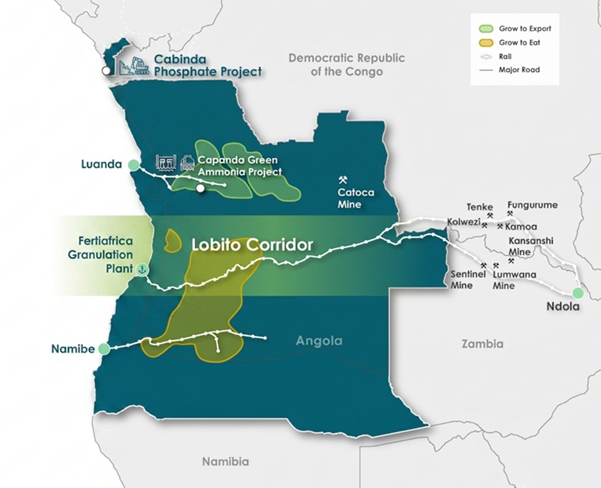
Minbos describes Cabinda as Angola’s only integrated phosphate mine and fertilizer project, targeting locally produced phosphate rock fertilizer to substitute for imports.
In April, BCI reported that Phase 1 civil works at the Subantando site had been completed and the plant was designed for an initial 150,000 t/y of enhanced phosphate rock, with scope to expand to 450,000 t/y, alongside field trials showing yield increases of up to 80% on phosphorus deficient soils.