• Skip to main content

    Latin America

    Fermachem to build $1bn fertilizer plant in Durango

    Written by Natalie Noor-Drugan


    Mexico’s Fermachem is moving ahead with a large nitrogen fertilizer plant in Lerdo, Durango, backed by federal and state authorities and positioned as one of the largest industrial investments in the state.

    Project scope and investment

    According to the Durango state government, the project represents an investment of more than MXN 28 billion ($1.6 billion) and will create around 3,000 direct jobs during construction. Operations are scheduled to start in the second half of 2027.
    Under Plan México, a federal announcement confirms that Mexican industrial group Fermaca Dreams will invest $1 billion in the Fermachem fertilizer plant and $2.7 billion in the Fermaca Digital City data‑centre project, for a total package of $3.7 billion in Durango

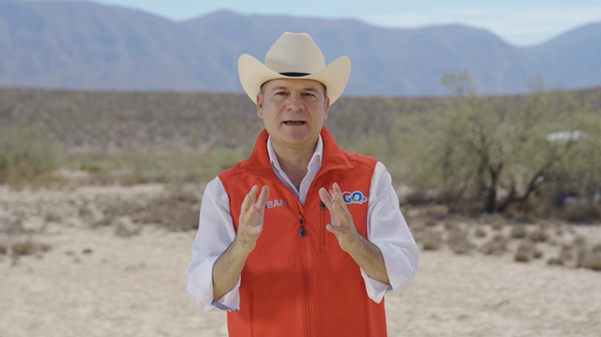
    Dr Esteban Alejandro Villegas Villarreal, the constitutional Governor of the State of Durango. Image courtesy of Government of the State of Durango.

    The Lerdo plant is designed to produce about 100,000 t/y of nitrogen fertilizers, with a federal statement specifying a target of 600,000 t/y of urea for agricultural use to reduce Mexico’s import dependence. Supply is aimed at the domestic farm sector, with exports also envisaged.

    Strategic positioning and support

    Durango’s Governor Dr. Esteban Villegas Villarreal describes Fermachem as “one of the mega investments in the history of Durango” and says the plant will strengthen Mexican agriculture, support productivity and open new export opportunities. He notes that the project has financial backing from the US International Development Finance Corporation (DFC) and commercial agreements that “guarantee its viability from the outset”, positioning Durango as a key hub for industrial and agri‑food development.

    At federal level, President Claudia Sheinbaum describes Fermachem as a green fertilizer project that will support Mexico’s food security and domestic agriculture, and notes that it complements fertilizer plants being developed with Pemex, Mexico’s state‑owned oil and gas company that also produces petrochemicals and fertilizers.

    Latest in Latin America

    Chile’s lawmakers to investigate Codelco

    Members of the lower house in Chile’s Congress have unanimously approved creation of a special investigative commission to examine a series of alleged irregularities at state-owned copper producer Codelco. The issues are: overestimation of production by almost 27,000 t last year; a multimillion-dollar renovation of the company’s headquarters in Santiago; and, maybe, the collapse of a chimney at Potrerillos copper smelter in the Atacama region of northern Chile. The structural failure has forced a production suspension.

    Cartagena refinery enters solid sulphur market

    Cartagena Refinery has entered the solid sulphur market, diversifying its petrochemical portfolio, according to a company statement on 21 May. The first shipment of 260 tonnes has already been dispatched to the domestic market. This new venture is enabled by a recently commissioned pelletising plant that converts liquid sulphur into solid pellets, with a production capacity of 1,000 t/d. The refinery is targeting Colombia’s fertilizer, chemical, and mining industries, and is also planning to export to international markets, including Brazil, Peru, and countries in Africa.

    Petrobras to resume construction at Tres Lagoas

    Petrobras PBR has said that it plans to restart construction of the long-delayed UFN-III fertilizer plant in Três Lagoas, Mato Grosso do Sul, with work at the site expected to resume by September. UFN-III, with a planned capacity of 2,200 t/d of ammonia and 3,600 t/d of urea, was partially completed in the 2010s, but the site has been inactive and unfinished since 2015. Petrobras now intends to complete the project with an estimated investment of $1 billion, targeting commercial operations by 2029. The site was chosen as it was strategically positioned near several of Brazil’s largest agribusiness regions, including Mato Grosso, Mato Grosso do Sul, Goiás, Paraná and São Paulo.