North America

Itafos, Rio Tinto tighten sulphuric acid deal for US ag

Written by Natalie Noor-Drugan


Itafos Inc., a phosphate and specialty fertiliser producer listed in Canada and the US, has signed an amendment to its sulphuric acid supply agreement with Rio Tinto’s Kennecott copper business. The amended deal locks in a new pricing basis and more flexible volumes to support US phosphate production at Itafos’ Conda, Idaho plant through 2029, strengthening a relationship that has underpinned unit for more than 30 years.

Under the amended deal, the reference index price used in the contract shifts from the Vancouver index to the Tampa index for the period from 1 May 2026 to 31 December 2029. Over the same period, the parties have agreed an adjusted sulphuric acid price aimed at smoothing out the impact of the sharp sulphur price volatility seen over the last four years. The contract changes are framed as a way to promote long-term value for both the US farming and mining industries by stabilising a critical raw material for domestic phosphate production.


The companies have also tweaked volume provisions to make delivered tonnes more flexible. Additional options for incremental supply have been negotiated, subject to availability, which Itafos says will give Conda more room to respond to market needs. Historically, the Conda facility has sourced about 60% of its sulphuric acid requirements from Rio Tinto, and Itafos expects to maintain a similar share under the amended agreement. Both sides signal that purchases from Kennecott are expected to continue beyond 2029, even though the current pricing changes run only to the end of that year.

Itafos CEO David Delaney said the amendment will help the company “maintain supply of a vital input” while reducing exposure to commodity price swings. He thanked Rio Tinto for “further strengthening the relationship” and highlighted the importance of having a reliable sulphuric acid supplier for Conda’s production plans. Rio Tinto Kennecott managing director Nate Foster said the revised contract reflects the strength of the long-standing partnership and a shared commitment to reliable supply for the US agriculture sector, arguing that the arrangement supports domestic resilience and helps keep crop yields and supply consistent for American farmers.

Itafos positions itself as a phosphate and specialty fertiliser company with a portfolio spanning three continents. In the US, Conda is a vertically integrated phosphate fertiliser business in Idaho with capacity to produce about 550,000 tonnes per year of MAP, MAP+, superphosphoric acid and merchant‑grade phosphoric acid, and roughly 27,000 tonnes per year of hydrofluorosilicic acid. In Brazil, the Arraias complex in Tocantins is a vertically integrated phosphate fertiliser business targeting output of SSP, PAPR and DAPR after a proposed beneficiation restart, alongside around 40,000 tonnes per year of excess sulphuric acid from a 220,000 tonne per year gross capacity. The company also controls the Farim high‑grade phosphate mine project in Guinea‑Bissau and the Santana integrated high‑grade phosphate mine and fertiliser plant project in Pará, Brazil.

Latest in North America

Alberta wildfires stopped near key oilsands sulphur facilities

The immediate threat to Canadian sulphur supply from the Alberta oilsands has eased, after several large wildfires in the Lac la Biche region were classified as “being held” with the help of rainfall in early June. The region has a combined annual sulphur production capacity of nearly 3 million t/a. Around 700,000 t/a of this is produced in the Edmonton area, primarily from Shell’s Scotford upgrader (580,000 t/a) and the Redwater refinery (130,000 t/a). The majority of the output, approximately 2.2 million t/a, is concentrated further north near Fort McMurray at facilities operated by Suncor, Syncrude, and CNRL Horizon. The out-of-control fires prompted evacuation alerts near in-situ sites operated by Cenovus, Canadian Natural Resources, and ConocoPhillips. While this specific threat has passed, the event highlights the seasonal vulnerability of Canadian sulphur supply, with the wildfire season typically running through the summer.

Travertine processes Ariane phosphate samples

Arianne Phosphate has provided samples of its phosphate concentrate for processing at Travertine’s facility in Boulder, Colorado, US. Pilot scale testing was successfully performed, demonstrating proof of concept on the process and production of a high-quality purified phosphoric acid (PPA). The Travertine process captures and recycles over 95% of the sulphur used in the process of making PPA, providing a virtually closed loop system. The PPA produced using the process met specifications required for both LFP batteries as well as fertilizers. The companies have begun work to advance the PPA demonstration plant in Quebec’s Saguenay-Lac-Saint-Jean region, working with potential partners as well as end-users of the product.

Yara acquires Gulf Coast Ammonia plant

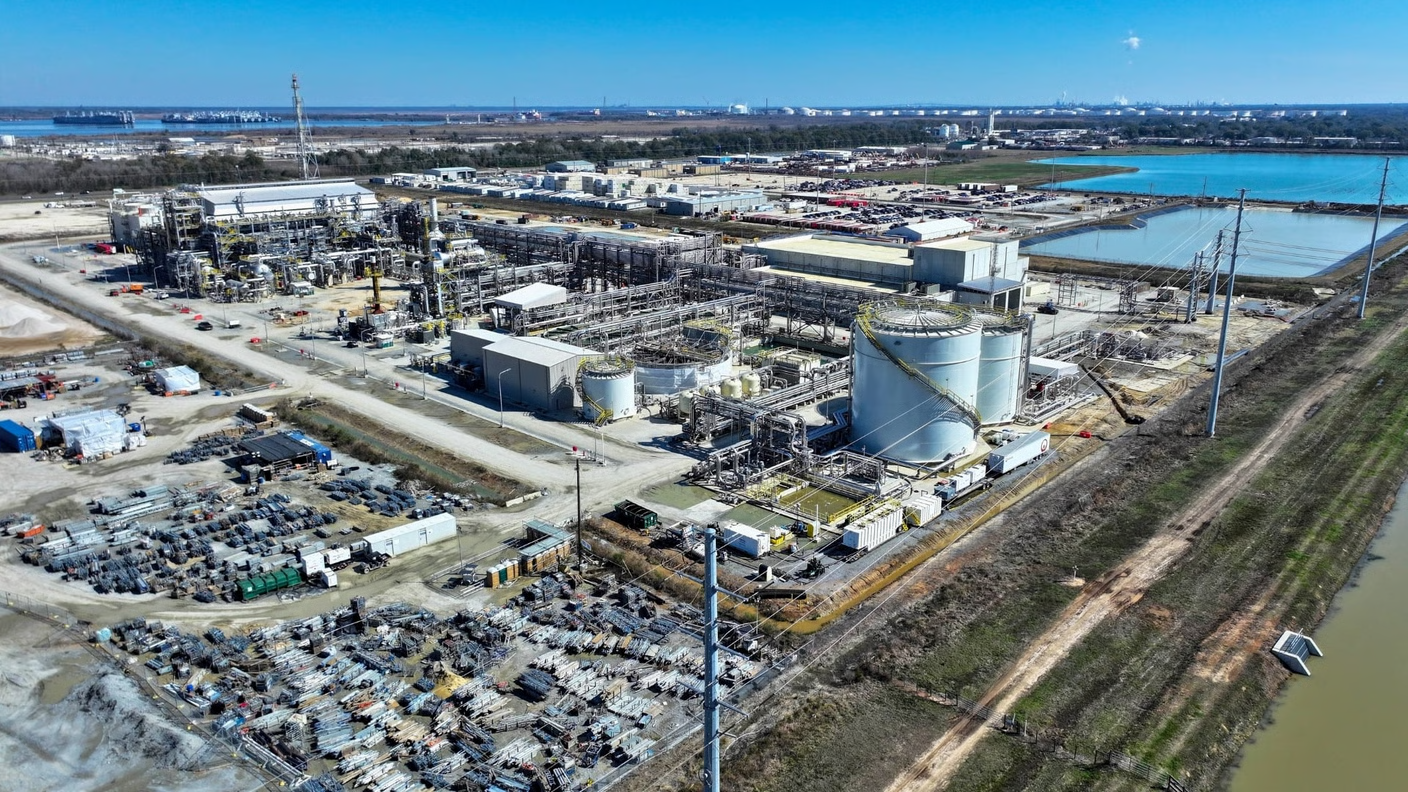
Yara International has reached an agreement to acquire Gulf Coast Ammonia’s (GCA) ammonia production facility in Texas City, Texas from GCA Holdings LLC, for a consideration of $ 1.3 billion. Yara says that the acquisition is part of its strategy to diversify its energy exposure and enhance the competitiveness of its global ammonia production footprint. Yara will own the ammonia plant with an expected nameplate capacity of 1.3 million t/a, with Air Products supplying industrial gases to Yara as part of a long-term supply agreement. Yara will use its midstream ammonia platform to supply both external customers and its own internal sourcing needs.