Fertilizer International 531 Mar-Apr 2026

20 March 2026
New potash entrants at the door
Guest Editorial
New potash entrants at the door
CRU’s Alexander Chreky, Analyst, Potash Market Services, provides a potash market overview ahead of CRU’s Phosphates+Potash Expoconference in Paris, 13-15 April.
For the third year in a row, 2026 is forecast to be yet another year of record potash demand. Following 2024 deliveries of 72.5 million tonnes, deliveries last year reached nearly 74 million tonnes, per CRU’s latest estimate.
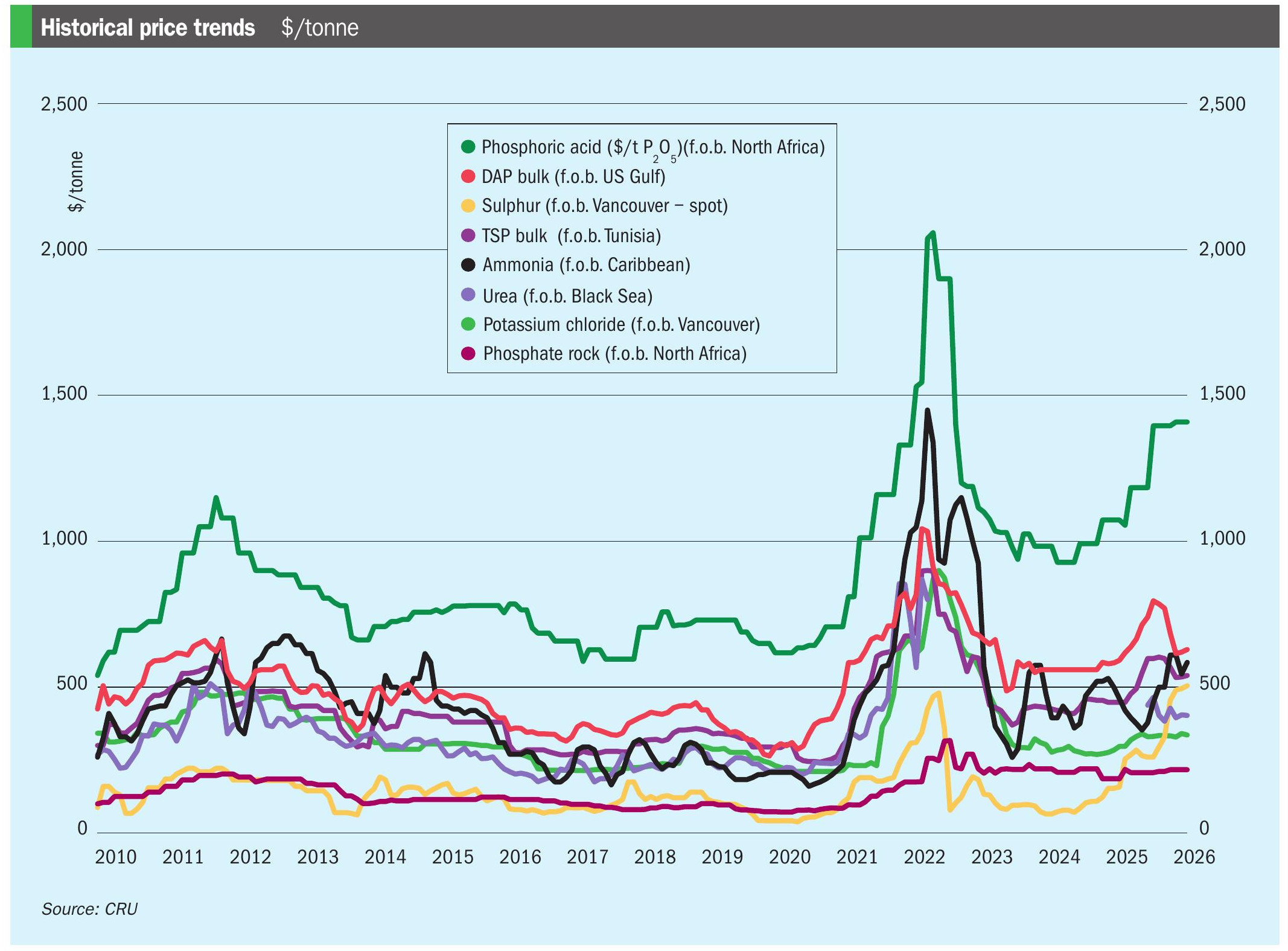
In good news for producers, potash prices in recent times have risen concurrently with ever growing demand – albeit largely on fears of supply shortages that ultimately failed to materialise.
Southeast Asia the standout performer
Globally, as deliveries reached new peaks in 2025, several growth engines stood out.
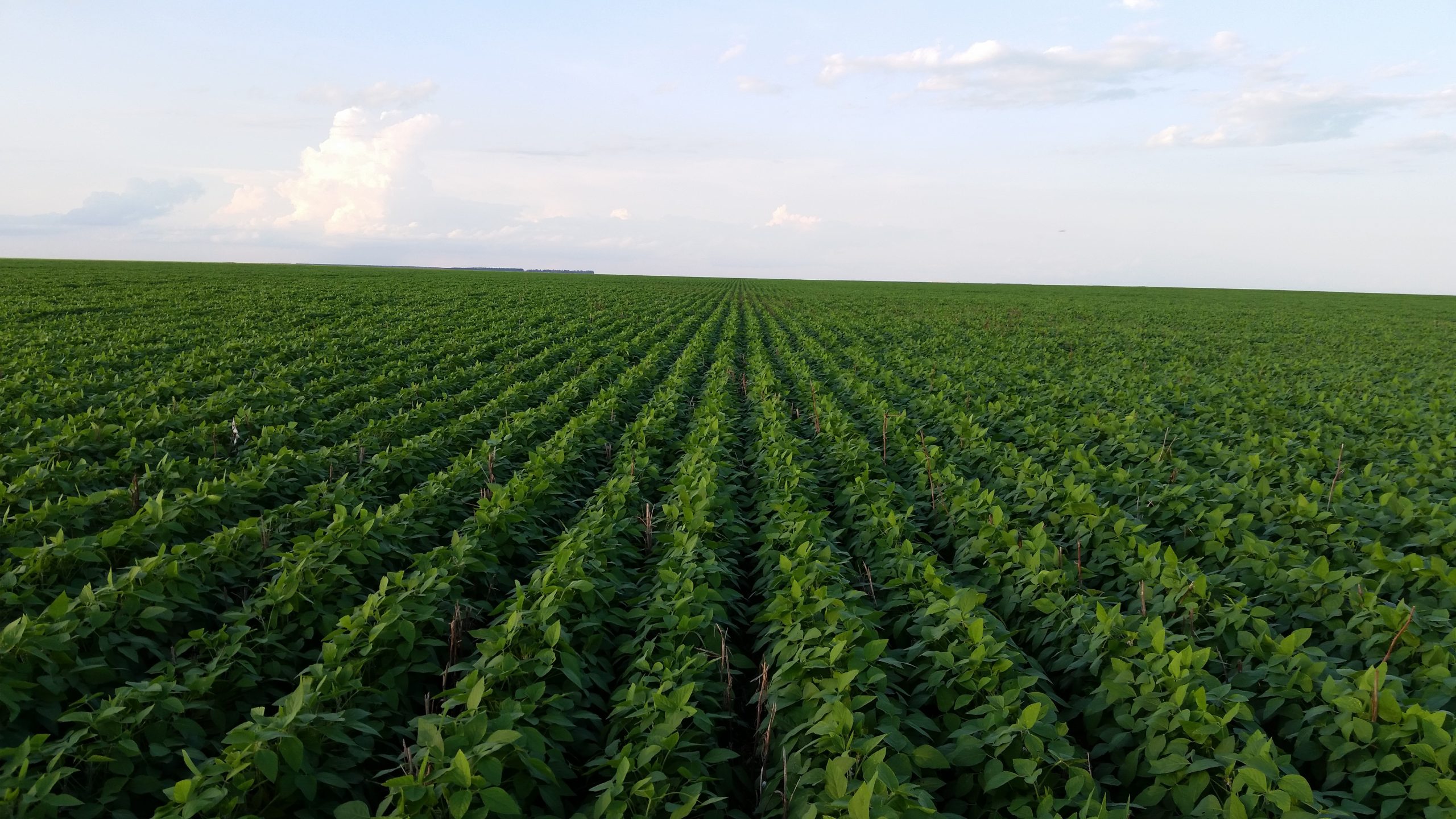
Brazil, following historical trends, continues to set new potash demand records, most of it imported. This has been driven by the country’s agricultural powerhouse status, particularly expansions in the soybean and corn crop areas, both of which are heavy consumers of potash fertilizer.
Yet it was Southeast Asia, primarily Vietnam, Thailand, Indonesia, and Malaysia, which emerged as the standout performer in 2025, with regional potash demand growing by 23% year-on-year on the back of strong affordability supported by high palm oil prices.
Other regions lagged last year: the US saw poor farm economics and policy uncertainty hamper its potash demand; while India’s demand remained stagnant amid low subsidy levels; and China’s imports remained flat versus 2024, despite production issues in Qinghai affecting domestic supply.
Major exporters increase supply share
As demand has increased, supply has continued to concentrate among the major potash-producing countries: Russia, Belarus, and Canada. In 2022, these three countries accounted for 73% of global exports. This share has since risen to 78%. Yet this still remains below historical norms, with this trio previously having captured 80% of supply in the years prior to 2022.
Their failure to regain this supply share, despite record production from the major producers, underscores increasing supply diversification in recent times. The most notable example of this is the rise of Laos as a major supplier – with the country quadrupling it exports in four years. Additional capacity in Canada and Russia, despite new Chinese investments in places like Thailand and Congo, is likely to reinforce supply concentration over the longer-term.
New capacity looms
New capacity from both incumbent and new producers is set to reshape the market from 2027 onward. BHP, which has spent billions of dollars to establish itself as a potash major, is expected to begin production from its new Jansen mine next year. BHP also has plans to potentially add capacity in roughly four million tonne increments from 2031, pending final investment decisions. It enters the market with high ambitions, but will face stiff competition from Nutrien and Mosaic, as well as K+S’s Canadian operations, for a share of an already well-supplied US market.
Internationally, competition could be even more intense. The capacity additions planned by EuroChem and Acron in 2027 and 2028 are comparable to, even in excess of, the volumes expected from BHP’s Canadian mega project. If fully utilised, this capacity wave has the potential to push the market into deep oversupply, pressuring prices and the market’s marginal producers. This could, in turn, drive consolidation in the potash industry as the landscape adjusts to a prolonged period of lower prices.
2026 – the prelude to increasing competition?
The potash market, having endured intense periods of oversupply previously, continues to be characterised by investment in new capacity that outpaces expected demand growth.
Nonetheless, long-term trends are highly supportive of demand for potassium as a nutrient, particularly relative to nitrogen, which is overapplied in many regions. In the medium-term, however, the potash market remains more than adequately supplied, and new producers may struggle to add supply without impacting prices, even if new demand segments, such as batteries, emerge.
In my view, 2026 may be the best opportunity for potash producers to benefit from higher prices before major new capacity additions come online in 2027 and beyond. BHP’s Jansen project in Canada, new Russian capacity from EuroChem and Acron, and various other projects, particularly those linked to Chinese overseas investments, have the potential to tip the market into significant oversupply.
Following a year of record demand, it will be highly instructive to watch the reactions of incumbent potash producers over the coming months – as they position themselves for the arrival of new entrants in 2027.