Nitrogen+Syngas 400 Mar-Apr 2026
17 March 2026
Nitrogen+Syngas Expoconference 2026
CONFERENCE REVIEW
Nitrogen+Syngas Expoconference 2026
A review of papers presented at CRU’s Nitrogen+Syngas 2026 Expoconference, held in Barcelona from February 10th-12th 2026.
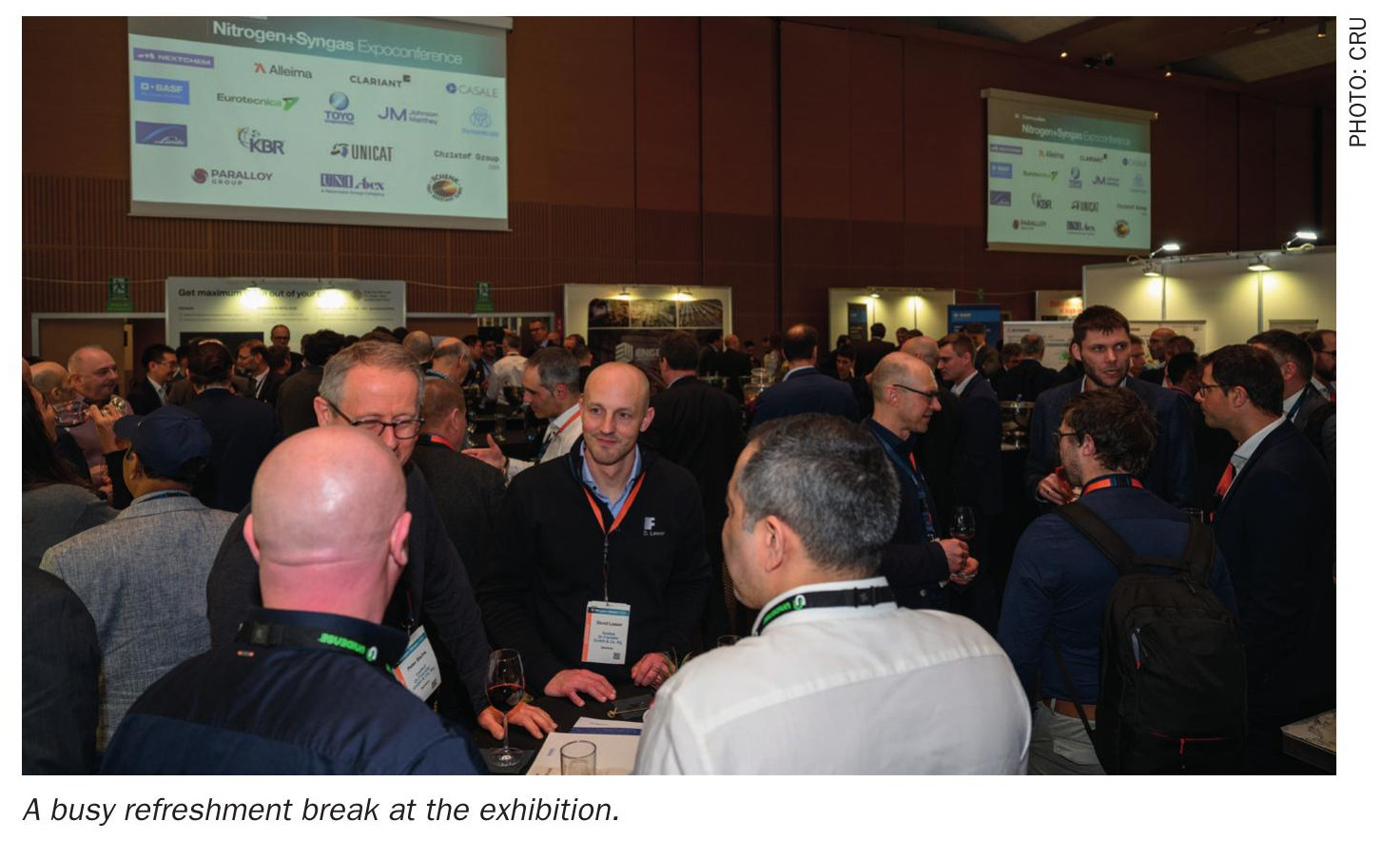
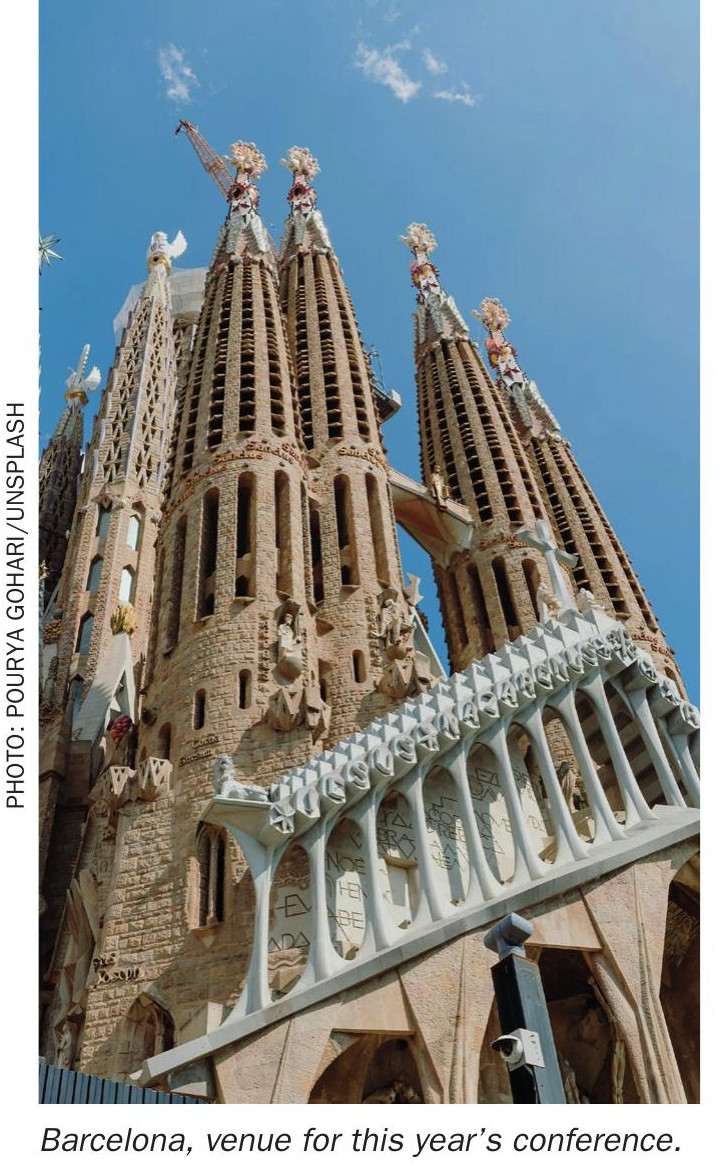
CRU’s Nitrogen+Syngas Expoconference returned to a slightly grey Barcelona this year, with an expanded programme including more than 70 papers in up to three parallel streams, as well as technical showcases and, on the first day, operator training workshops on urea plant upsets, plant revamping and decarbonisation opportunities, and safety.
The conference began with a tribute to Dr Umberto Zardi by Norbert Ringer of Clariant and Lisa Connock, Managing Editor of Nitrogen+Syngas magazine. Dr Zardi, whose obituary we carried in issue 398, was an inspirational figure in the industry, whose stewardship of Casale saw it return to its position as one of the major plant licensors, expanding from urea and ammonia to methanol and eventually nitric acid and plant construction. In her introduction, Lisa also discussed the challenges that the industry faces, balancing new low carbon technologies against finance and policy frameworks.
Market outlook
The nitrogen markets paper was presented by Charlie Stephen of CRU. He noted that high nitrogen process following the Russian invasion of Ukraine and European gas price crisis had given way to lower prices, but urea prices had been elevated in the past year or so dur to strong demand. Fertilizer affordability has been impacted by these higher prices and lower crop prices.
On the consuming side, China remains both the largest producer and consumer of urea. Over the past few years it had exported 4-5 million t/a, but this dropped in 2024 to almost nothing due to export restrictions designed to keep domestic prices lower. Exports had been opened back up in 2025 to the tune of 5.5 million t/a without unduly affecting domestic Chinese prices, so the expectation is that this year exports will be allowed again, and may reach 6 million t/a. Brazil also continues to show strong demand for urea, with imports reaching 8 million t/a, but it is also now importing huge quantities of cheap Chinese ammonium sulphate, which is competing with urea on a volume basis and to an extent placing a cap on Brazilian urea imports. India, historically the largest importer of urea, added 5.5 million t/a of domestic urea capacity from 2021-23, but demand has continue to grow at the same time, and still reached 9.4 million t/a in 2025.
Meanwhile, on the supply side, the US has a lot of new merchant ammonia capacity under development, and is likely to become a net exporter in the next couple of years. The flip side has been lower exports from Trinidad over the past few years due to restrictions on gas supply. Capital costs for projects have escalated in the US, although some of this may not be as serious as reported.
Europe has instituted its Carbon Border Adjustment Mechanism (CBAM). Urea has been relatively less affected, with imports from Algeria, Russia and Egypt not being unduly penalised, but costs will rise going forward. Meanwhile nitrates may bear the brunt of CBAM costs – European producers have by and large invested in N2 O reduction technology, but exporters to the EU, including Trinidad, the US and Russia, have not. CBAM does incentivise low carbon ammonia production outside the EU, especially for blue ammonia, but anomalously high charges on the US may impact trade flows in the short term.
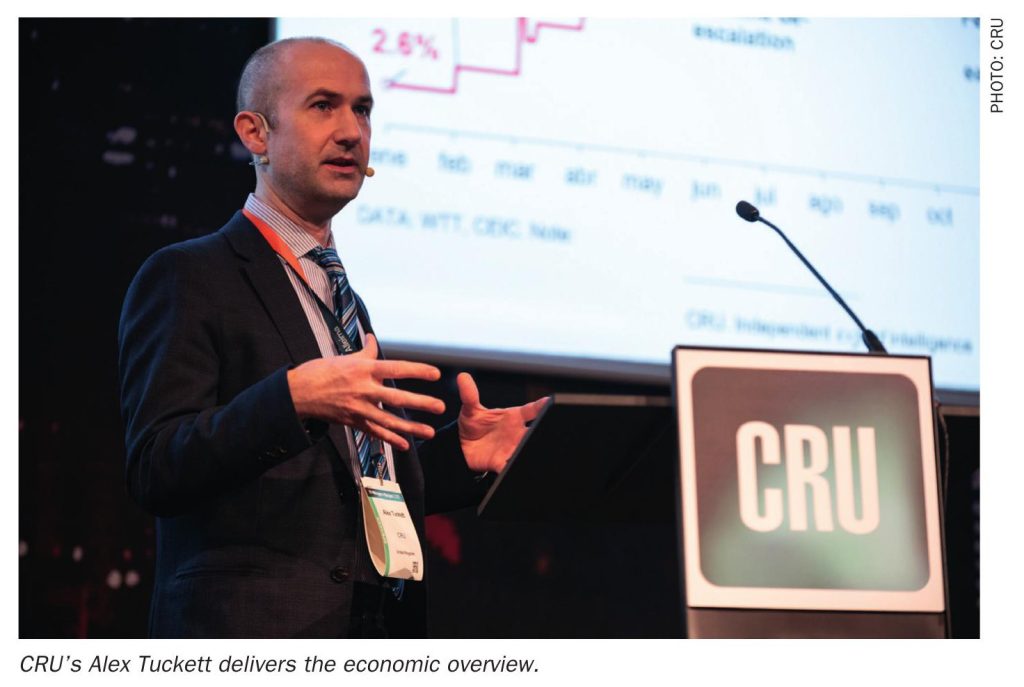
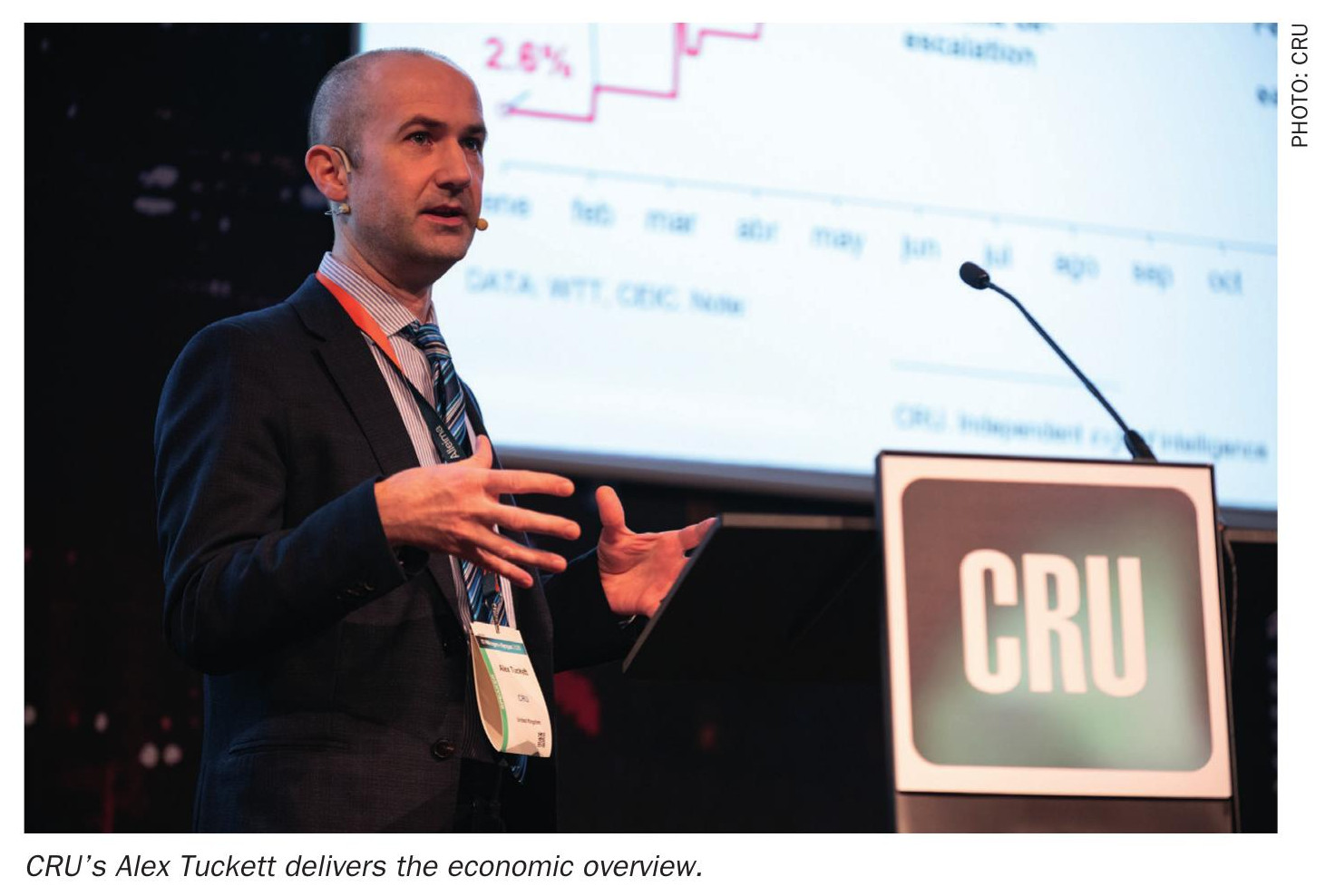
A broader look at the regulatory outlook and its impact was presented by Alex Tuckett, CRU’s head of economics. Tariffs seem to have stabilised, albeit at much higher levels, he said, but major uncertainties remain, especially over the political situation in Iran. The continuing intensification of the Russian-Ukrainian war and seizures of so-called ‘shadowfleet’ tankers pose risks for the oil market, and US foreign policy remains a key source of uncertainties. In the EU, CBAM has its own uncertainties, particularly over calculation of carbon intensity, but overall it is expected that CBAM will push costs up over time. The EU still faces difficult choices as it tries to balance energy security, decarbonisation and growth and maintenance of its industrial base. At the same time, a US push for deregulation will increase the gap in regulatory costs between the US and Europe.
Low carbon project development
Following the coffee break, there was an industry keynote panel discussion on major trends, which naturally converged around low carbon project development. Led by Charlie Stephen of CRU, the panel included Ignacio Fernandez Santiago of FertigHy, Torsten Brezin of the GIZ Nitric Action Climate Action Group (NACAG), Narayanan Valayaputtur of the Egyptian Basic Industries Corporation, Syed Aamir Abbas of Fauji Fertilizers, and Achim Schaadt of the Frauenhofer Institute for Solar Energy Systems.
FertigHy is developing a low carbon 500,000 t/a CAN plant in northern France using 170,000 t/a of green ammonia, with investment from the food and beverage industry, including Heineken, who are keen to reduce their Scope 3 emissions by using low carbon fertilizer to grow the barley they use for making beer. NACAG, meanwhile, has assisted with the reduction of 2.6 million t/a of CO2 equivalent emissions via N2 O abatement technology, including 1.0 million t/a in Uzbekistan, and advocated a public-private partnership approach to emissions reduction. Achim Schaadt also pointed out that infrastructure issues remain for lower carbon production, including development of CO2 pipelines to carry sequestered carbon dioxide.
Narayanan Valayaputtur noted that CBAM has changed EBIC’s perspective, and turned CO2 reduction into a key performance indicator. However, he advocated for an efficiency approach to begin with, arguing that if the whole industry increased its efficiency of ammonia production by 10%, this would be a larger carbon saving than all green and blue ammonia capacity that has reached a final investment decision.
Low carbon capacity
Paul Butterworth of CRU argued that the EU’s Green Hydrogen Programme had been based on erroneous pricing for low carbon hydrogen of less than $1/kg, whereas in fact a lower bound of around $5/kg is more likely. The lowest possible cost for solar hydrogen varies from around $6/kg closer to the equator in the Middle East or North Africa to $12/kg in Spain and higher still in northern Europe. However, coupling it with wind tends to smooth the curve and bring the lowest cost to around $5/kg in the Middle East and only $6.2/kg for Spain and $7.6/kg in Germany. Given that the estimated cost of converting low carbon hydrogen to ammonia, shipping it to Europe and then cracking it back to hydrogen could cost around $3.1/kg, Paul saw little future for ammonia cracking technology, but producing low cost ammonia or direct reduction iron (DRI) outside Europe using green hydrogen and then shipping the products to Europe for use as ammonia or DRI could bring the encapsulated hydrogen cost down to $0.7-1.1/kg and seemed the most sensible way of importing low carbon hydrogen.
Rebecca Ruan of CRU added that of a total capacity of 274 million t/a of announcements of green and blue hydrogen capacity, only 6% had so far made it to a final investment decision (FID), with blue ammonia projects far more likely to make it than green, even though more green projects had been announced. Much of the blue ammonia capacity moving forward is in North America, while China is the location for much of the green capacity. As for the emergence of demand, marine fuel seemed the most promising demand pathway, particularly in Europe, with increasing penalties on carbin equivalent cost, although at a global level the IMO has delayed implementation of its net zero framework in the short term, pushing shipping towards LNG for the time being, though ammonia remains a strong contender from the 2030s.
Uzbekistan
Bakhtiyor Sultankhodjaev’s history of the nitrogen industry of Uzbekistan gave an overview of the development of capacity in that country. This began in the 1940s, with what would now be described as ‘green’ ammonia produced via water electrolysis using hydroelectric power at Chirchik – the first such site in the Soviet Union. However, electricity demand for other uses led to the plant being used mainly for balancing the grid, with little to no production during winter. By the 1950s the plant had switched to a coal gasification feed and then, as Uzbekistan’s gas industry developed during the 1960s, it switched to a gas-based feed at the same time that new plants were developed at Navoi and Fergana. In the 1980s, new plants were built at all three sites based on modified Kellogg technology. Chirchik continued to have a hybrid electrolysis/gas fed until the 1990s. More recently, a 3,000 t/a green ammonia pilot plant has been developed at Chirchik in partnership with Saudi company ACWA Power using local wind power. Uzbeikstan is now targeting a 50% renewable share in power production by 2030, offering further options for future green projects. The renewable share reached 22% in 2025, more than doubling since 2021. A 200,000 t/a green ammonia project is now under development in the Navoi region using a mix of solar and wind power, though this will be used for local green fertilizer production for export rather than export of green ammonia itself. Longer term, if this is successful, further green/ grey hybrid production is planned.
Project profiles
Phil Ingram of Johnson Matthey discussed his company’s partnership with EET on the Hydrogen Production Partnership 1 at the Stanlow refinery near Liverpool. The project uses JM’s Leading Concept for Hydrogen (LCH) and it, along with two other similar projects in the UK, will capture 2.1 million t/a of CO2. The Stanlow project will sequester emissions in ageing gas fields in the Irish Sea.
The project required a guaranteed hydrogen offtake for investment, which it solves by coupling the refinery hydrogen feed with a combined heat and power plant to generate clean electricity from surplus hydrogen. New users can come onto the hydrogen supply at any time.
Andrea Zambianco of Saipem described the massive CERES project in Australia. This 2.3 million t/a urea project is sited on the Burrup Peninsula in Western Australia, and is being developed by Perdaman Chemicals and Fertilizers, with EPC being conducted by Saipem and Clough. It has one ammonia and two urea trains, with thyssenkrupp Uhde providing the ammonia technology as well as UFT urea granulation technology. Construction has been on a modular basis, with the modules constructed in India and shipped to Australia. The modules, some weighing up to 2,700 tonnes, are then taken overland from the port to the project site for assembly and tie-in.
Zdenek Kadlec of Casale and Josef Sliva of BorsodChem in the Czech Republic described the modernisation of nitric acid production at BorsodChem in Ostrava. Production runs on imported ammonia to make a variety of downstream chemicals, including nitrobenzene, aniline and speciality amines. An accelerated project schedule has brought the overall timeline down from 36 months to 29 months. Construction will be completed in May 2026.
Terje Bakken of ATOME updated delegates on the progress of that major green fertilizer project in Paraguay, aiming to produce 260,000 t/a of calcium ammonium nitrate, using green ammonia. A 100% offtake agreement has been signed with Yara, and at the time of the conference a final investment decision had almost been reached, and was expected “within weeks”.
Blue ammonia
Day two saw a number of presentations devoted to the nuts and bolts of ‘blue’ ammonia production; now firmly established cost-wise as the likely way for low carbon production to go in the medium term, and a clear indication of the way that the industry is moving. This begins with carbon capture strategies – Dow highlighted their high pressure regeneration process, which offers up to a 40-50% reduction in operating expenditure compared to other methods, more than offsetting the increased capex. NextChem also offers a cryogenic CO2 recovery process, suitable for higher molar proportions of CO2 in the gas feed (preferably above 15%) and can supply CO2 as a liquid rather than a gas. All of this makes meeting CO2 specifications all the more important, and Zubair Taiha of Yara discussed varying specifications and treatment strategies to remove hydrogen, oxygen, amines, ammonia, alcohols, aldehydes and solids/dust, as well as, most crucially, water, to prevent pipeline corrosion.
Saudi Aramco presented the results of a technology assessment of blue ammonia production, comparing steam reforming, autothermal reforming (ATR) and partial oxidation, concluding that ATR, though unusual for ammonia production, had the better performance for CO2 recovery at a ‘sweet spot’ of around 80% efficiency, and the proven scalability for large volumes.
Other technologies
Technip have completed validation of their ammonia cracking technology at a pilot plant at Rotterdam, and are now looking for a first commercial reference. ‘Hynext by T.EN’ uses a structured catalyst developed with Clariant for higher mass transfer rates, lower pressure drop, and more efficient heat recovery, combined with the T.EN burner. The design minimises metal exposure to high temperature ammonia to avoid nitridation issues and can use a variety of fuels for the burner, including a hydrogen purge from the purification section.
KT Tech have an innovative solution to low carbon hydrogen production. Their NX eBLue technology uses electrically heated reformer tubes (and an electric pre-heat section) to replace the traditional SMR radiant box, which reduces gas consumption by 45%, and potentially allows higher CO2 recovery efficiency at up to 98% via purge gas recycling. The heated tubes are supplied in modular assemblies which allow flexibility in design and operation. Feeds can also be flexible, with biogas potentially producing negative CO2 outputs of 9-11kg CO2/kg H2. Electrical energy consumption is only around one third of a comparable sized electrolysis-based plant.
Casale highlighted their partnership with China’s XLX (Xin Lian XIn) Group, which now includes the first world-scale ammonia-urea complex combining the N-LOOP and HYPER-U medium/high pressure self stripping technology.
Mitsubishi Heavy Industries, meanwhile, presented an innovative ammonia scrubbing system using a CO2 bubbling unit to boost mass transfer and replace hazardous sulphuric acid scrubbing.
Dominique Flahaut of Paralloy introduced their new Omega profile reformer tube. Conventional tubes with a smooth surface have a laminar flow which can lead to an insulation layer between the tube and catalyst. Omega’s grooved inner surface is designed to increased turbulence and hence heat transfer. CFD modelling shows it can lead to a temperature increase of 150C in the tube or a faster approach to temperature. Tests measured an 80°C increase at the tube exit. There is also a new strategic partnership with Casale to build this technology into new plants and revamps, as mentioned in our news item this issue.