Europe

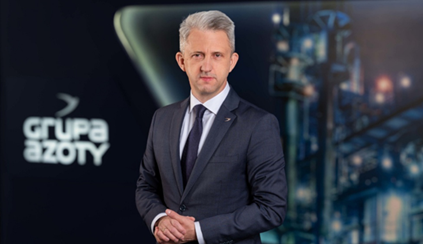
Grupa Azoty dismisses CEO Andrzej Skolmowski

Written by Natalie Noor-Drugan


Grupa Azoty has dismissed its CEO Andrzej Skolmowski. He had been in the job less than one year, having originally been appointed in June 2025.

Skolmowski was removed from his role as president of the company’s management board on 12 February, along with vice presidents Paweł Bielski and Andrzej Dawidowski.

Grupa Azoty’s vice-chair, Aleksandra Machowicz‑Jaworska, will now act as temporary president of the management board for up to three months until a replacement CEO is found.

The senior level dismissals come after Grupa Azoty agreed extensions to its financing deals with 12 banks and the European Investment Bank in late January, keeping funding lines in place until 31 March 2026. The extensions were conditional on the chemicals and fertilizer group meeting certain requirements by 27 February 2026, as it works on a longer-term restructuring plan.

Latest in Europe

Cherepovets hit by drone strikes; phosphate impact unclear

Multiple drone strikes have hit the industrial city of Cherepovets in Russia's Vologda Oblast region, according to Russian news agency TASS. The area contains PhosAgro's largest phosphate fertilizer production site. Cherepovets has a production capacity of around 700,000 t/a NPK and around 814,000 t/year DAP/MAP, according to CRU data, making it the largest phosphate fertilizer production site across Europe and the CIS. The site also contains several sulphuric acid plants with a combined capacity of 4.5 million t/a, making it Russia's largest production hub for the acid. This entire volume is consumed domestically.

Russia extends sulphur export ban to mid-2026

Russia has again extended its ban on the export of industrial sulphur, with the latest decree prolonging the restriction until 30 June 2026. The announcement was made via the government’s press service on 31 March. This decision is aimed at stabilising the supply of raw materials for the domestic market to support the production of phosphate-based fertilizers. The restriction covers the export of liquid, granulated, and lump sulphur.

Partnership for waste to methanol plant

HyOrc Corporation says that it has signed a project development and technology agreement with Bulgaria-based OnEnergy Group to develop a waste-to-methanol facility. Under the agreement, HyOrc will serve as the technology partner for Stage 3 of the project, which focuses on thermochemical conversion of refuse-derived fuel (RDF) into green methanol. The facility is designed to process approximately 50,000 t/a of RDF, operating around 330 days per year with a daily throughput of approximately 150-155 t/d. Expected methanol production capacity is approximately 38-42 t/d (13,200 t/a), subject to final engineering configuration.

Agreement over green methanol project

Swedish e-fuel developer Liquid Wind and Finnish energy company Turun Seudun Energiantuotanto (TSE) have signed a memorandum of understanding (MoU) for the development of a green methanol plant at Naantali, Finland. The facility is planned to be adjacent to TSE’s local power plant, Naantali 4, which will deliver biogenic CO 2 and steam for the production of methanol. Process and waste heat will be used for district heating, reducing the share of incineration-based district heat production by TSE. Once operational, the plant is expected to produce 100,000 t/a of green methanol made from green hydrogen and biogenic CO 2 . The final investment decision (FID) is planned for 2026, and the facility is expected to be operational in 2029.