Nitrogen+Syngas 399 Jan-Feb 2026
27 January 2026
Dangote planning two massive new ammonia-urea complexes
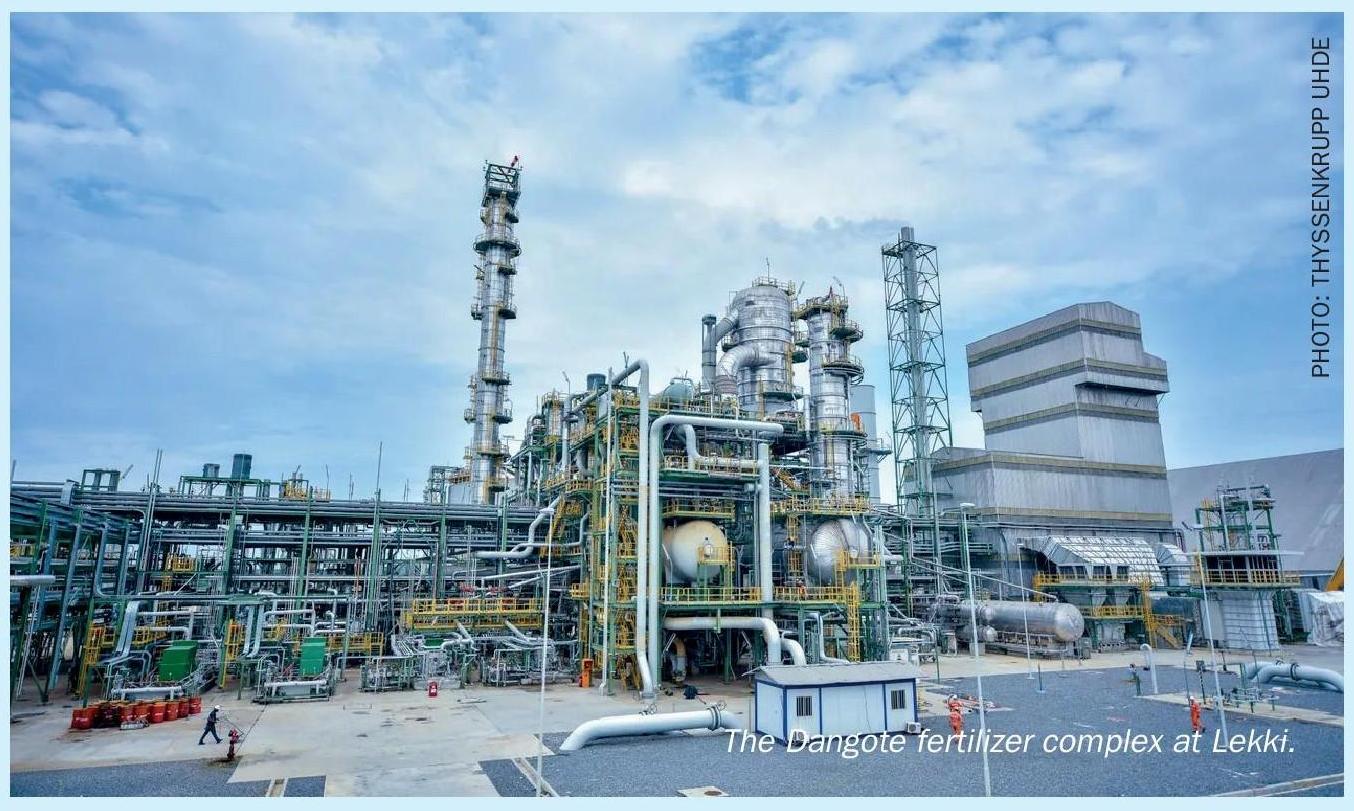
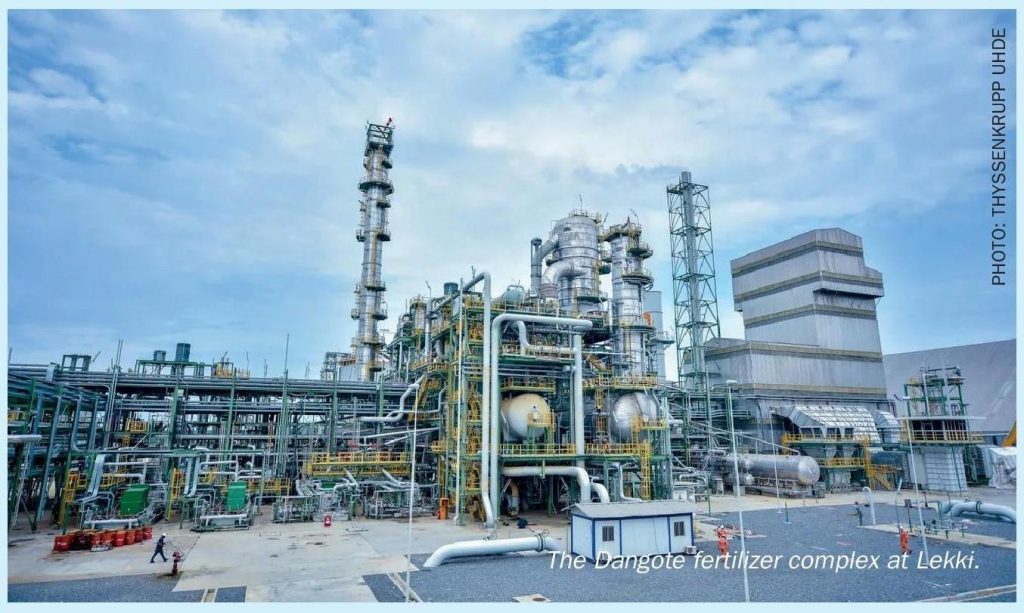
Dangote Fertilizer, Africa’s leading fertilizer producer, has awarded contracts to several major companies for the provision of licenses and technical expertise for the development of two new planned ammonia-urea complexes, one in Nigeria and the other in Ethiopia, as well as the provision of basic engineering and design services for the related plants.
The Nigerian operation envisages for new ammonia-urea trains. Saipem has been selected to provide its proprietary Snamprogetti™ urea technology, as well as process engineering services including all technical documentation required for the construction of the urea units, each with a record capacity of 4,235 t/d, for a total of 16,940 t/d (5.6 million t/a). thyssenkrupp Uhde Fertilizer Technology (UFT) will also license its UFT® fluid bed granulation technology for the urea plants. Topsoe will supply licenses for the four 2,500 t/d gas-based ammonia units which will feed the urea plants. The new trains will be built at Dangote’s existing Lekki facility near Lagos, which already operates 3 million t/a of urea capacity.
Additionally, a complex in Ethiopia is planned to include two more 2,500 t/d Topsoe ammonia plants, with 3 million t/a of downstream urea capacity licensed by Saipem. Saipem and Dangote Fertilizer have signed a letter of intent for front end engineering design (FEED) services relating the new complex in Ethiopia, developed in partnership with Ethiopian Investment Holdings for the construction of a plant at Gode, in the Somali region of the country.