Fertilizer International 529 Nov-Dec 2025
21 November 2025
MEPs warn of CBAM price hikes
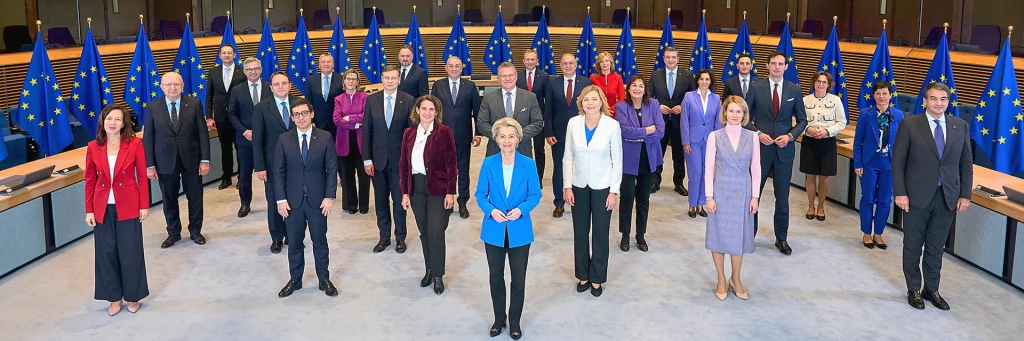
Irish MEPs have urged the European Commission to rethink its introduction of the carbon border adjustment mechanism (CBAM) due to concerns about fertilizer price rises.
Fianna Fáil MEPs Barry Cowen, Billy Kelleher and Cynthia Ní Mhurchú raised their concerns in a letter to Wopke Hoekstra, European Commissioner for Climate, Net Zero and Clean Growth, the website Agriland reported on 23rd October.
The letter said that Ireland’s heavy reliance on imported fertilizer, particularly urea, left the country’s farmers “more exposed than others to new carbon tariffs”. The MEPs warned the Commissioner that CBAM could “hit Irish farmers hard” and have requested an urgent meeting to “explore solutions”.
From 1st January 2026, CBAM will require importers to buy certificates based on the EU carbon price. At the current price of €70/t CO2e, this will add €35-80/t to the cost of fertilizers such as urea and calcium ammonium nitrate (CAN), according to calculations by the Irish Co-operative Organisation Society (ICOS).
The extra cost of CBAM on fertilizers could rise to as much as €250/t by 2034, ICOS said. The Society also warned that CBAM could increase overall costs for Irish farmers by €100 million by 2030.
Speaking to Agriland, MEP Barry Cowen said: “Ireland’s farmers must not become collateral damage of well-intended climate policy. As a country, we import virtually all our fertiliser – about 80% of our urea comes from outside the EU.
“If Brussels imposes a one-size-fits-all carbon tariff on fertilisers without accounting for that reality, it will hit Ireland far harder than other member states. I have grave concerns that our farmers will bear the brunt of a policy that was never tailored to our national circumstances, and that is why I’ve urgently reached out to Commissioner Hoekstra on this matter.”
Cowen said a “cross-border fiasco” in Ireland must also be avoided. “We need the EU and UK in sync on CBAM timing to prevent a loophole that could hurt both our single market and Ireland’s agri sector,” he said.
The UK will not apply similar charges to CBAM until 2027.
“I’m urging the commission to hit the pause button on CBAM for fertilisers until these issues are resolved,” Cowen added. “This is about being smart as well as green – my Fianna Fáil MEP colleagues and I absolutely support climate action, but it has to be done in a fair and workable way.”