MEScon returns to Abu Dhabi
CRU and UniverSUL Consulting, together with the event host, ADNOC, are delighted to welcome you back for MEScon 2024 at the Conrad Abu Dhabi, Etihad Towers from 20 to 23 May 2024.


CRU and UniverSUL Consulting, together with the event host, ADNOC, are delighted to welcome you back for MEScon 2024 at the Conrad Abu Dhabi, Etihad Towers from 20 to 23 May 2024.
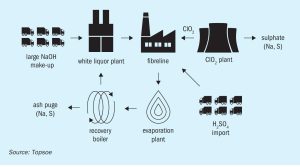
The implementation of WSA technology to recover sulphur as sulphuric acid from lean sulphurous off-gases offers significant environmental benefits. These include waste reduction, resource efficiency and reduced overall CO2 e footprint, while also producing profitable sulphuric acid. By embracing such practices, industries can ensure improved or better consumption and production patterns and foster a more sustainable and responsible future. J. Feddersen and S. S. Johansson of Topsoe illustrate these benefits using three distinct industrial applications where WSA technology provides a smarter way to treat sulphurous off-gases. It is not only waste stream management in the three cases, but also reduced transportation of chemicals, reduced opex and reduced CO2 e footprint.
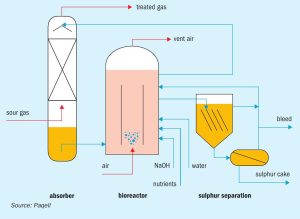
As environmental SO2 emission regulations become more stringent, tail gas treating options become limited. To potentially achieve lower opex and improved plot plan, utilising a biological desulphurisation process as an alternative to a conventional amine-based TGT unit is becoming of increased interest in the oil and gas industry. At the same time, demands for increased SRU capacity and reliability favour the use of medium and high-level oxygen enrichment.
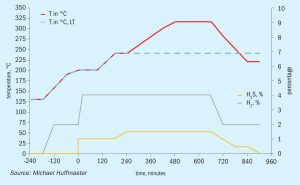
In the final part of this two-part article, Michael Huffmaster , Consultant, presents case study results using a discrete reactor model incorporating heat, mass transfer, and activation reaction kinetics to assess the impacts of these variables on in-bed temperature profile and activation effectiveness. Tailoring gas rate, composition, and temperature progression can achieve in-bed exotherms which improve CoMo catalyst activation effectiveness for low temperature tail gas units.
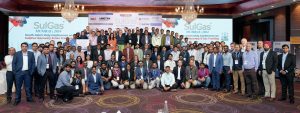
We report on the key highlights of the annual SulGas® conference, organised by Three Ten Initiative Technologies LLP,, which took place in Mumbai, India, from January 31 to February 2, 2024.
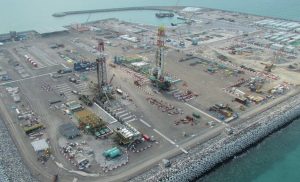
Already the world’s largest exporter of sulphur, Abu Dhabi continues to expand its sour gas production and sulphur output.
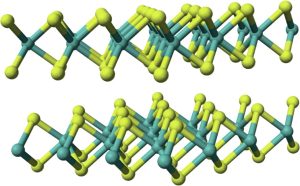
Cobalt-molybdenum catalysts are integral components of tail gas units, playing a vital role in reducing harmful sulphur dioxide emissions arising from Claus sulphur recovery units. Effective activation of these catalysts is essential for their optimal performance. In the first part of this two-part article, Michael Huffmaster, Consultant, explores CoMo catalyst activation at low pressure, focusing on sulphiding reaction pathways and the impact of temperature and the composition of the sulphiding media on reaction kinetics.
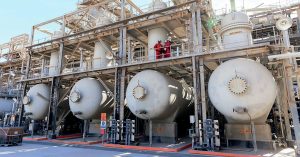
Small quantities of sulphur in a refinery or gas feed can present challenges for conventional large scale sulphur recovery techniques.
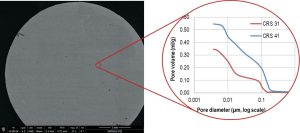
Axens has developed a new titania-based catalyst named CRS 41, which has a much larger porosity than its renowned predecessor, CRS 31 catalyst. Thanks to an improved catalyst manufacturing process and a new recipe, the porosity of CRS 41 has been increased while preserving the mechanical resistance for loading, allowing customers to optimise their capex by either reducing the Claus reactor size or loading volume of TiO2 catalyst.
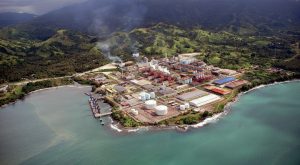
First Quantum Minerals Ltd. has contracted with MECS, Inc. (MECS), a subsidiary of Elessent Clean Technologies, for the Kansanshi smelter expansion at the Kansanshi mine at Solwezi. MECS’ scope of work will include a redesign of the existing sulphur-burning sulphuric acid plant into a copper smelter off-gas recovery sulphuric acid plant. This transition to a copper smelter off-gas recovery acid plant will enable First Quantum to reduce emissions from the existing copper smelter, increase production at the mine, and supply more copper to the global market, which will enable the adoption of greener technologies. MECS’ design for First Quantum incorporates proprietary technologies such as MECS® catalyst for low emissions and high conversion, Brink® mist eliminators, ZeCor® alloy towers and pump tank and UniFlo® acid distributor technology for operational reliability and efficiency.