African fertilizer producers and blenders
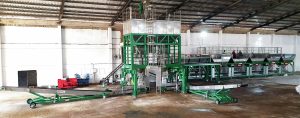
The last three years has seen a renaissance in fertilizer production and blending in sub-Saharan Africa. We highlight the expansion of capacity in Nigeria and other countries within the region.
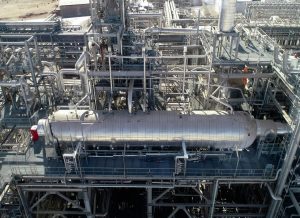
Following the publication of the 2020 nitrogen project listing by our sister magazine Nitrogen+Syngas, we profile a selection of leading nitrogen projects and their process licensors. Australia, Egypt, India, Nigeria and Russia have been key countries for new project developments.
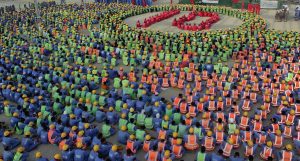
Nitrogen+Syngas asked some of the industry’s leading EPC companies what they are doing to make construction sites safer around the world in pursuit of the goal for zero incident safety performance. Read on to find out what approaches have been taken by Maire Tecnimont Group, thyssenkrupp, Toyo Engineering Corporation and Saipem.
As existing facilities grow older, service requirements increase. Equipment needs to be low maintenance and back in operation quickly after service and repair. Technology licensors are expanding their technical services with new digital tools, using digitalised expertise with real time insights and data driven analytics to boost chemical production and ensure that equipment operates reliably and efficiently, while maintaining product quality.
A Stamicarbon urea plant attempts to start up after a scheduled turnaround. Due to maintenance issues, it is necessary to shut down and block in the synthesis section several times. Although licensor’s procedures have been followed, several signs of active corrosion are noticed in the liner of the reactor. What could the cause be for this unexpected behaviour? Can sharing experiences from colleagues from other urea plants provide valuable support to find the root cause or even provide new insights into possible new causes? One observation is that the typical heating up rate of a liner in a reactor is much higher than recommended (refer to diagram). The condensation heat of steam heats up the liner much faster than the carbon steel pressure bearing wall. This creates stress on the liner and affects the lifetime of the liner. Another observation is a temperature rise in the reactor during a blocking in situation. This can be a cause for loss of oxygen required for passivation, resulting in higher corrosion rates.
Shell Global Solutions International BV (Shell) has awarded Worley two contracts for PT Pertamina EP Cepu’s (PEPC) new sulphuric acid plant in Indonesia. This plant is part of the Jambaran-Tiung Biru utilised gas field project for PEPC, which is a subsidiary of PT Pertamina-Indonesia’s state-owned energy company. Under the contracts, Worley will supply be supplying Chemetics’ cooled oxidation reactor (CORE) technology. This is the first time that CORE will be paired with Shell’s Cansolv SO2 capture technology. Worley gained the Chemetics technology as part of its Jacobs Energy, Chemicals and Resources acquisition last year. Cansolv controls the emissions and captures additional by-product value from the sulphur dioxide emitted from various refinery flue gas streams (such as cracking units, process heaters and boilers), sulphur plants and spent acid regeneration units. Sulphur dioxide can be recycled to the sulphur recovery unit to be produced as marketable sulphur or converted to sulphuric acid.
The grave economic and human health consequences of the global spread of coronavirus (Covid-19) deepened in March.
At the Nitrogen+Syngas Conference 2020, held in The Hague, Netherlands, Haldor Topsoe launched its new TITAN ™ series of steam reforming catalysts. The company says that the new series, which consists of the RC-67 TITAN and RK-500 TITAN catalysts, offers improved performance and longer catalyst lifetime thanks to the hibonite-rich composition. The addition of titanium promoters adds exceptional mechanical strength while a seven-hole cylindrical shape yields both a very low pressure drop and a high surface area. Pressure drop build-ups in syngas plants can cause unscheduled downtime and cost millions of dollars, while thermal instability during operation can lead to operational risk and reduce plant lifetime. Topsoe says that the catalysts can mitigate these risks, ensuring lower operating costs, increased profit margins, and reduced energy usage.
New ammonia and urea plants in Nigeria and Ethiopia are part of a wave of new capacity in Sub-Saharan Africa, and may help pull up regional demand from its current low base level.