Who’s who in fertilizer handling and precision blending
An overview of the very latest in fertilizer handling and blending, including new contracts, company news and advances in technology.
There is growing acceptance and integration of biostimulants into the wider fertilizer and agricultural markets. This is illustrated by rocketing sales, the spate of new product launches, and merger and acquisition activity.
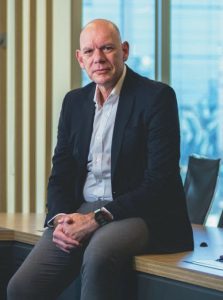
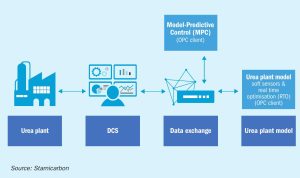
Technological innovation is vital to solving the global food challenge and delivering the transition to a low-carbon economy. Pejman Djavdan, Stamicarbon’s CEO, sets out his vision for a future-proof fertilizer industry – one that will enable the sustainable intensification of agriculture while also protecting the environment.
A review of recent additions to fertilizer product portfolios and new process technologies, as innovation within the industry accelerates to decarbonise production and improve nutrient use efficiency (NUE).
Tessenderlo Kerley International recently published a tree nut crop brochure. This article draws on the brochure to highlight the importance of two essential nutrients, calcium and sulphur, as part of a balanced fertilization programme for nut crops.
Tree nuts are an important dietary source of unsaturated fatty acids, vitamins and minerals. Orchards require balanced fertilization to promote healthy root growth, maintain tree vigour, and achieve yield targets in response to growing market demand. ICL agronomists Cristian Filote, Gali Carmi and Patricia Imas review their nutrient needs.
Tony Will, the president and CEO of CF Industries, is the new chair of the International Fertilizer Association (IFA). He was elected in June alongside a number of other executive board members and board directors.
The modern sulphur industry is in effect a response to the environmental problems created by the presence of sulphur compounds in oil and gas, and the consequent release of sulphur dioxide when they are burned. The tens of millions of tonnes extracted, formed, traded and used for sulphuric acid production every year would otherwise be entering the atmosphere and causing health issues, especially in major cities, or returning as acid rain. One of the most recent step changes in sulphur recovery has come from the extension of rules on sulphur content of fuels that have been commonplace for road vehicles for many years into the maritime transport sphere. The International Maritime Organisation has mandated a reduction in sulphur content of bunker fuels to 0.5% worldwide, and 0.1% in busy shipping regions that have become designated emissions control areas (ECAs). Because bunker fuels were made from refinery residues, they often had high concentrations of sulphur in them; the limit before 2020 was 3.5%. As a result, a recent paper by two climate scientists calculates that global SO2 emissions have dropped by as much as 10% since 2020 because of the IMO limits. Given that atmospheric sulphur dioxide is responsible for an estimated 20-90,000 preventable deaths per year, this is surely a good thing.
Metso Outotec’s annual general meeting (AGM) in early May approved the board of directors’ proposal to change the company name to Metso Corporation. “After the successful integration of Metso and Outotec, we will focus on growing a strong unified Metso company and brand,” says President and CEO of Metso, Pekka Vauramo. “We have combined two valuable companies into one strong Metso. Our focus is clear: we continue enabling sustainable modern life and transforming the industry with a clear strategy and strong culture, supported by a name that is short yet established and well recognized among all our stakeholders. Services are an extremely important part of our business, requiring a strong name.”
SABIC’s general assembly has approved the appointment of Abdulrahman Al-Fageeh as SABIC CEO, and an executive member of the board of directors until April 9, 2025 – the Board’s tenure end date. In its previous meeting, the Board of Directors, had agreed to appoint Dr. Mohammed Yahya Al-Qahtani as vice chairman. At the meeting, Khalid Al-Dabbagh, SABIC Chairman, noted that the past year had been difficult one, though “SABIC managed to face the challenges by intensifying its development programs to achieve record numbers in terms of production, sales, and revenues that exceeded the achievements of the previous year. However, its net profits have not met its aspirations and have shrunk compared to last year due to the worsening global conditions.” He also said that SABIC is pursuing plans to manage working capital through the Cash Cost Transformation program, and is sparing no effort to achieve sustainable growth, adopt long-term strategic goals for sustainability, and reduce emissions related to the life cycle of its products across the value chain.